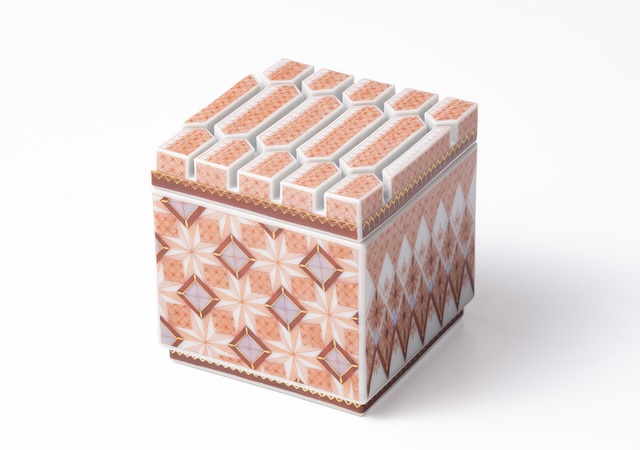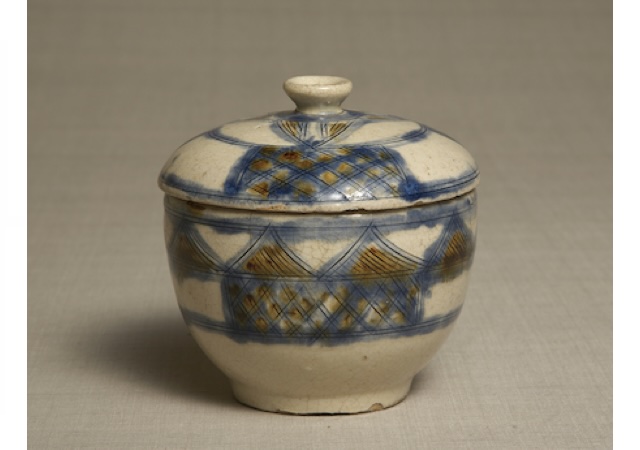
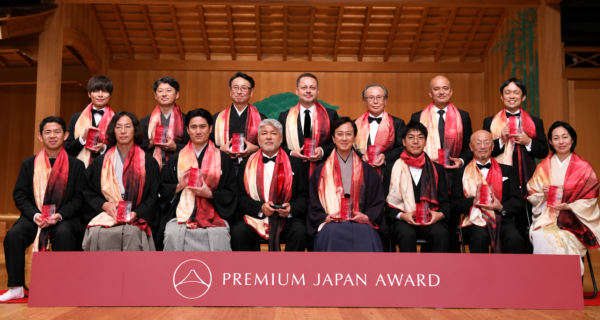
A-POC ABLE ISSEY MIYAKE (hereinafter, A-POC ABLE) is an Issey Miyake brand that was born in 2021 during the COVID-19 pandemic. It is not just a brand that produces beautiful clothes. Through collaborations with companies and individuals from diverse fields—from production areas that inherit traditional materials and craftsmanship, to researchers and startups that handle deformed materials and computer algorithms, to leading artists and young creators—it has been creating unprecedented ways of making clothes.The brand is bringing Japanese design ideas to the world. The "PREMIUM JAPAN AWARD 2026" recognizes both the innovativeness of the numerous projects the brand has undertaken and its contributions to expanding the horizons of Japanese craftsmanship. We have decided to present this award to them in recognition of both.
When heat is applied, a piece of cloth stands up on its own.
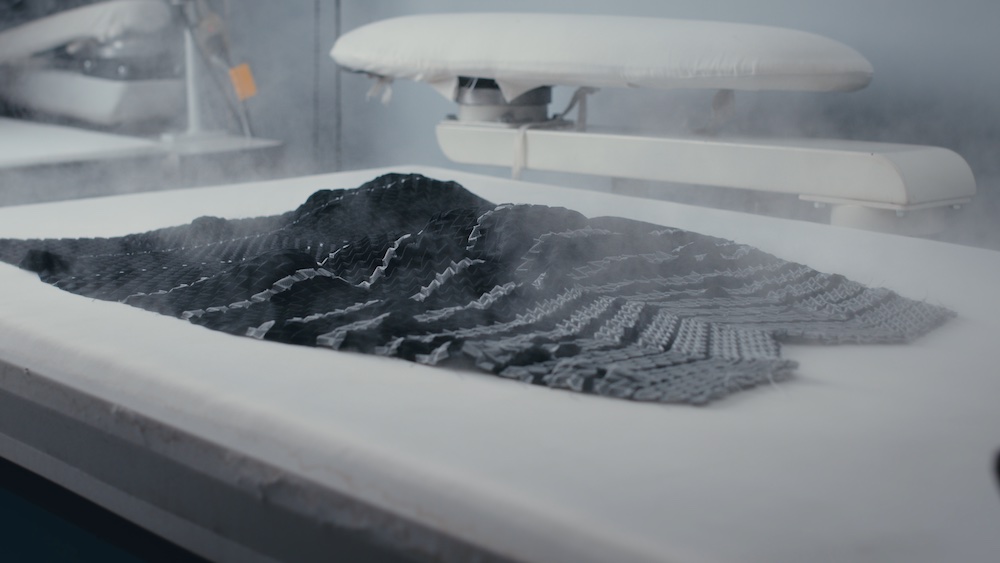
High-temperature steam is applied to a flat piece of fabric. The fabric then folds and expands on its own, eventually transforming into a three-dimensional shape that envelops the body. It's as if the fabric itself had memorized the shape it was meant to become. This isn't magic. It's a technique called steam stretching, a specialty of Issey Miyake's brand "A-POC ABLE ISSEY MIYAKE" (hereinafter, A-POC ABLE).
In 2023, the brand collaborated with Nature Architects, using this technology as its foundation, to announce the "TYPE-V Nature Architects project," in which "a single piece of fabric" transforms into a three-dimensional jacket or dress, which garnered worldwide attention (in 2025, they commercialized a blouson made using this technology).
Issey Miyake's ideal of "a single piece of fabric," which he has pursued since the 1970s, has evolved to the next level.

The leaf-like fabric shown below is transformed into a garment using steam stretching technology. Image courtesy of © ISSEY MIYAKE INC.
While working on cutting-edge clothing production, A-POC ABLE also uses the hand-printing technique, a legacy of Yuzen dyeing which originated in Kyoto in the 17th century, to create blousons featuring the works of contemporary artist Tatsuo Miyajima, which have been exhibited at the Kyoto City Kyocera Museum of Art. More recently, they garnered significant attention at a design event in Copenhagen with lighting fixtures made of fabric and wire that emit light. A-POC ABLE's activities span a wide range of fields, including technology, traditional craftsmanship, primary industries, and contemporary art.
It wasn't until the 20th century that Western clothing production, which became mass-produced after the Industrial Revolution, spread and took root in Japan. A-POC ABLE aims to show the world that this is neither the only answer nor the final form of clothing production. They discover materials, techniques, and the imagination of artists lying dormant throughout Japan, connecting previously unconnected points on the concept of "a single piece of cloth," and transforming them into products that can reach the world.
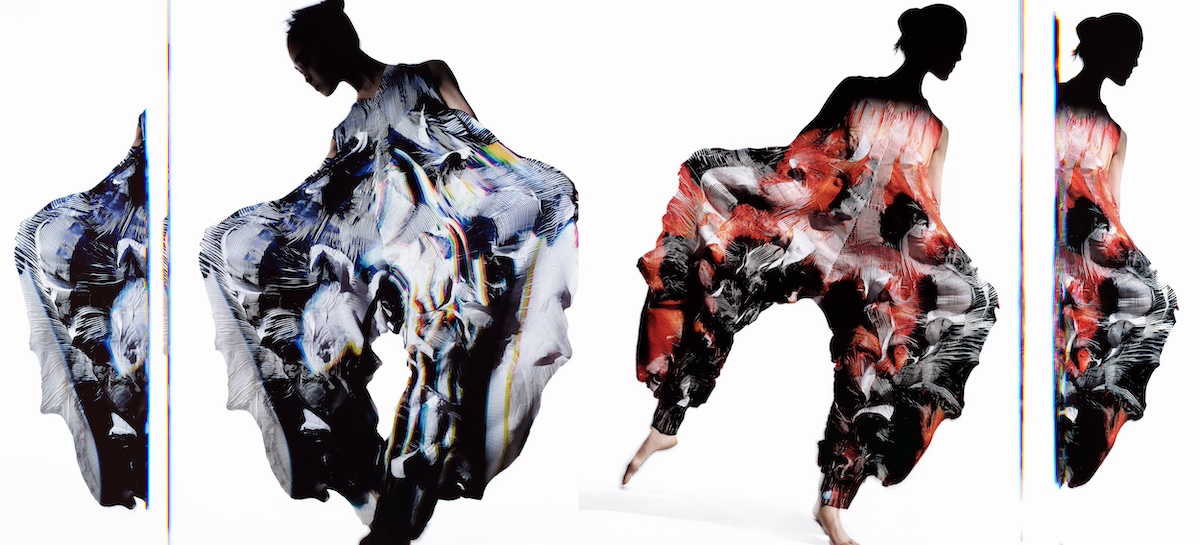
"TYPE-VIII Kenta Umemoto project" is a project undertaken with up-and-coming photographer Kenta Umemoto. The project reconstructs the visuals from his representative "FLŌRA" series, which skillfully utilizes light and shadow to pursue new photographic expressions, by heat-transferring them onto dresses and jumpsuits in bold compositions. Image provided by: ©︎ ISSEY MIYAKE INC.
By collaborating with A-POC ABLE on projects, Issey Miyake and its partners have worked together to spread their wings to the world. The Premium Japan Award recognizes both these unprecedented challenges and the brand's commitment to mutual growth with collaborating creators, and has decided to present this award to the brand that was born in 2021. We spoke with Yoshiyuki Miyamae, the designer who leads the brand, about their efforts to date.
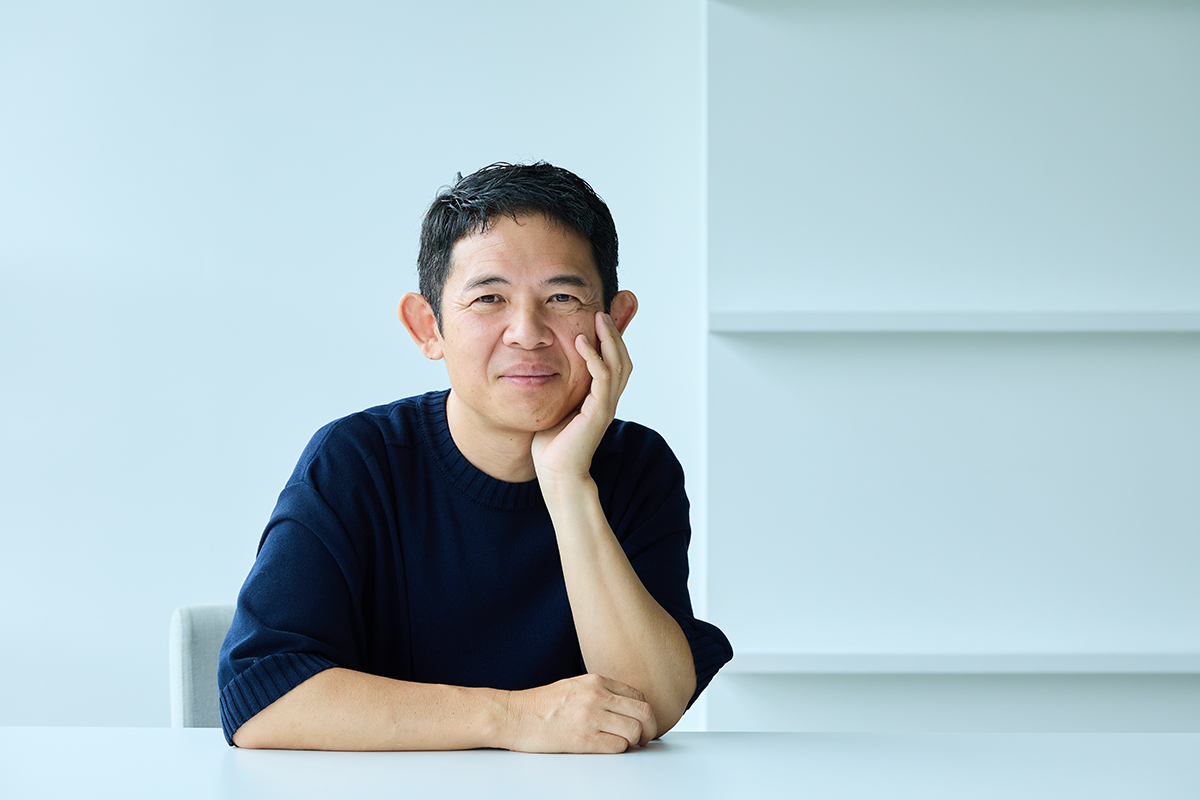
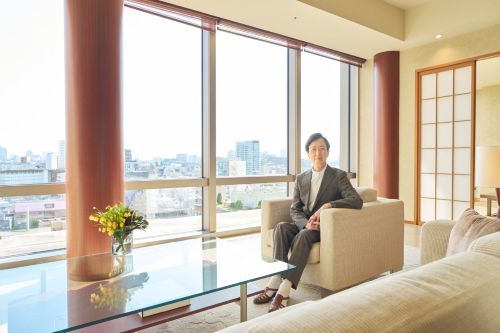
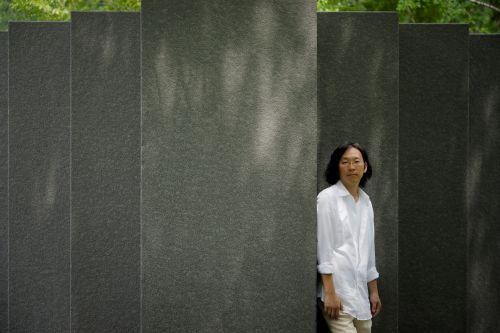
Yoshiyuki Miyamae is a designer who leads the A-POC ABLE ISSEY MIYAKE team and is also one of the design directors at Miyake Design Studio. Since 2011, he has been involved in the production of clothing for the Paris Collection as the fourth designer for "ISSEY MIYAKE". More recently, he has played a central role in the development of the "iPhone Pocket" in collaboration with Apple Inc.Eight faces and six armsThey are doing very well.
A-POC - Designing the garment-making process itself.
To understand A-POC ABLE, we must first start with A-POC.
A-POC stands for "A Piece Of Cloth," meaning "a single piece of fabric." Conventional clothing production begins with selecting fabric, cutting it into the shapes of garment parts designed by the designer, and then sewing them together. In contrast, A-POC starts with pre-programming the shape, pattern, and structure of garment parts—including details like where to use heat-shrinkable threads—into a computer, and then creating the fabric using computer control.
The finished fabric already has the clothing parts woven into it in a way that makes them easy to cut out, so all you have to do is cut them out and assemble them like a plastic model kit to make clothes.
In 1998, when Issey Miyake presented this collection with Dai Fujiwara, it became a major news story as a groundbreaking garment-making technique that changed not only the silhouette of the clothes but also the manufacturing process itself. Subsequently, it was acquired as part of the permanent collections of the Museum of Modern Art (MoMA) in New York and the Metropolitan Museum of Art.
The emergence of A-POC was a shocking event for Miyamae, who at the time was studying apparel design and was planning to work in the clothing industry.
"I was so shocked that I wondered what everything I had learned up until then had been for. But at the same time, I was incredibly excited."
1998 was the year the internet began to spread and Apple unveiled its first iMac. As computers started to become a part of everyday life, clothing design also became intertwined with technology, ushering in a new era. A-POC was at the heart of that, Miyamae recalls.
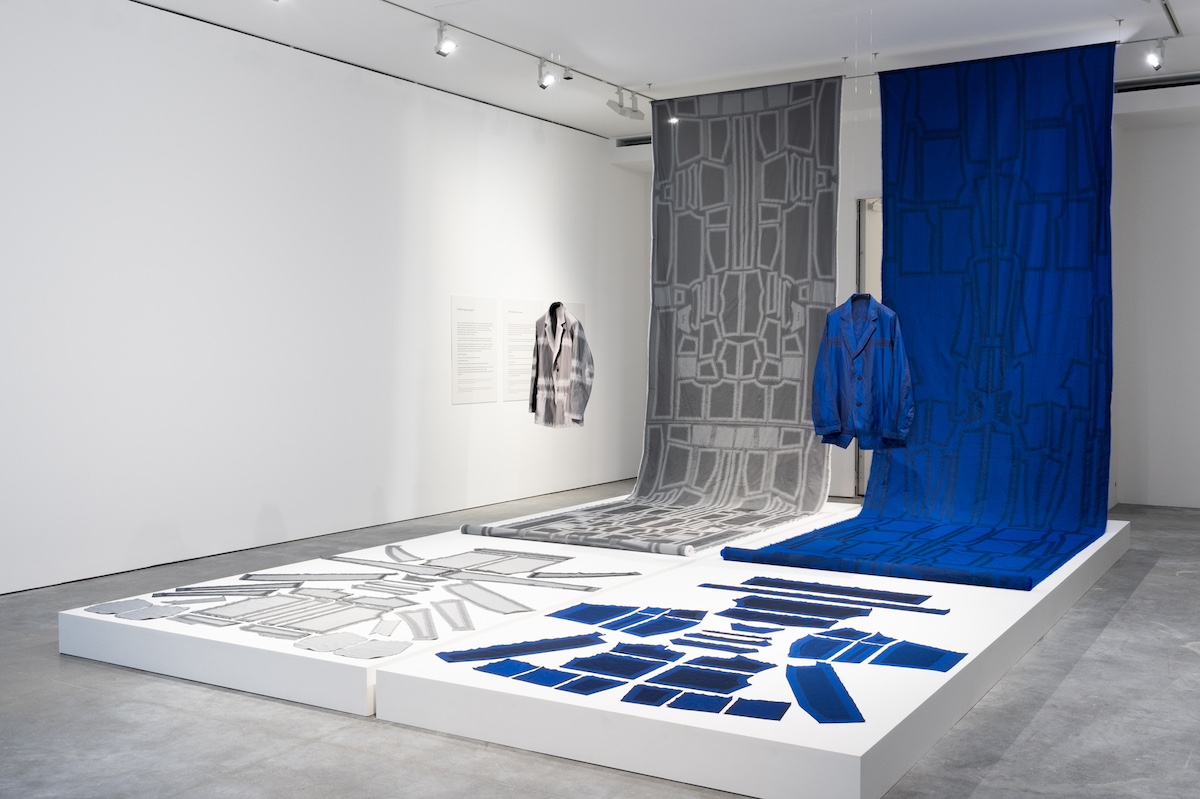
Conventional clothing is made by applying patterns to pre-made fabric and cutting out garment parts. In contrast, A-POC starts by creating fabric with the shapes of each garment part already embedded in it. As a result, there is less fabric waste (cutting loss) compared to conventional clothing production. In the "TYPE-IX Synflux project" shown in the photo, this cutting loss is minimized using the "Algorithmic Couture" digital technology of AI and algorithms from the design laboratory Synflux. Image provided by: ©︎ ISSEY MIYAKE INC.
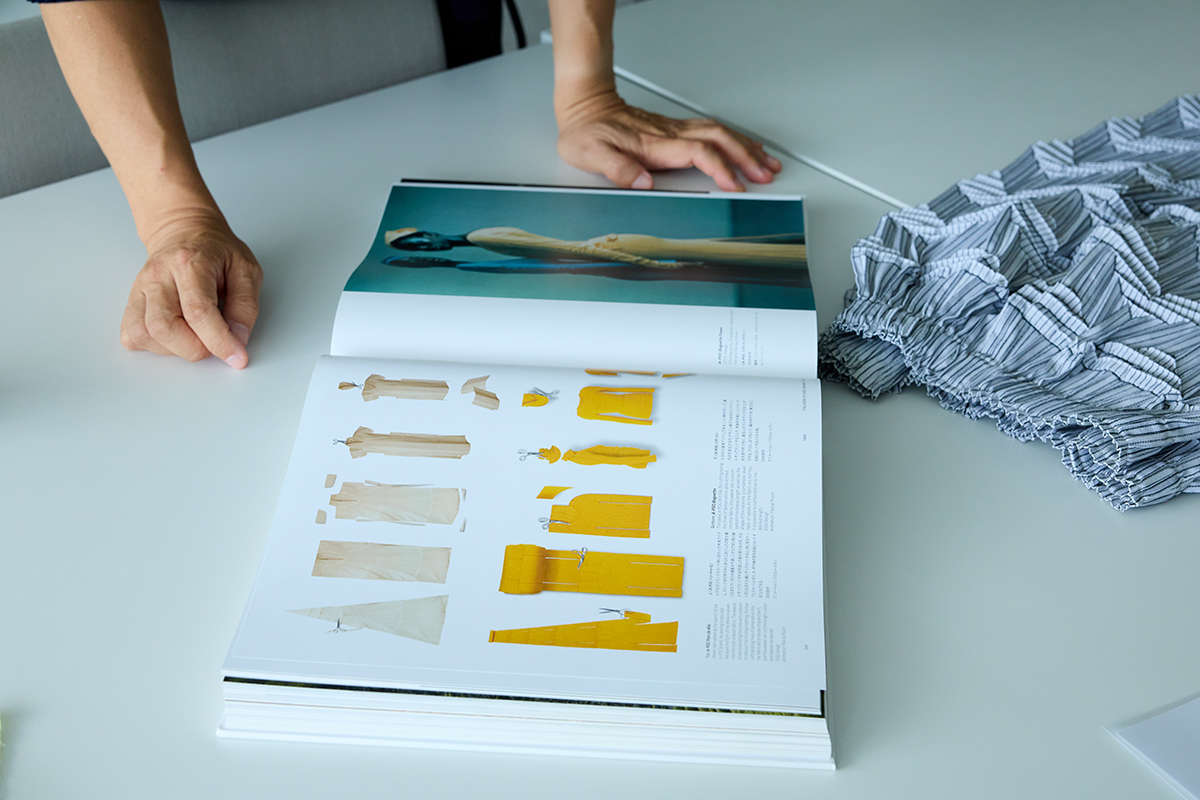
Not just with A-POC ABLE, but with all of Issey Miyake's brands, the perspective of starting with "a single piece of fabric" and developing it into various forms of items is very important in their clothing production.
Don't start with "prepared dough"
Three years later, in 2001, when Miyamae decided to join Issey Miyake, the first brand she was assigned to was A-POC.
The textile industry is built on a long chain of division of labor, and typical designers often begin their work by selecting finished fabrics. However, at A-POC, designers themselves get involved further up the production process. Why this yarn? Why this weaving method? Is this step really necessary? Is there another way? They break down the process and reassemble it, while directly communicating with factories and craftsmen. It was there that Ms. Miyamae thoroughly honed her knowledge of textiles.
At the same time, he has also witnessed the realities of Japanese manufacturing. While the textile industry has shrunk, highly skilled craftsmen and factories remain in various regions, and there is a close-knit environment that allows for face-to-face prototyping and continuous improvement. Miyamae says he has come to see this not as a weakness of Japan, but as a strength that has not yet been fully utilized.
From Spring/Summer 2012 to Autumn/Winter 2019, Miyamae led the Paris Collection brand as the designer for ISSEY MIYAKE. Every six months, he would develop a major theme, create clothing, and present it to the world. It was an incredibly intense experience for a designer. On the other hand, the longer he continued, the more a certain frustration grew within him. Could something truly new really be born in six months? Of course, it's possible to edit existing materials and techniques to present a new image.
However, it will take much longer to re-examine the production process and the producers in the region, and to cultivate researchers in specialized fields and unknown technologies. I had many such discussions with Issey Miyake. The A-POC technology has been frequently used in Issey Miyake's clothing production, but Miyake believes that this technology is not yet complete and should be developed once again, especially now as times are changing.
Thus, in 2020, the project "TADANORI YOKOO ISSEY MIYAKE" with Tadanori Yokoo was launched. This project expresses Yokoo's complex world of paintings not by printing them onto fabric, but by weaving together threads of a limited range of colors. Because it is expressed through weaving rather than printing, when you look at the reverse side, a mysterious texture appears, almost like a negative film of the painting.
Both Tadanori Yokoo and Issey Miyake were very pleased when they saw the finished garments, and Miyamae felt that this experience gave her the confidence to further develop A-POC. Thus, in 2021, Miyamae formed a team and launched a new brand called A-POC ABLE ISSEY MIYAKE.
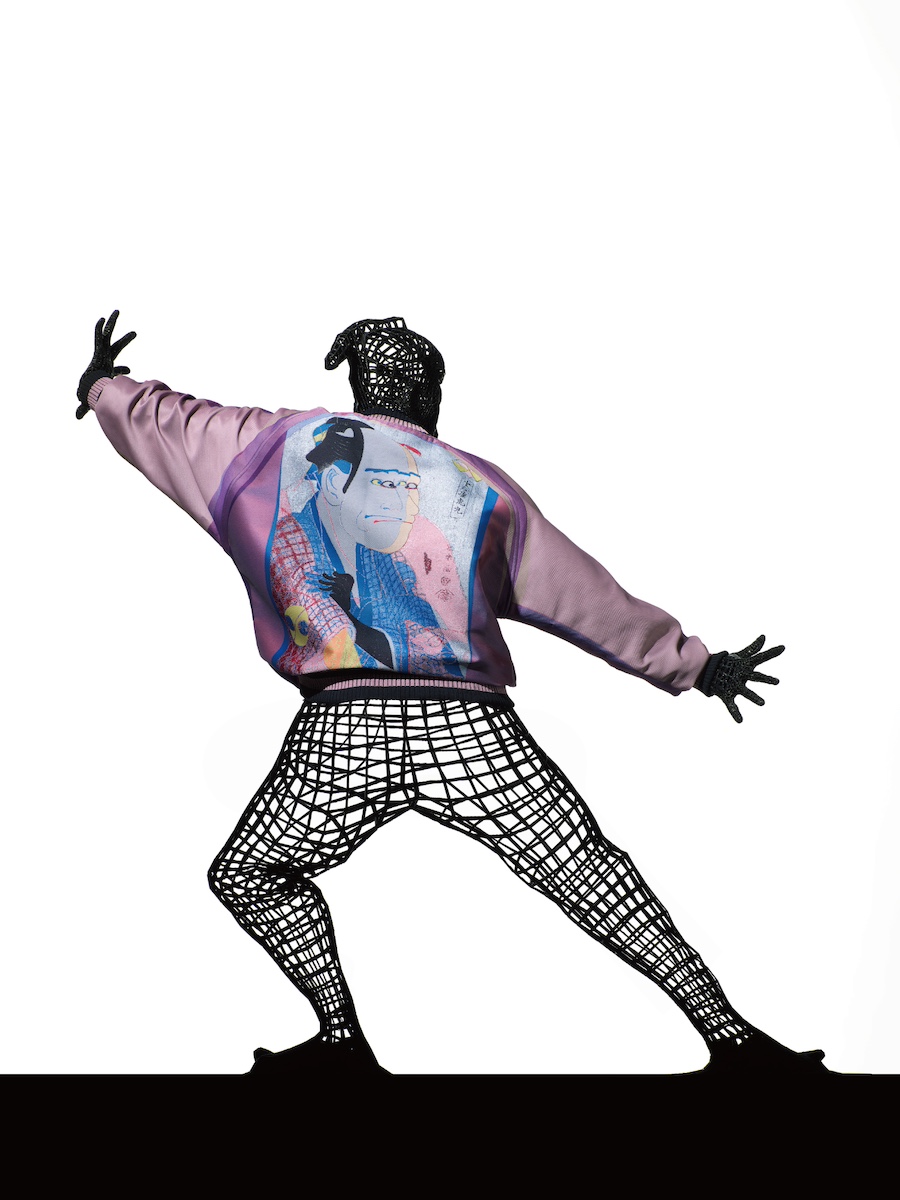
The A-POC ABLE brand was born following the success of the "TADANORI YOKOO ISSEY MIYAKE" project, which was presented in collaboration with Tadanori Yokoo. Since then, the collaboration with Yokoo has continued on an ongoing basis. The second collection, released in 2022, features humorous and diverse blousons based on Sharaku Toshusai's actor portraits, emphasizing intentional misprints. The black mannequins are made using 3D printing technology developed in collaboration with MagnaRecta and branded as "130" (One Thirty), allowing them to be repaired and reused even after being damaged. Image provided by: © ISSEY MIYAKE INC.
"ABLE" is a word that signifies possibility. In fact, the brand's activities extend beyond the realm of fashion, encompassing artists, material manufacturers, designers, researchers, musicians, and architects.
"Lately, it's hard to explain what I'm doing in a single sentence," Miyamae laughs. But his core principles remain unchanged. He always starts by thinking from "a single piece of cloth," and by expanding the relationship between creator and recipient. It is because of these simple origins that his work can expand indefinitely.
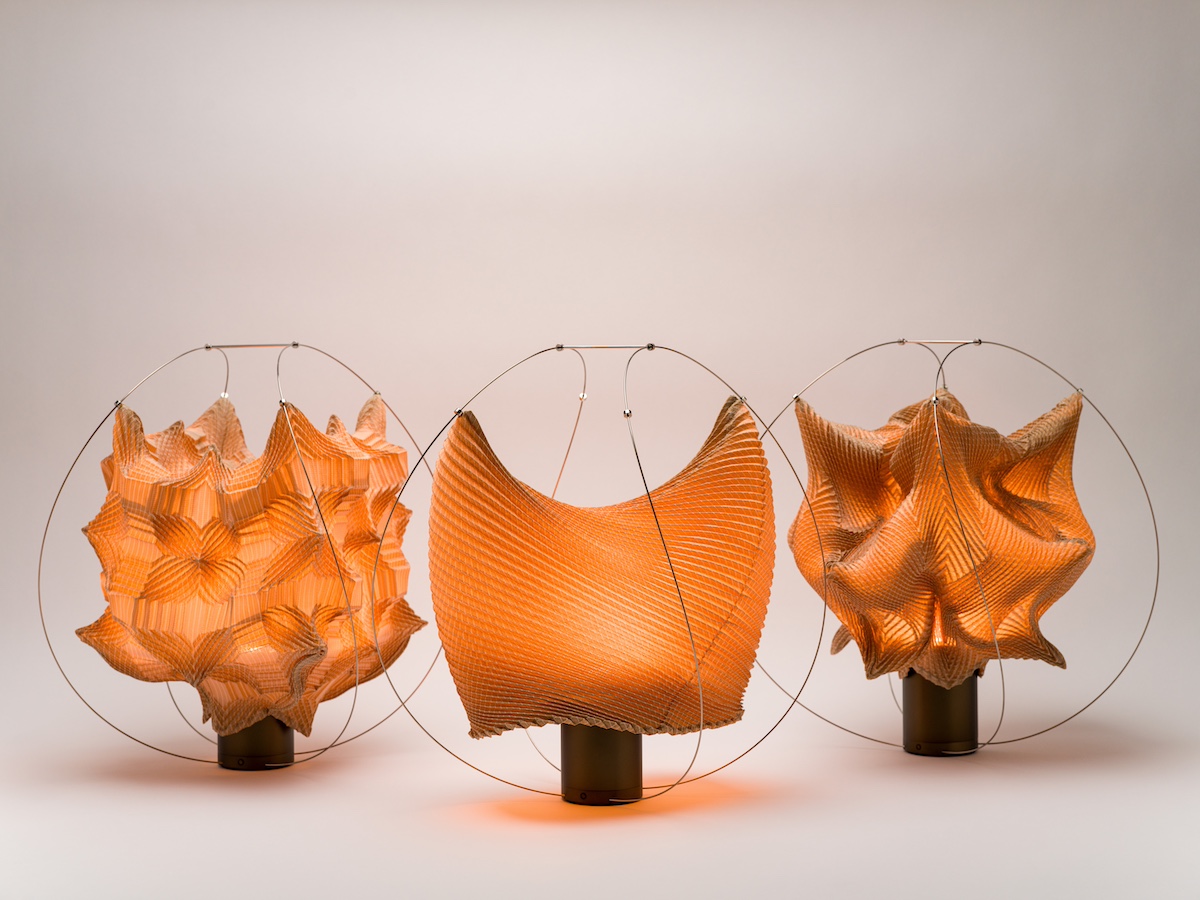
In the TYPE-XIII Atelier Oï project, we collaborated with the Swiss-based design studio atelier oï to develop lighting fixtures made from steam-stretch material, transcending the boundaries of clothing. Following exhibitions in Milan and Tokyo, the project was exhibited in Copenhagen to great acclaim (Ambientec, a leading Japanese portable lighting manufacturer, provided the lighting technology). Image provided by: © ISSEY MIYAKE INC.
Art demands technology, and technology stimulates art.
A-POC ABLE has collaborated with various artists and creators over the past five years.
Miyamae believes that art should not be confined to museum walls, but should also be present in more everyday spaces. Clothing, for example, is something we touch every day, in the place closest to our bodies, and wearing it changes our mood and awareness. Perhaps we can use the power of art to slightly expand our everyday senses.
Following his collaboration with Tadanori Yokoo, he has collaborated with a variety of other creators, including contemporary artist Tatsuo Miyajima, designer Yuma Kano, graphic designer Kazuki Kobayashi, photographer Sohei Nishino, photographer Kenta Umemoto, graphic designer/creative director Masaki Hanahara, and contemporary artist Hiroto Samukawa / Eugene Studio, who rose to fame with a solo exhibition at the Museum of Contemporary Art Tokyo.
One of their latest projects is the "TYPE-XII Tomokazu Matsuyama project" with contemporary artist Tomokazu Matsuyama, which was extensively showcased in New York in the summer of 2026 and received critical acclaim.
In this way, A-POC ABLE collaborates with both cutting-edge technology and artists. Miyamae describes the relationship between art and technology as being like a "pendulum." When working with artists striving for high levels of expression, existing technologies become insufficient. The demand for more drives research forward. Conversely, encountering new technologies reveals expressions that were previously unimaginable. It is neither art alone nor technology alone. A-POC ABLE's creativity lies within this back-and-forth movement.
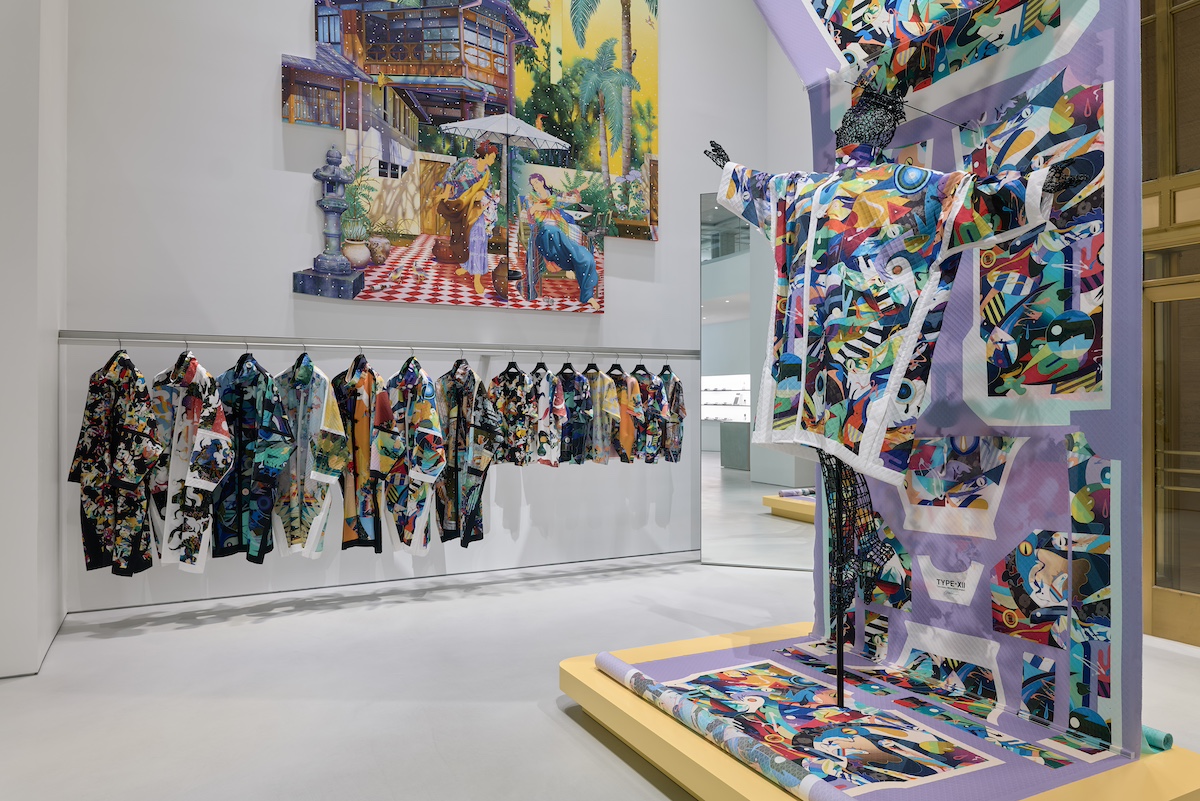
This project was a collaboration with Tomokazu Matsuyama, a contemporary artist based in New York who is active on the world stage. A base fabric, vividly printed in a Kyoto workshop, was then printed with a triangular pattern using a special technique. It features a unique texture that changes three-dimensionally in response to body movements. The piece was unveiled at ISSEY MIYAKE / NEW YORK, which opened this year in New York, and received great acclaim. Image provided by: ©︎ ISSEY MIYAKE INC.
Algorithms and craftsmanship meet in a single piece of fabric.
The most symbolic example of their collaboration with technology companies is the project with Nature Architects, which I mentioned at the beginning. Nature Architects is developing technology to create things using deformable materials (metamaterials), building upon the knowledge gained from origami engineering research at the University of Tokyo.
You input the shape of what you want to create using metamaterials, and it works backward to create a design. Issey Miyake had its own unique metamaterial technology called steam stretching, which involves weaving fabric using special threads and then deforming it with steam. However, converting various three-dimensional shapes into folding designs required extensive calculations and simulations based on origami engineering, and there were limits to what could be achieved by designing it solely through human thought.
Encountering origami design techniques by Nature Architects made it possible to transform "a single piece of cloth" into complex three-dimensional shapes like a jacket. This technique was presented at Milan Design Week and subsequently featured in design magazines and computer-related academic conferences worldwide, spreading the name of Nature Architects globally.
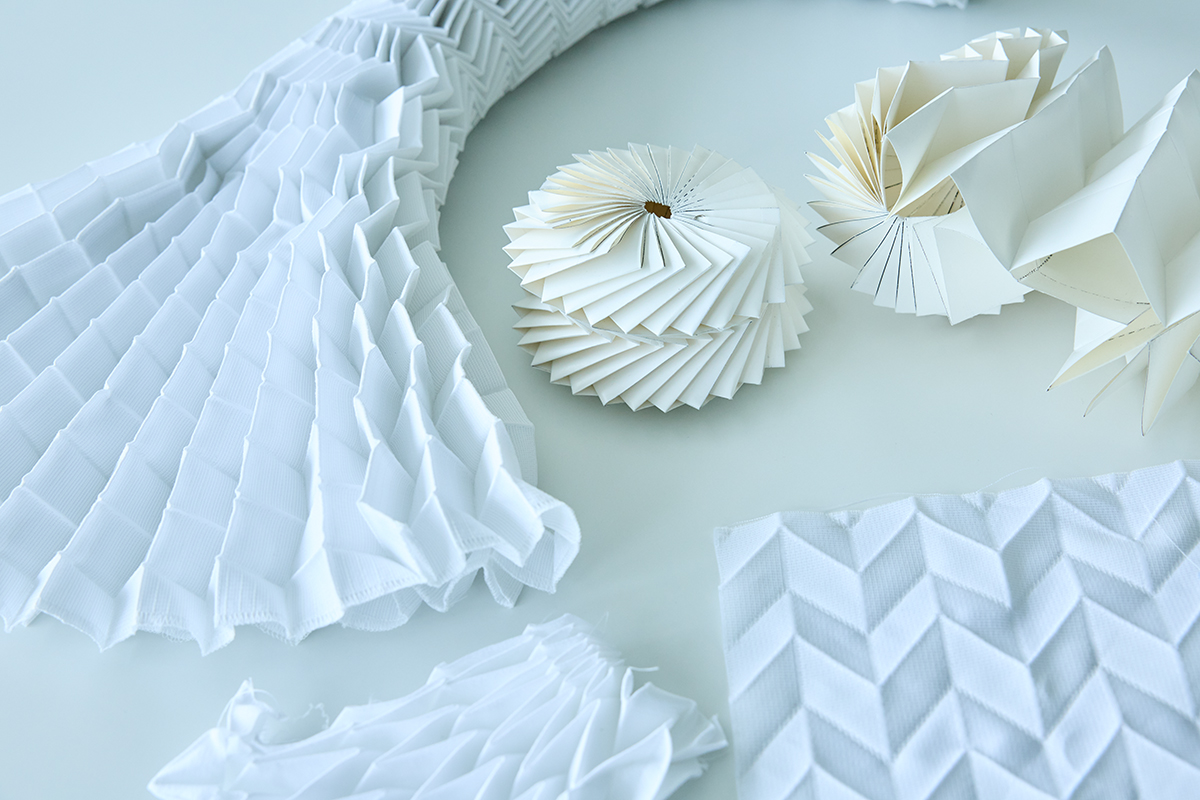
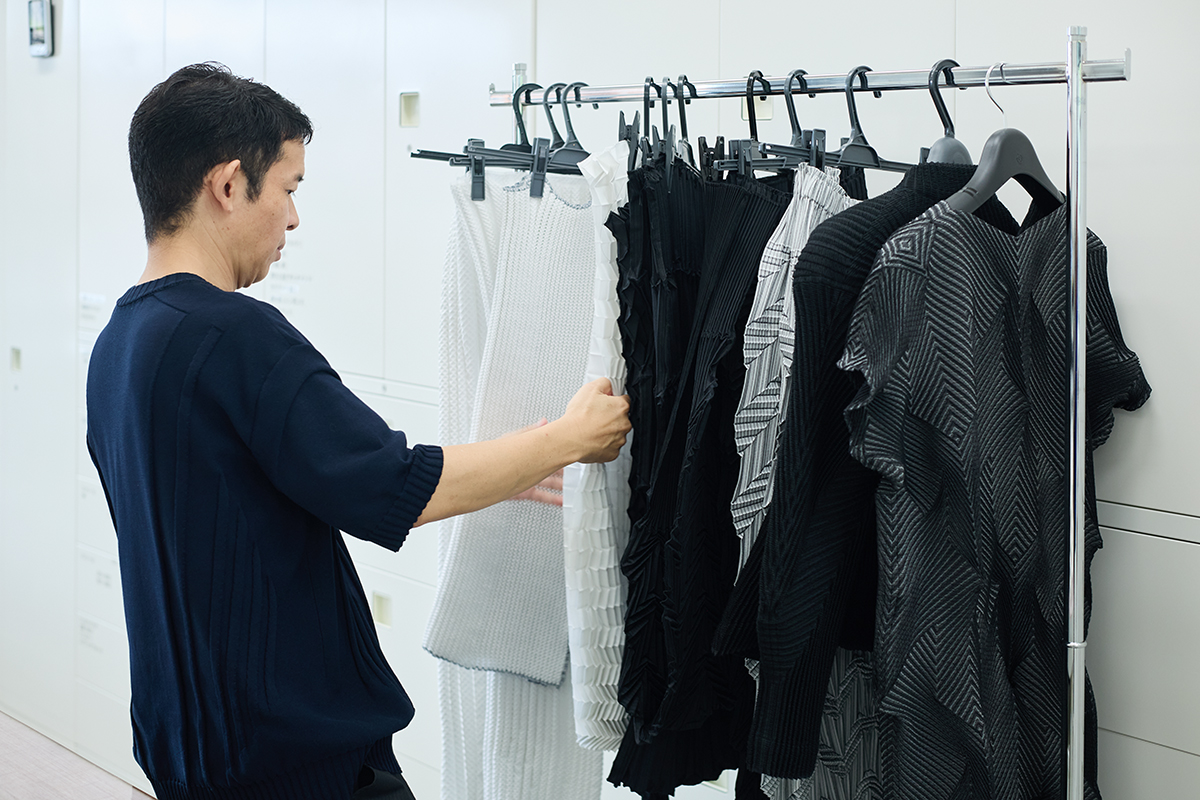
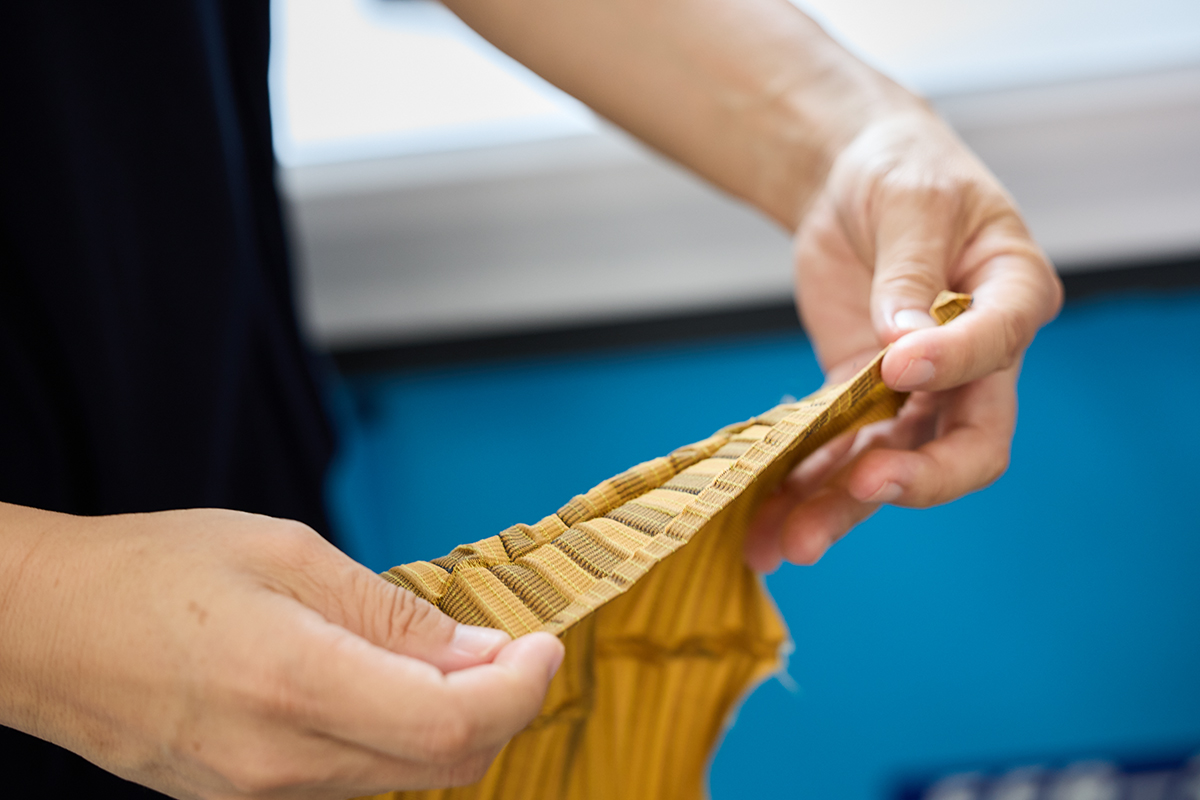
The A-POC ABLE team isn't just pursuing the appeal of material selection and technology; they're constantly working with their hands, weaving fabrics and exploring new and beautiful forms.
Other projects include creating accessories using a deformable film material developed by a research group at the University of Tokyo Graduate School and Fujifilm, and a project with Synflux, a design laboratory that has an algorithm to reduce textile waste.
Mr. Miyamae likens these cutting-edge technology projects to Formula One racing. It's like pushing performance to its limits and creating a new engine through research. However, that alone isn't enough to sustain a business. The refined technology needs to be translated back into everyday products, like passenger cars that drive comfortably around town. Research and product development. Cutting-edge experimentation and stable production. Turning both wheels is what keeps the factory machinery running and connects Japanese manufacturing to the next generation.
Rice husks become a musician's "special black"
A-POC ABLE is exploring and challenging more than just clothing manufacturing techniques.
Many of their projects involve materials deeply connected to Japan's primary industries. One project that Miyamae is particularly enthusiastic about is the "TYPE-VII Kouzoshi project," a collaboration with Sansai, a washi (Japanese paper) manufacturer in Tosa City, Kochi Prefecture.
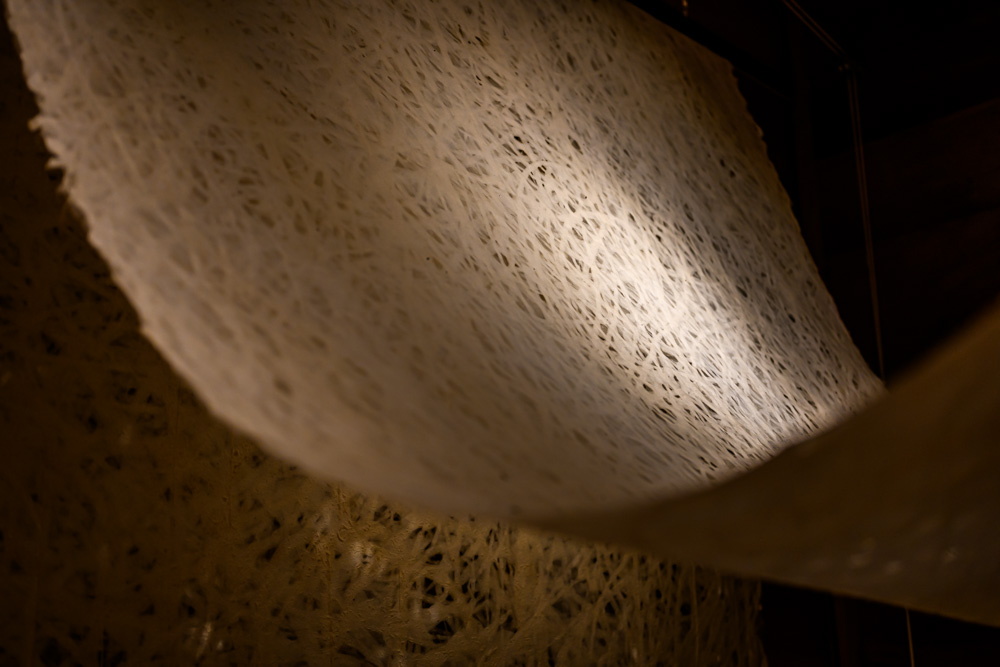
Kozo is a type of paper mulberry grown in the Tosa region. The washi paper made from this material has long, strong fibers and is a rare type of paper used in the restoration of world-renowned cultural properties. To prevent this precious Japanese material from disappearing, Sansai has created yarn from the kozo to be used in clothing, something that is touched every day. A-POC ABLE then turned this yarn into fabric and created the products.
Making thread from mulberry fibers is by no means easy, but Sansai created a special machine and worked closely with the A-POC ABLE team, discussing how to bring out the characteristic texture, softness, and firmness of washi paper. This project also clearly demonstrates the A-POC ABLE team's attitude of not viewing the production area as merely a "material provider," but rather working together with the artisans to consider how to best showcase the value of the product.
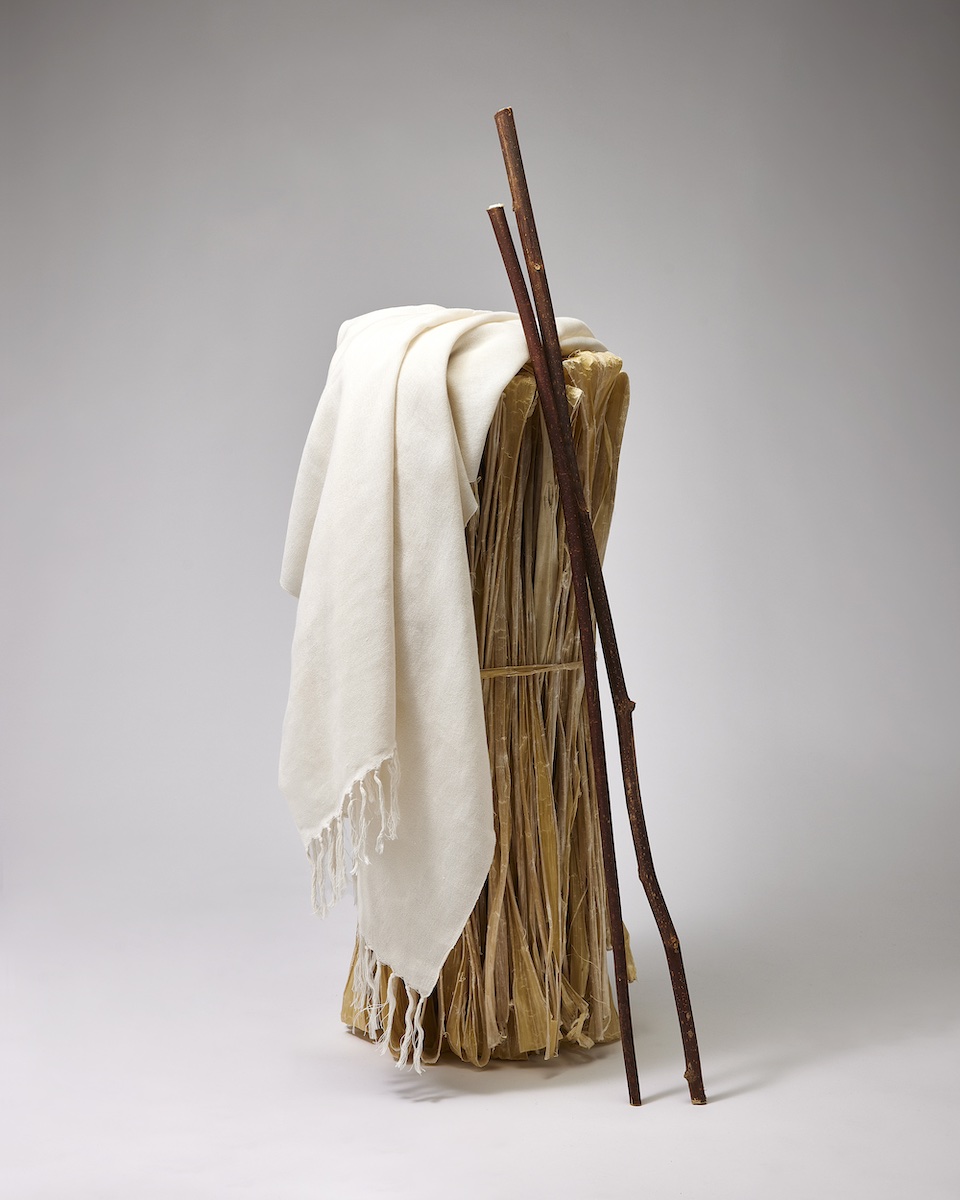
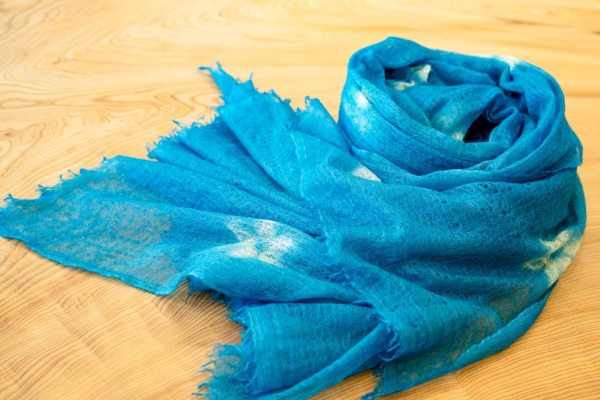
This stole, made from kozo silk, was created in collaboration with Sansai Co., Ltd., a company within the Sanwa Paper Group located in Tosa City, Kochi Prefecture. The two parties collaborated on the fabric's creation, discussing how much of the paper's characteristic crispness to retain. Image provided by: ©︎ ISSEY MIYAKE INC.
Throughout the long history of division of labor, even highly skilled craftsmen sometimes don't know what their work ultimately amounted to.
The black-box nature of the process can sometimes become a barrier that hinders new ideas. That's why the A-POC ABLE team engages in extensive discussions with their collaborators.
Why is this fabric needed? What kind of clothes do you want to make? After completion, you'll be able to see the finished product on display.
How did their skills ultimately envelop people's bodies, and how were they evaluated? This then elicits suggestions from the creators themselves, such as, "Let's try this next time." Innovation isn't just about introducing new machines. It's also about reconnecting fragmented people and processes, and A-POC ABLE is one of the brands in the fashion industry that takes this most seriously.
Another interesting initiative related to materials is a project using Triporous™, developed by the Sony Group.
This is a porous carbon material made from rice husks, and A-POC ABLE has been incorporating it into yarn to create clothing with a unique, deep black color that is resistant to fading. Eventually, this project came into focus in Miyamae's mind as it overlapped with another challenge posed by Issey Miyake.
The question was, "Why do classical musicians, who move their bodies so freely, perform in such restrictive formal attire? Isn't it possible to create clothing that allows for more freedom of movement, is beautiful, and is more appropriate for the musical setting?" This led to a collaboration with conductor Michiyoshi Inoue, and the "TYPE-I MM project" was born.
The project involved creating garments that comfortably envelop the bodies of conductors and musicians while maintaining the refined elegance of formal wear, using a black fabric infused with tripolous fibers and combined with steam stretching. The process of the project was documented as a documentary video that intertwined performance and craftsmanship.

The "TYPE-I MM project" orchestral suit, featuring a striking deep black triple-layered fabric, aims to create comfortable and easy-to-move-in clothing by studying the movements of not only conductor Michiyoshi Inoue but also all orchestra members during performances. A documentary video showcasing this process has been released. Image provided by: © ISSEY MIYAKE INC.
Design without a predetermined endpoint: something only a small team can do.
In this way, A-POC ABLE re-examines every step of the garment-making process, from material selection and design to manufacturing, finishing, and even the purpose of the garment, constantly taking on new challenges.
Recently, they have begun to expand their design process beyond clothing production. Their "TYPE-XIII Atelier Oï project," a collaboration with Swiss design studio atelier oï, features lighting fixtures made from "a single piece of fabric" and "a single wire," with technical support from Ambientec, a leading Japanese portable lighting manufacturer. The steam-stretched fabric shades are interchangeable, allowing users to change the light's appearance as if arranging flowers. The technology, which began in clothing, is now expanding into living spaces.
Their efforts extend beyond products. They design their stores, the fixtures used there, and even the mannequins in an environmentally conscious way. Particularly innovative are the mannequins they created with a company called MagnaRecta, which are made using a 3D printer that makes them easy to modify, repair, and recycle. This special manufacturing process using a 3D printer allows for quick repairs if damaged and makes them easy to recycle.
These projects, including those beyond clothing production, and the collaborations with each company, are carefully presented as "Dialogues" in three languages—English, Japanese, and Chinese—on the A-POC ABLE brand website.
Listening to Mr. Miyamae, you realize he's not the type to step forward and project a strong, assertive artistic personality. Instead, his eyes light up when he talks about techniques he didn't know about, or about someone else's research.

Yoshiyuki Miyamae and the A-POC ABLE team believe that knowing the behind-the-scenes process of manufacturing is important for people to develop an attachment to objects, so they have recently been holding steam stretch workshops in conjunction with exhibitions and other events. In these workshops, participants apply steam to their favorite steam stretch fabric to reshape it, and then wrap it around a doll. They have held workshops in Milan, Paris, Copenhagen, and other places so far, and they seem to be popular with people of all ages.
"It's fun to learn about things you don't know." This simple curiosity seems to be the biggest engine driving their activities. Sometimes, researchers who initially had no interest in fashion start to enjoy wearing clothes after meeting them. Conversely, A-POC ABLE learns about the world from their areas of expertise.
Collaboration seems to be a process where mutual curiosity becomes contagious. Currently, A-POC ABLE operates as a small venture-like team within a larger company. They make quick decisions and can decide whether to go right or left on the spot. Miyamae values this agility.
Even in design meetings, we don't set a goal from the start, like "Let's make a jacket" or "Let's make a bag." We fold paper. We fold square objects. We reverse shapes. We change materials. From there, we expand the possibilities, thinking, "This could become clothing," "If we turn it upside down, it could become a bag," or "It could be used in architecture in the future."

Yoshiyuki Miyamae is a very curious person. When he talks about new technologies, art, and other topics, his eyes light up and he speaks with great enthusiasm.
Showcasing Japanese craftsmanship not as something of the past, but as something of the future.
When asked about the reaction overseas, Miyamae first spoke of the immense presence of Issey Miyake. His words conveyed a deep respect and awareness for being able to work on such a foundation.
They also hold workshops at overseas exhibitions. Participants, from children to the elderly, are drawn not only to seeing the finished products but also to touching the fabric and experiencing its transformation. They believe that in this digital age, the tangible experience of seeing a shape change before one's eyes is what truly moves people.
Miyamae says he has noticed a growing interest in Japanese manufacturing overseas. However, he believes it's meaningless to simply praise Japan inwardly with phrases like "Japan is amazing." What's important, he says, is to discover unknown technologies and people, translate them into modern values, take the actual products out into the world, and engage in direct dialogue. Apparently, A-POC ABLE has recently been receiving inquiries from companies all over the world asking, "Is it possible to do something like this?" Miyamae laughs, saying it's almost like a "manufacturing advice center."
Those words perfectly describe the brand's current position. A-POC ABLE is not just a showcase of excellent Japanese products. It's a platform that can't be ignored, lowering the barriers between old and new technologies, craftsmanship and algorithms, art and industry, and transforming them into projects and products based on the concept of "a single piece of cloth" to communicate with the world.
The reason we selected them as recipients of the Premium Japan Award this time is not just because they are a fashion brand, but because we recognize their potential as a platform for creating a new manufacturing culture originating from Japan.
Yoshiyuki Miyamae
Born in Tokyo in 1976. In 2001, he joined Miyake Design Studio and participated in the A-POC planning team led by Issey Miyake. He later joined the planning team at ISSEY MIYAKE and served as a designer for ISSEY MIYAKE from 2011 to 2019. At the brand A-POC ABLE ISSEY MIYAKE, which launched in 2021, he leads the engineering team and works on further research and development of A-POC.
Photos by Hidehiro Yamada
JCCO
PREMIUM JAPAN AWARD
PREMIUM JAPAN AWARD 2026




PREMIUM JAPAN AWARD