

Text by Chiaki Nakajima (PREMIUM JAPAN Editorial Department)
The inaugural PREMIUM JAPAN AWARD 2026 awards ceremony was held on September 29th at the Kanze Noh Theatre in Tokyo. The grand prize was awarded to the Japan Culinary Academy's "Complete Guide to Japanese Cuisine," and the other award recipients were a diverse group of individuals who symbolize contemporary Japanese culture. Although the award recipients work in different fields, a common thread emerges when examining their endeavors. That is, they are not simply preserving Japanese culture, but rather updating it with modern sensibilities and techniques, and connecting it to the next generation and the world. Looking back at the results of the first awards ceremony, we will consider what the PREMIUM JAPAN AWARD aims for and its future prospects.
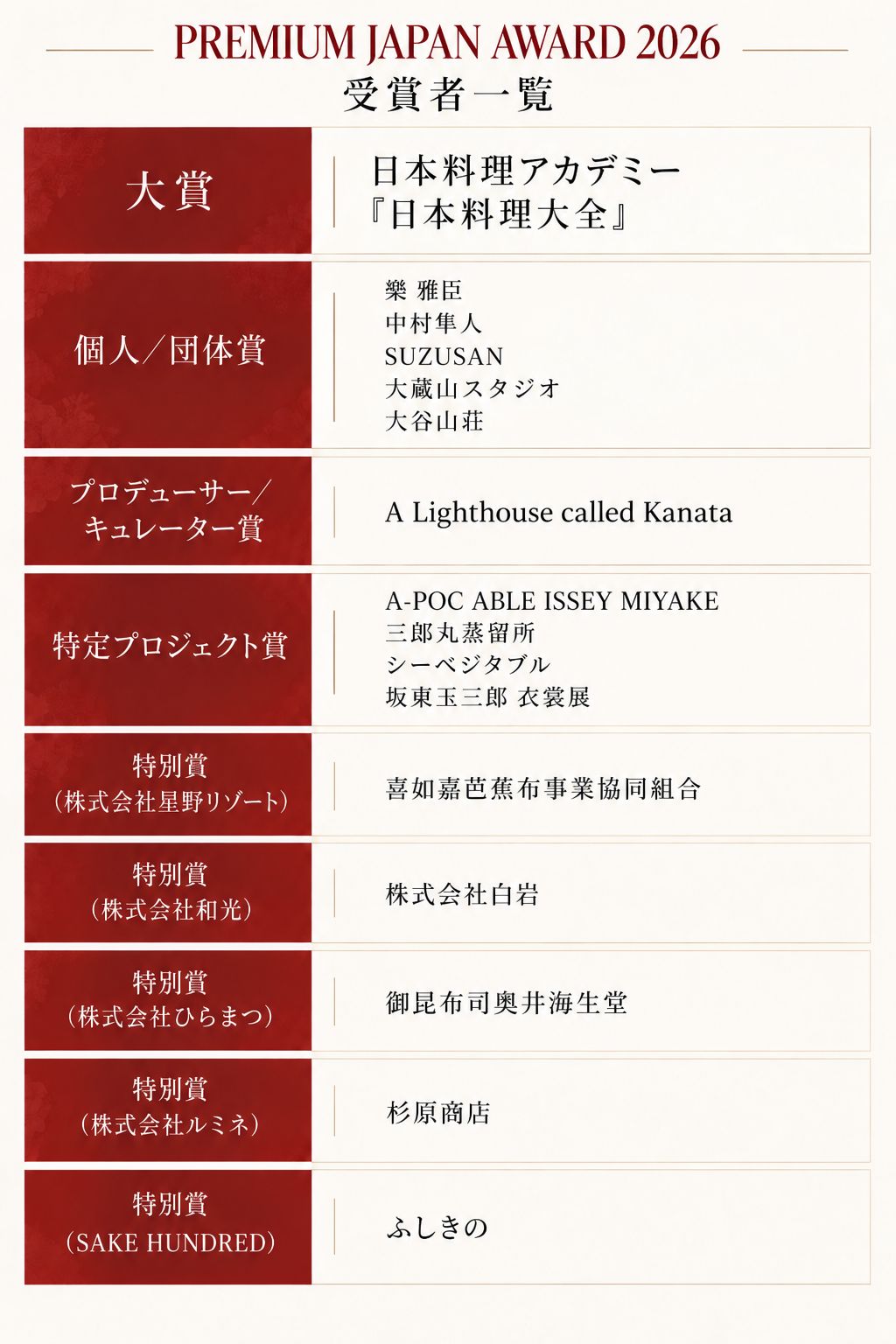
PREMIUM JAPAN AWARD 2026 Winners List
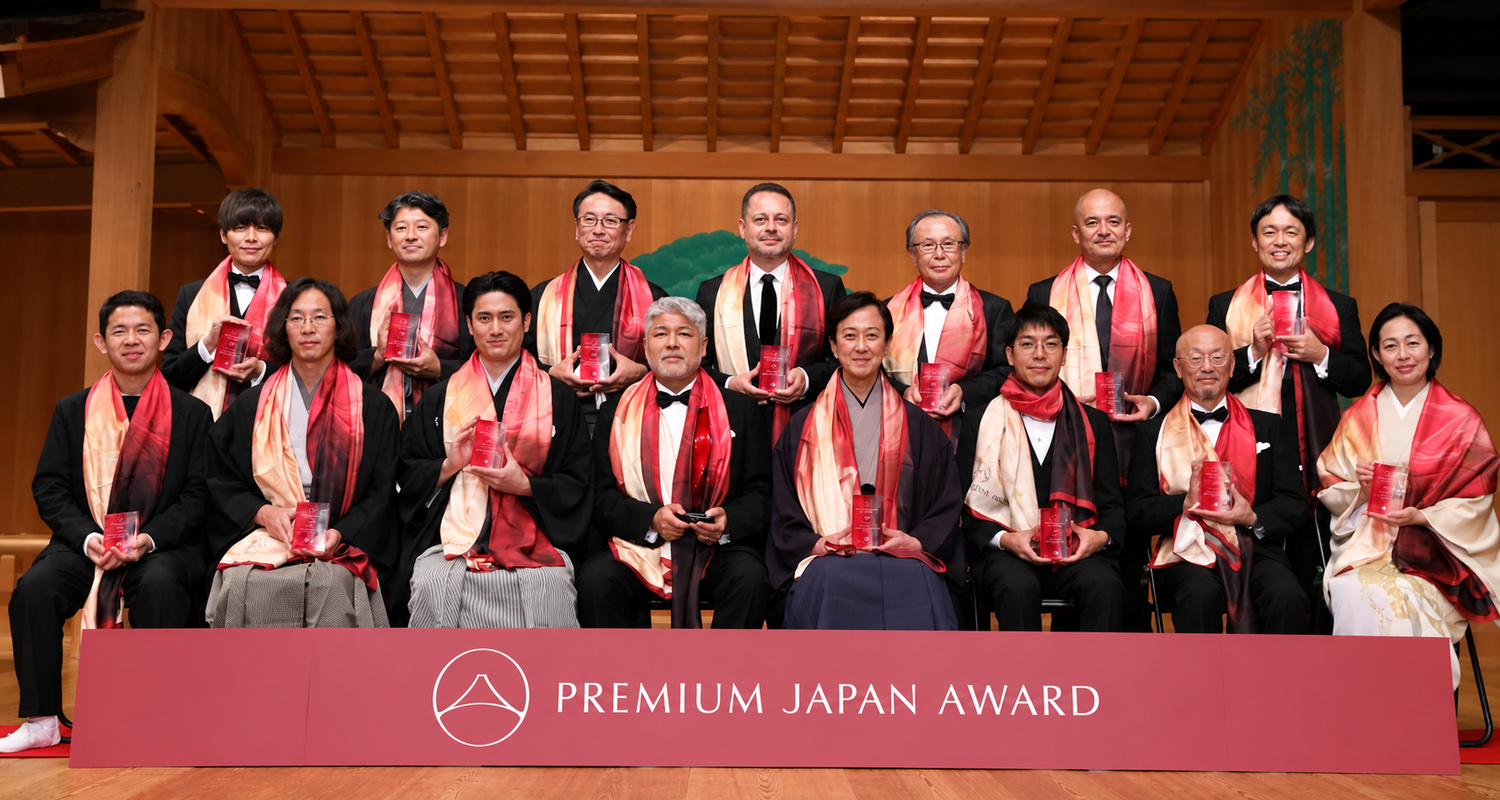
On September 29, 2026, people dressed in formal attire such as black ties and formal kimonos gathered at the Kanze Noh Theatre in Ginza SIX, adding a touch of glamour to the usual solemn atmosphere. They had gathered to participate in the PREMIUM JAPAN AWARD held at the Kanze Noh Theatre that day, to witness a story that would usher in a new era.
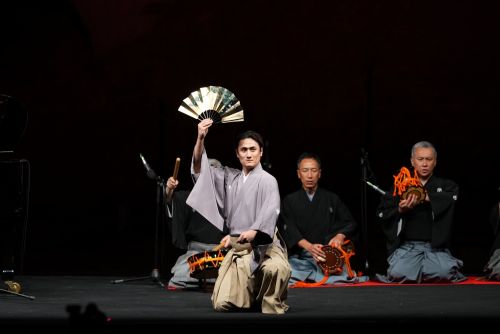
The opening ceremony began with "Sanbaso" performed by Kikunojo Onoe, who also serves as a director of the Japan Cultural Promotion Organization, and Ippei Shigeyama. This particular performance of Sanbaso was the Itsuseikai version, in which the two have been working together since 2009. Their celebratory dance added a touch of elegance to the awards ceremony.
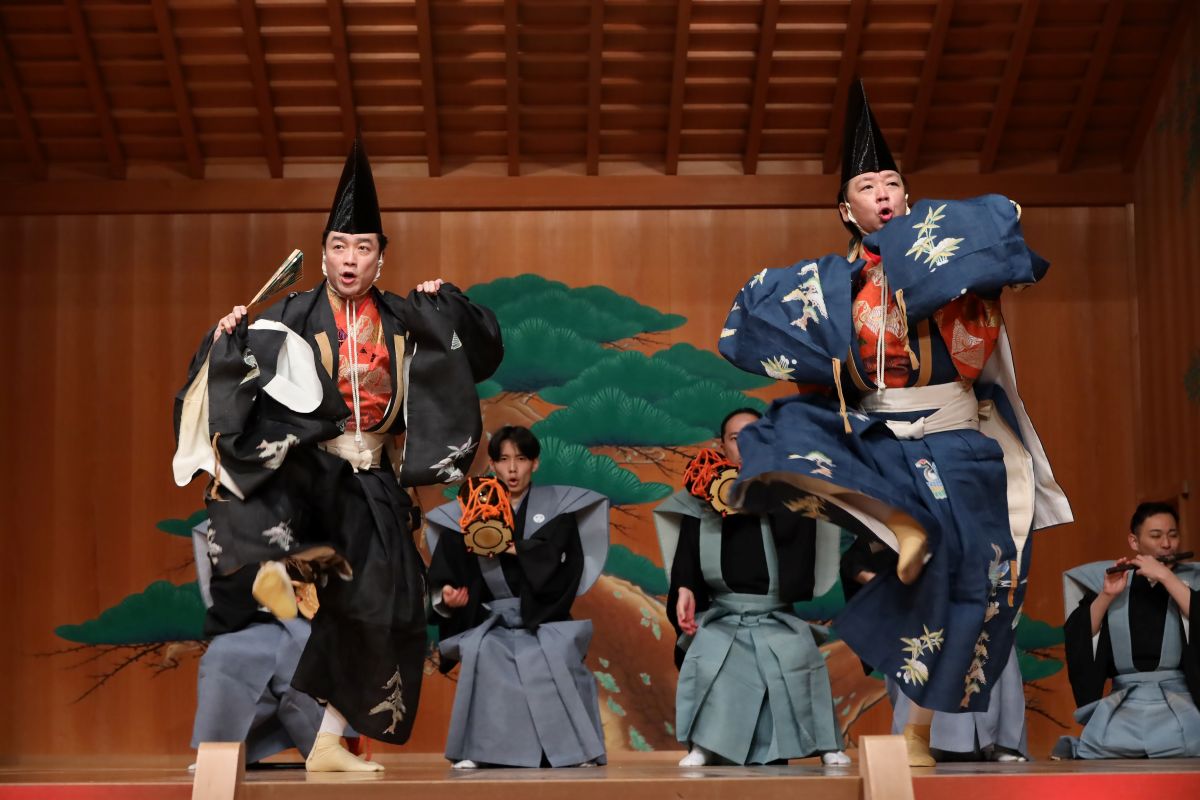
The opening performance featured "Sanbaso" by Kikunojo Onoe and Ippei Shigeyama.
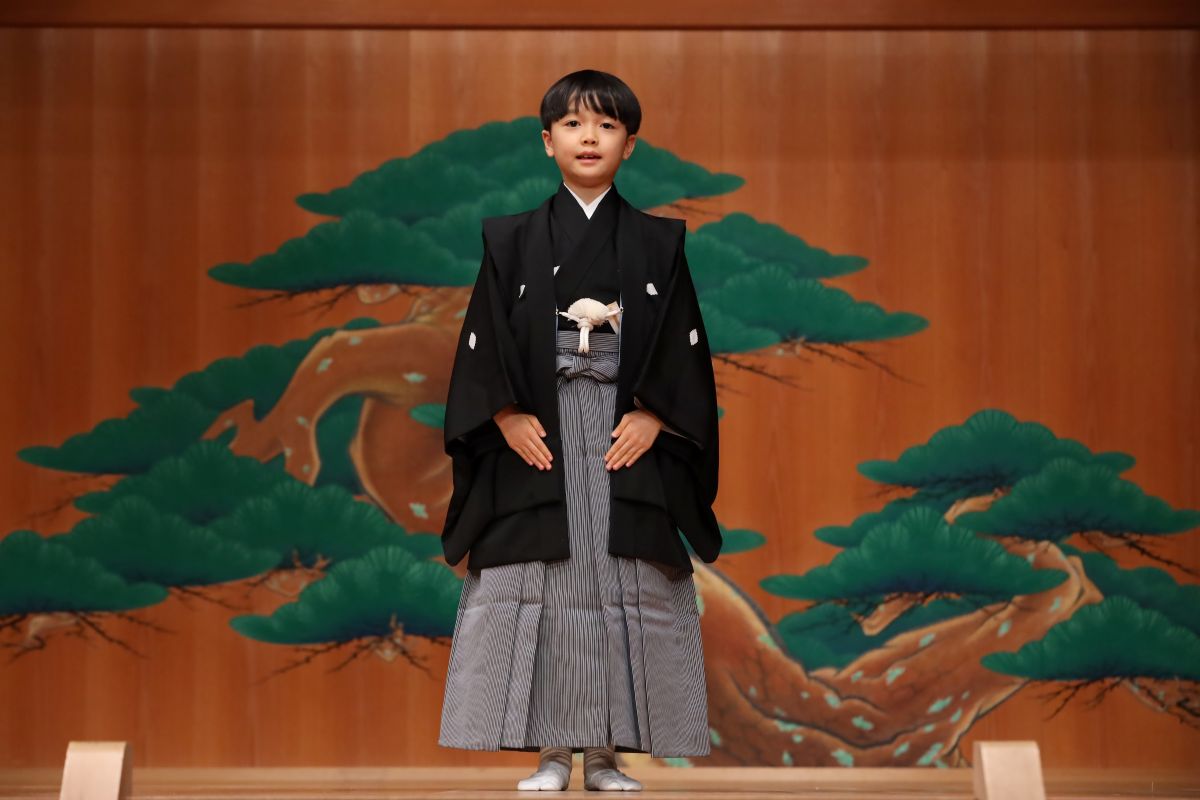
The opening declaration was given by Kotoya Onoe, the eldest son of Kikunojo Onoe. He fulfilled his important responsibility admirably.
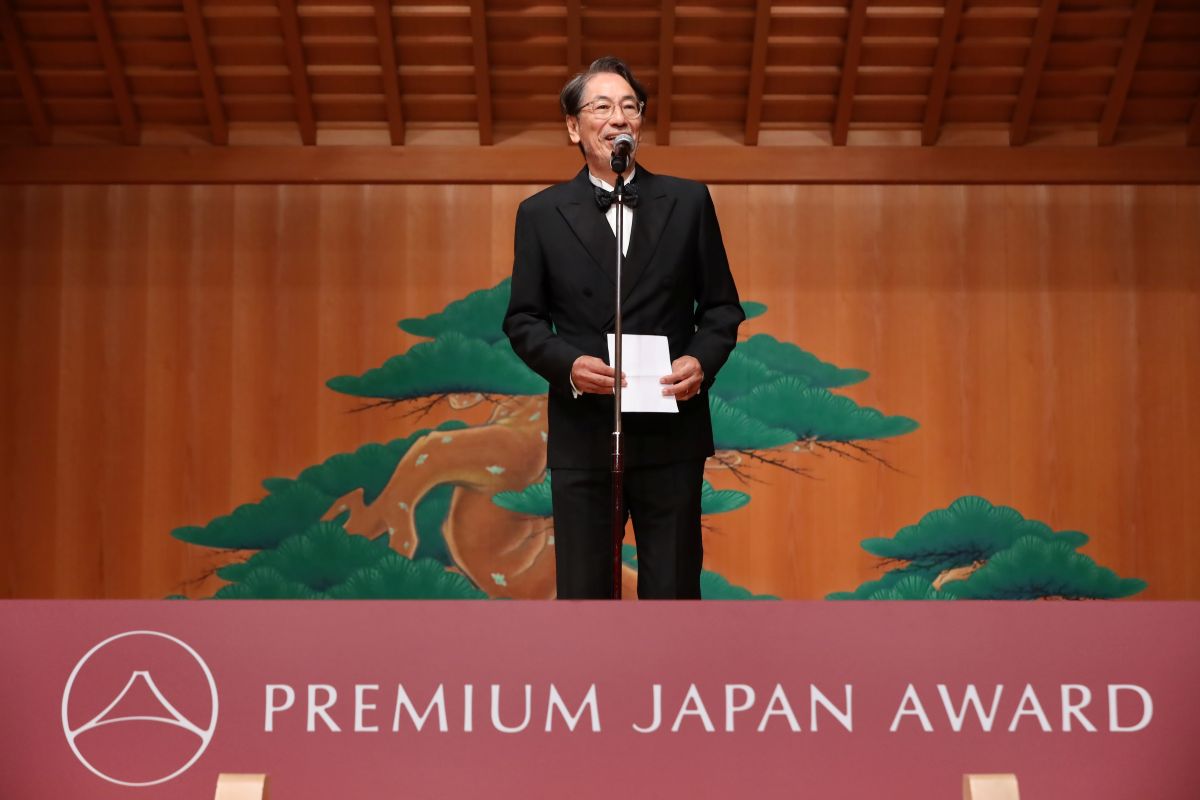
Mineaki Saito, Chairman of the Board, Japan Cultural Promotion Organization
Following congratulatory speeches from the sponsors, Mr. Manabu Ito, Commissioner of the Agency for Cultural Affairs, and Mr. Norio Kimura, Commissioner of the Japan Tourism Agency, the opening remarks were given by Mr. Mineaki Saito, Chairman of the Japan Cultural Promotion Organization. This was followed by a presentation by Executive Director Mio Shimamura on the background of the establishment of JCCO and the PREMIUM JAPAN AWARD. She explained that with the expansion of inbound tourism to Japan, interest in Japanese culture is increasing, and travelers' needs are shifting from superficial sightseeing to experiences that allow them to connect with authentic culture and values. However, she noted that there is currently insufficient mechanisms to disseminate Japan's excellent craftsmanship and culture to the world in a cross-industry and continuous manner. It was against this backdrop that JCCO and the PREMIUM JAPAN AWARD were established.
The PREMIUM JAPAN editorial team, leveraging the expertise of industry specialists, aims to uncover outstanding value across genres and disseminate it through multilingual media and domestic and international PR networks. This goes beyond mere awards, fulfilling a role in fostering collaborations between award recipients and companies, as well as overseas expansion. The presentation emphasized the goal of continuously nurturing international value.
The strengths that only a media outlet can offer are the ability to conduct research across industries and to become a platform for continuous dissemination of information. Shimamura's presentation conveyed his passion for sharing lesser-known aspects of Japanese culture with the world, something he constantly talks about within the PREMIUM JAPAN editorial department.

Mio Shimamura, President and Editor-in-Chief of PREMIUM JAPAN and Executive Director of the Japan Cultural Promotion Organization, gave a presentation on an award for promoting Japanese culture overseas, a concept she had envisioned since the beginning of PREMIUM JAPAN's operation.
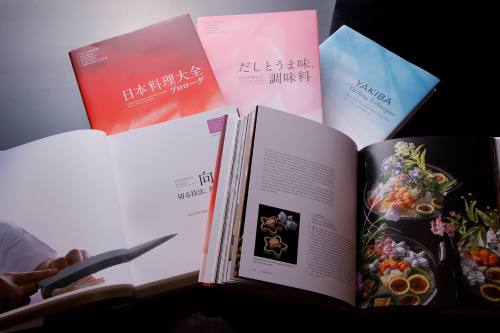
The grand prize went to the Japan Culinary Academy's "Complete Guide to Japanese Cuisine," an endeavor to pass on Japanese cuisine to the future.
Now, let's introduce the winners of the PREMIUM JAPAN AWARD 2026. We encourage you to learn about their activities in conjunction with the award series articles within PREMIUM JAPAN.
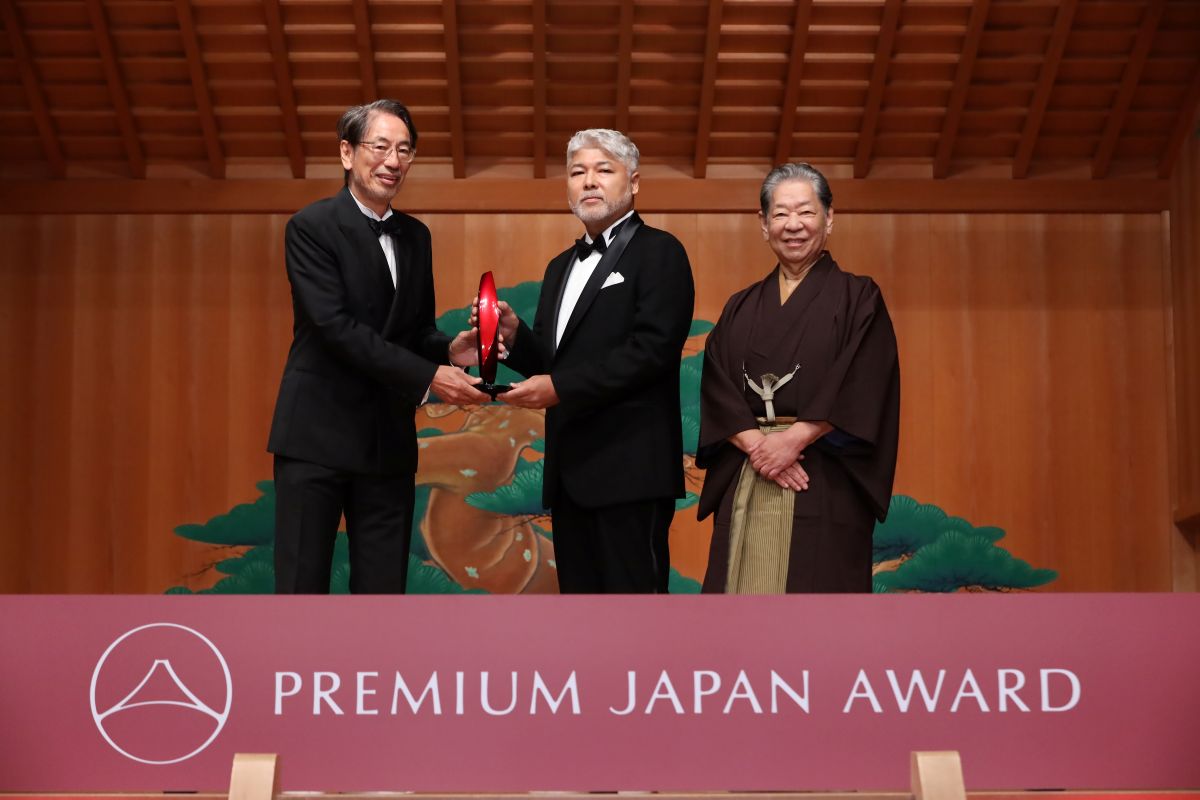
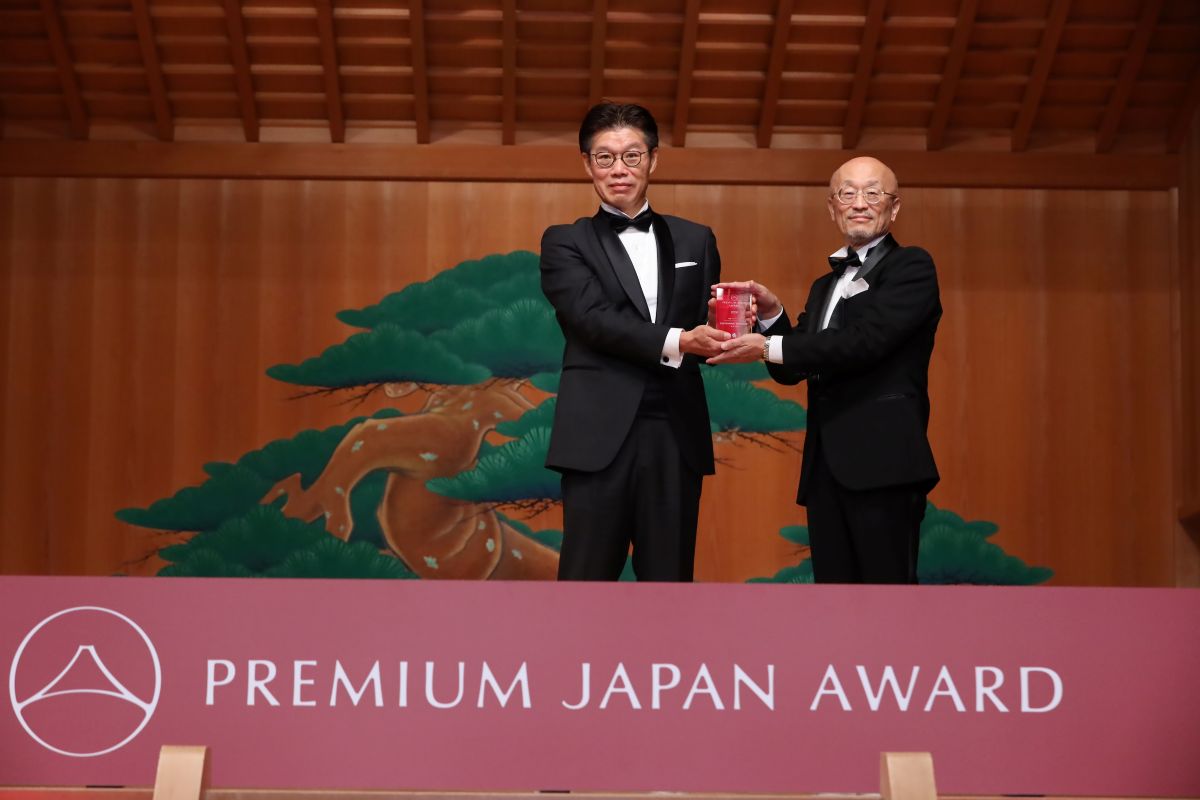
The grand prize trophy was presented by Chairman Mineaki Saito to Hiroya Kawasaki, a director of the Japan Culinary Academy who was also involved in the production and writing of the book. Yoshihiro Murata, Honorary Chairman of the Japan Culinary Academy, also rushed onto the stage.
The winner of this year's grand prize is "The Complete Guide to Japanese Cuisine," compiled by the NPO Japan Culinary Academy. This project systematically compiles the techniques, history, and culture of Japanese cuisine and transmits them to the next generation and the world. Composed of beautiful visuals and detailed explanations, "The Complete Guide to Japanese Cuisine" can truly be called the complete bible of Japanese cuisine. It began with the first volume, "Prologue," and has been completed up to the fifth volume, "The Grilling Area." As of 2026, the sixth and seventh volumes, "Simmering Methods," are under production. Each volume is over 200 pages long, and an English version with the same content has also been created. But that's not all. It is also available online for free for chefs around the world who are enthusiastic about learning Japanese cuisine.
Hiroya Kawasaki, who was involved in the production from the beginning and also contributed to some of the writing, says, "Japanese culinary techniques are not systematized. Because much of it is passed down orally, it has been difficult to transmit. The 'Complete Guide to Japanese Cuisine' was created with the aim of conveying the correct techniques, frameworks, and guidelines of Japanese cuisine not only to chefs in Japan but especially to chefs overseas. The main objective is to transmit correct knowledge to chefs all over the world." As Japanese food gains global recognition, the challenge remains of how to pass on its techniques and knowledge to the next generation and accurately transmit it overseas. In response to this, they made the bold decision to systematize the techniques and theories of Japanese cuisine and make them available for free in both English and Japanese, as well as on the web.
The name came up early in the creation of the nomination list within the PREMIUM JAPAN editorial department, and after repeated deliberations by the directors of the Japan Cultural Promotion Organization (JCCO), "The Complete Guide to Japanese Cuisine" was awarded the Grand Prize. (To reiterate, in order to ensure fairness in the judging process, Yoshihiro Murata, who is a director of the Japan Cultural Promotion Organization, was not involved in this judging process.)
For more details, please see the PREMIUM JAPAN AWARD article.
Individual and group awards
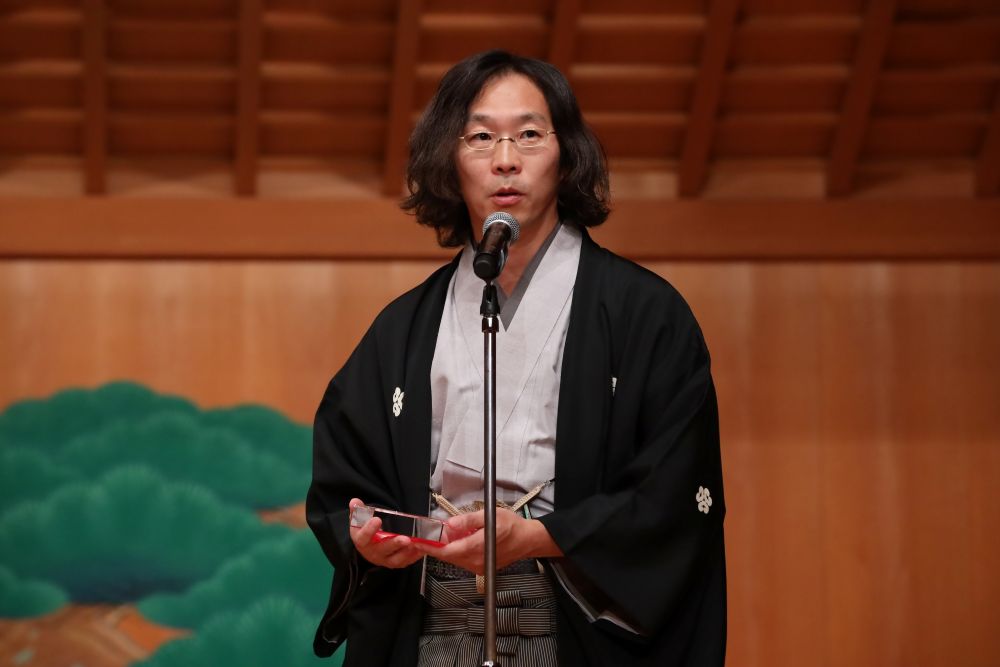
Sculptor Masaomi Raku.
Masaomi Raku
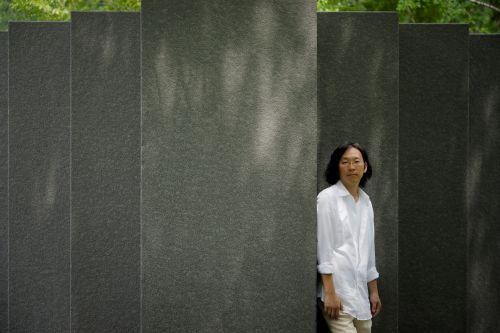
Masaomi Raku, born as the second son of the Raku family, a family of Raku ware potters with a history spanning over 450 years, expresses the invisible world of life and death and the cycles of nature through works such as "Reincarnation" and "Stone Box," which utilize the natural characteristics of stones like black granite and onyx. His work, while embodying the Raku family's view of nature and aesthetic sense, has been recognized for its unique approach as a sculptor, going beyond the family name.
Sculptor Masaomi Raku continues to work with stone, carving the laws of nature and the cycle of life.
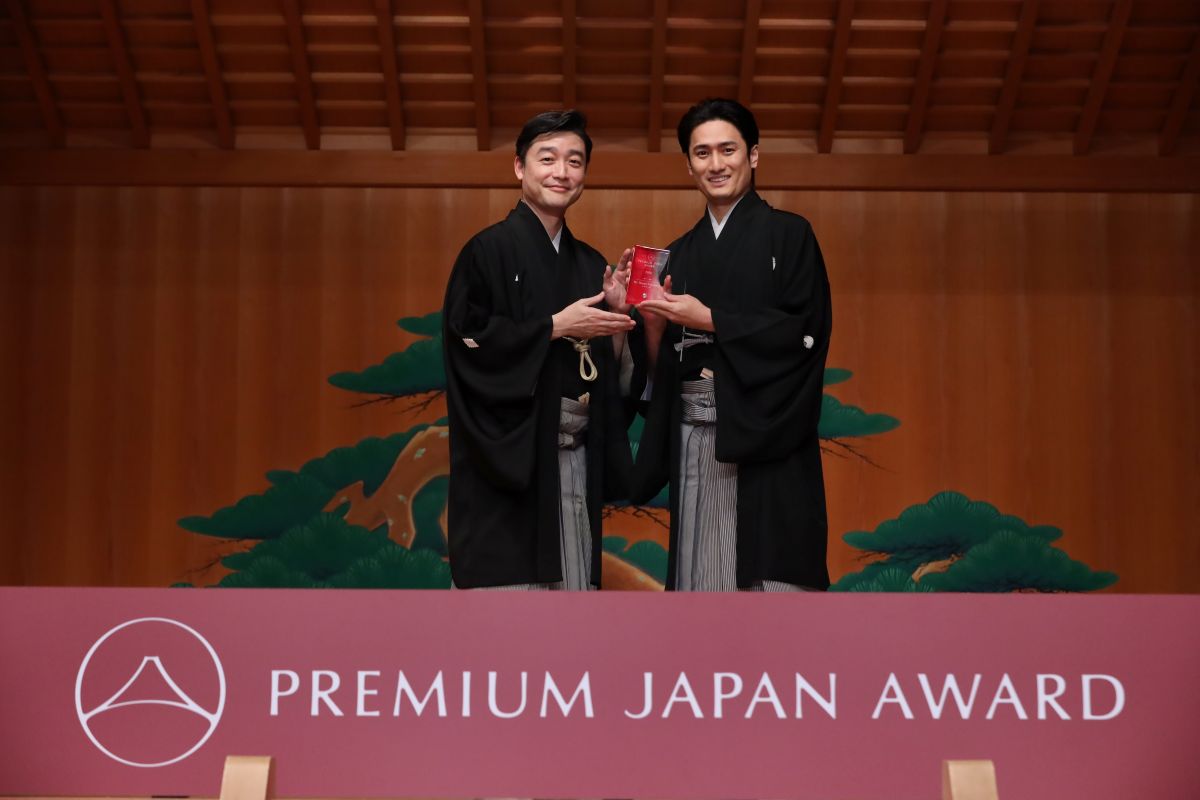
The trophy was presented by Kikunojo Onoe, head of the Onoe school of dance and director of the Japan Cultural Promotion Organization.
中村隼人
Hayato Nakamura is attracting attention as a figure who will lead the next generation of the Kabuki world. In 2025, he performed with world-renowned pianist Fazil Say in Cappadocia, Turkey, and presented Kabuki dance in Riyadh, Saudi Arabia. He also achieved an unprecedented collaboration at Carnegie Hall in New York, where Noh and Kabuki lions appeared on the same stage. His energetic activities to spread Kabuki to the world, transcending national borders and genres, including workshops for local students, have been highly praised.
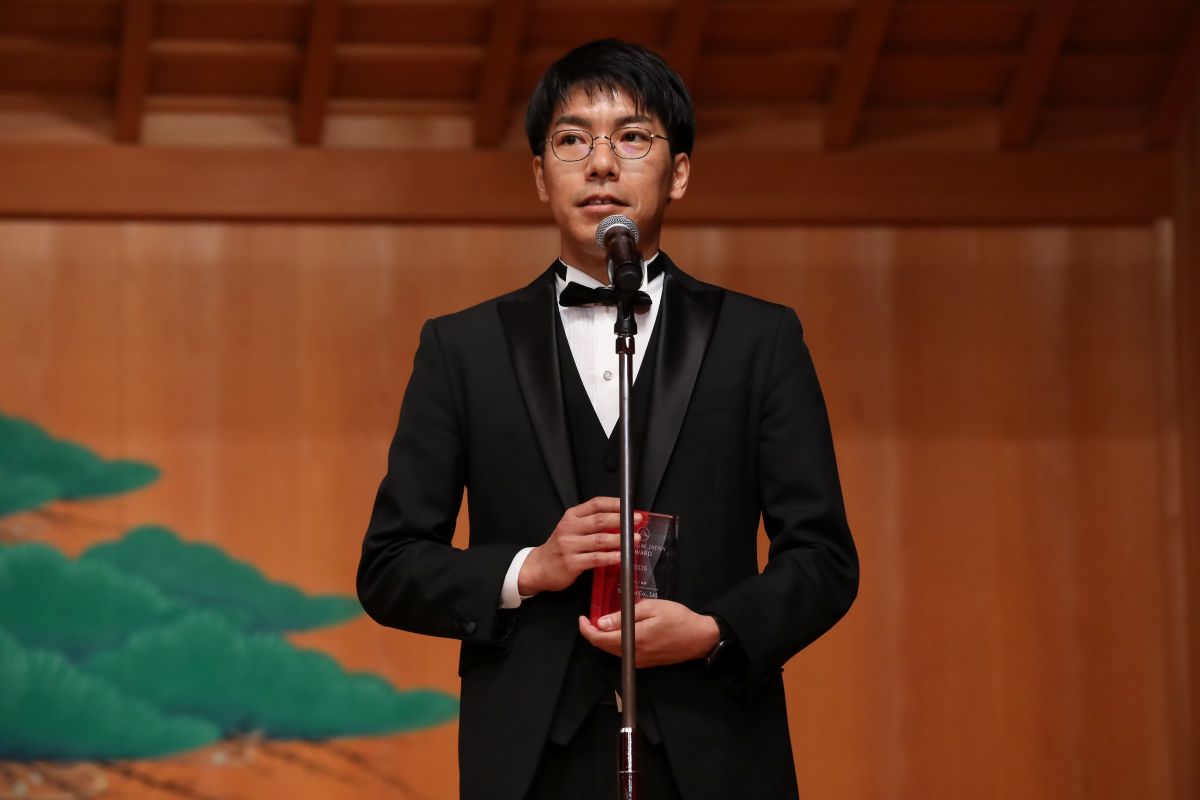
Representative Director and COO (Chief Operating Officer) Fumihiro Murase took the stage and spoke about his joy at receiving the award.
SUZUSAN
"Suzusan" has evolved Arimatsu Narumi Shibori, a dyeing technique with a history of over 400 years, into a new value that can be appreciated on a global scale. While developing traditional techniques for modern fashion, they have also created an environment that attracts young artisans to Arimatsu, contributing to the revitalization of the region. Furthermore, they are promoting a "from local, to local" concept where traditional crafts from various regions share their experience and knowledge. Their practical efforts and vision of connecting tradition to the next generation as an industry have been recognized.
From the traditional "Arimatsu Narumi Shibori" industry to the global brand "suzusan"
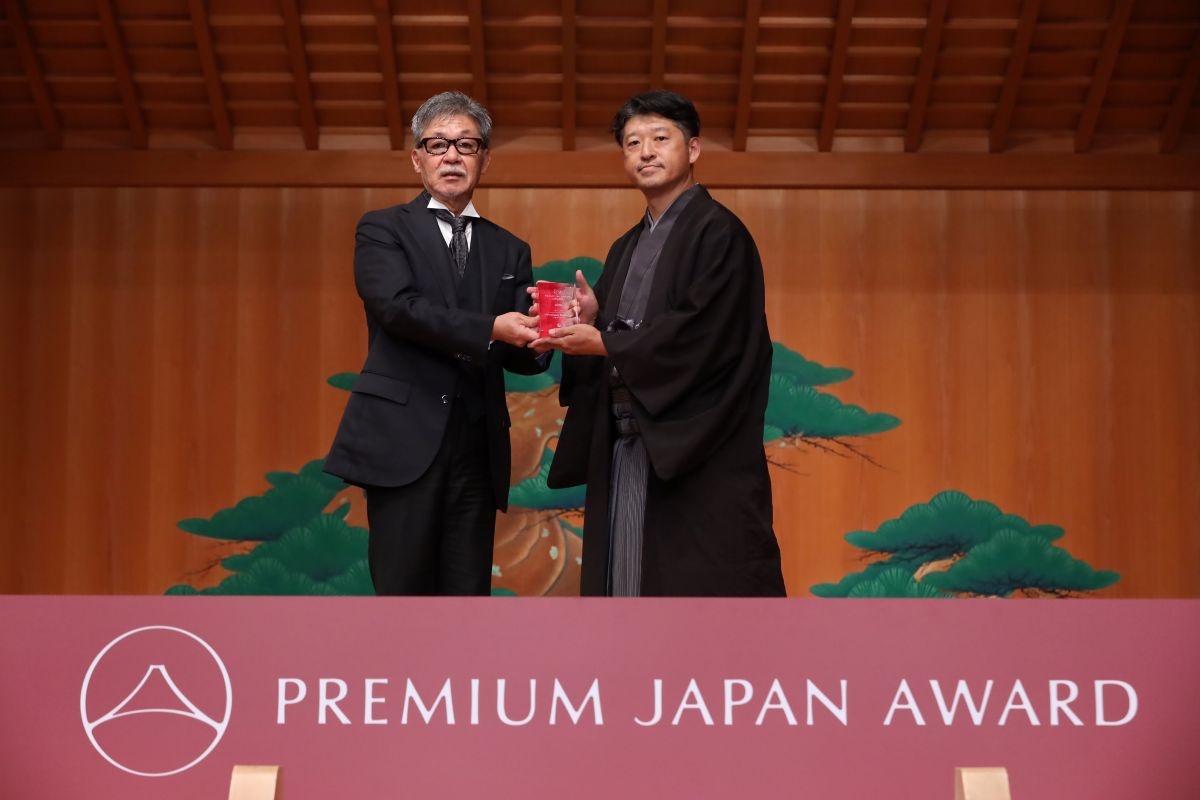
Yoshiyuki Yamada of Okurayama Studio receives a trophy from Ikuo Maeda, Director of the Japan Cultural Promotion Organization.
Okurayama Studio
For over 100 years, Okurayama Studio has been working with "Datekan stone," a type of stone found nowhere else in the world, on Mt. Okurayama in Marumori Town, Miyagi Prefecture. The fourth-generation owner, Masahiro Yamada, has been planting trees at the former quarry sites, transforming the desolate quarry into a satoyama (traditional rural landscape) dotted with cultural facilities. The fifth-generation owner, Yoshisuke Yamada, has expanded his activities to include collaborations with architects and artists, and the development of furniture and products. This two-generation effort to protect local resources while creating new value has been recognized.
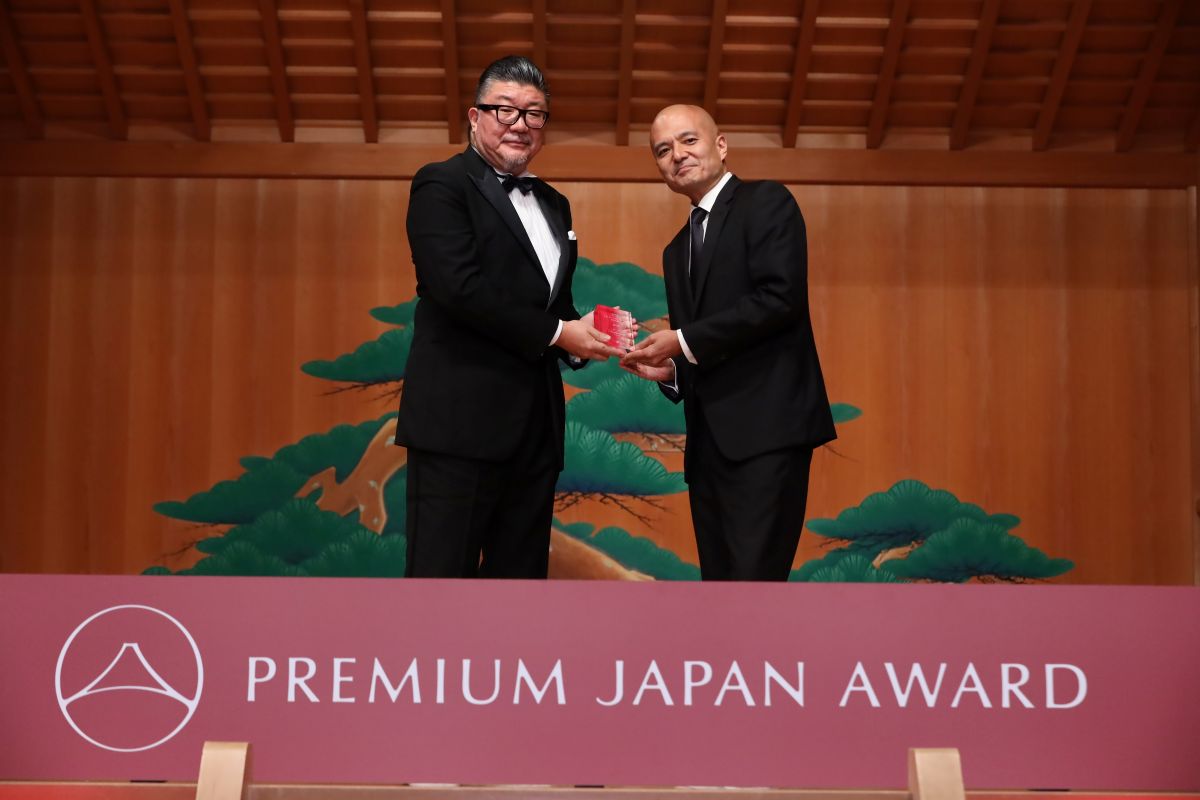
Hiroki Fukunaga and Kazuhiro Otani, directors of the Japan Cultural Promotion Organization.
大谷山荘
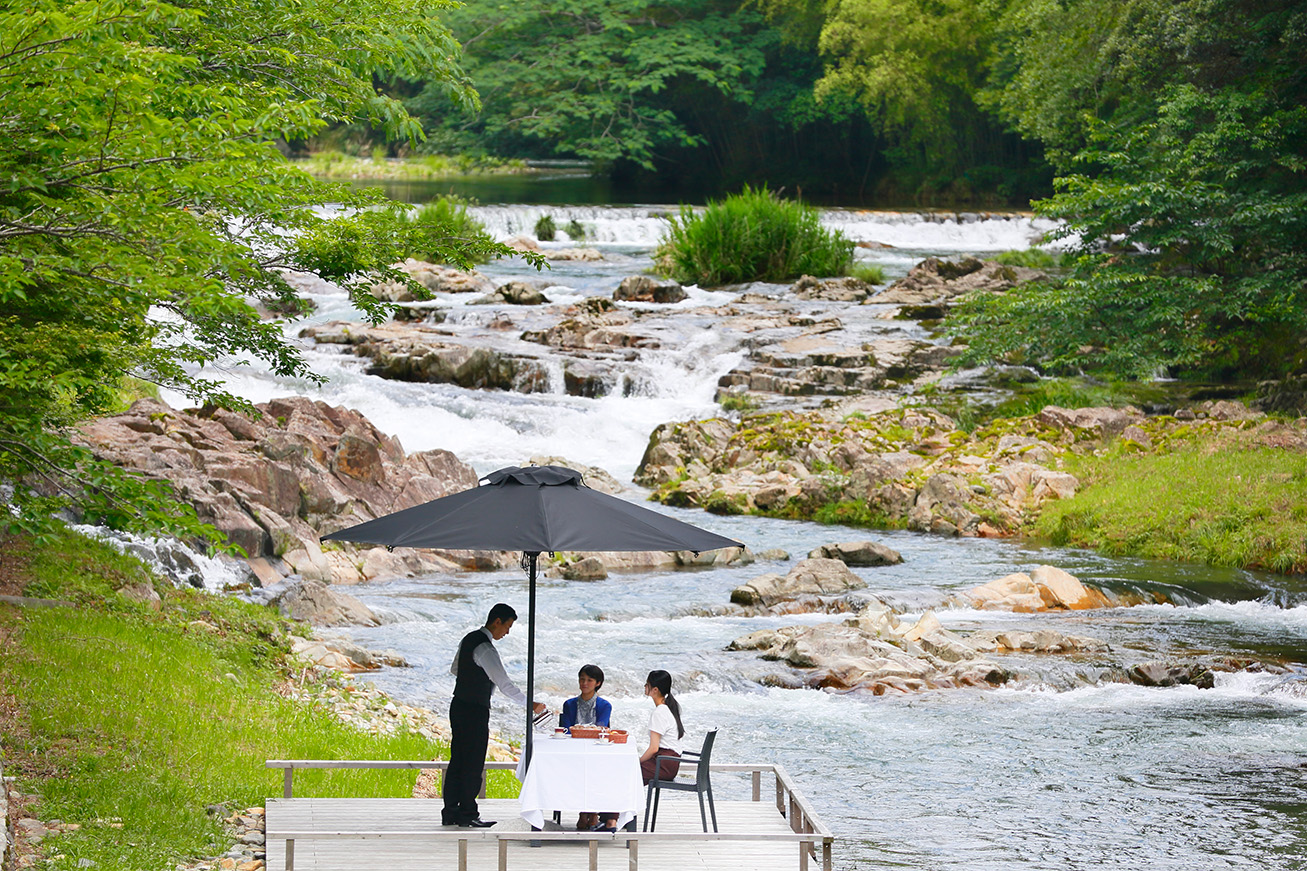
Founded in 1881, Otani Sanso is a large inn in Nagato Yumoto Onsen, Yamaguchi Prefecture. Despite having 95 rooms, it maintains a high standard of hospitality unique to Japanese inns, such as attentive check-in for each guest and valet parking for all vehicles. Furthermore, it has not only developed as an inn but has also contributed to the development of the Nagato Yumoto Onsen area in cooperation with local businesses. Its commitment to enhancing the value of the hot spring resort while inheriting a tradition of over 140 years has been recognized.
The Evolving Renowned Inn "Otani Sanso": Unveiling its Transformative Trajectory and Miracles
Producer/Curator Award
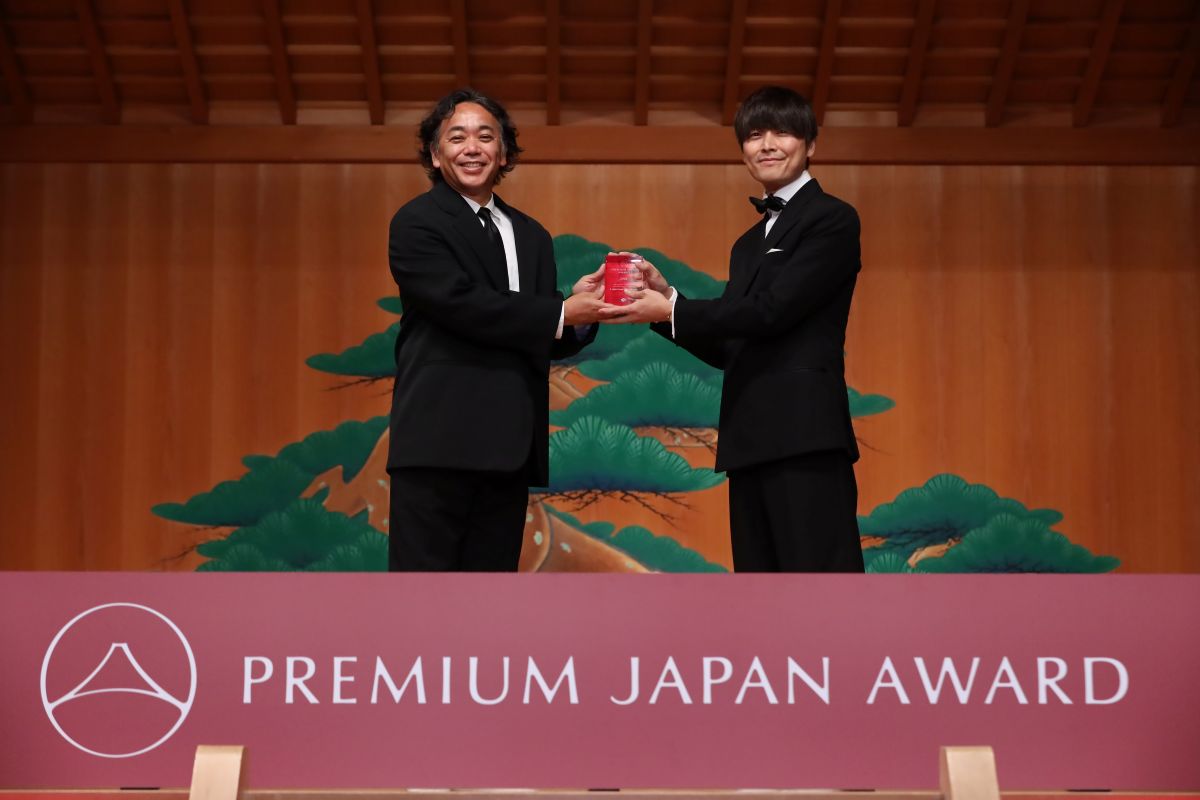
Shigeo Usui and Kazuhei Aoyama, directors of the Japan Cultural Promotion Organization.
A Lighthouse Called Kanata
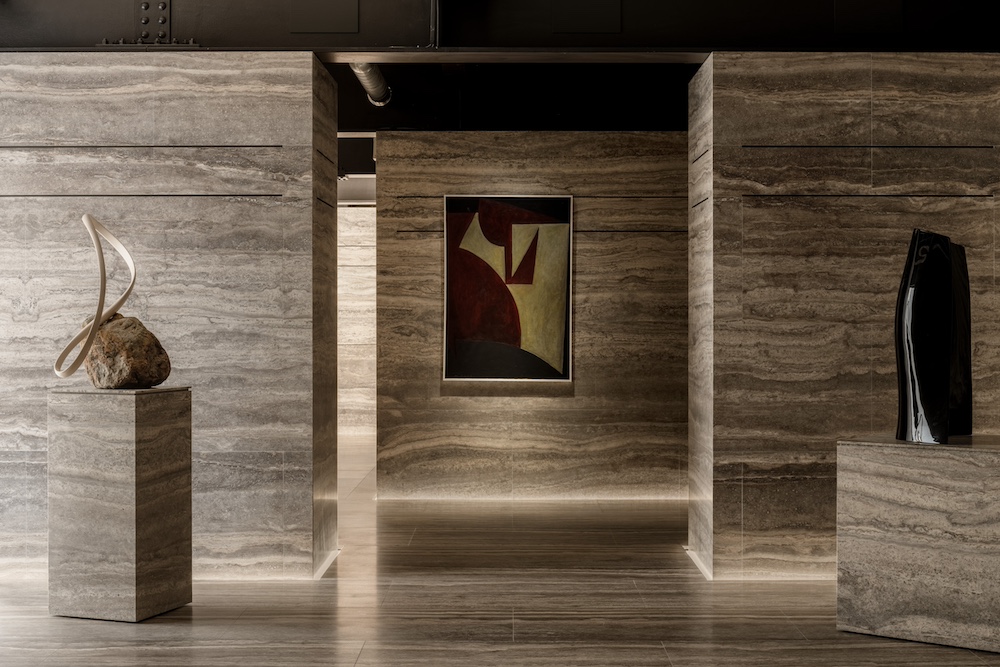
This contemporary art gallery in Omotesando, Tokyo, is run by Kazuhei Aoyama. It has a long history of discovering and introducing contemporary Japanese artists who possess a deep understanding of materials, exceptional skill, and a unique aesthetic sense to influential collectors and museums overseas. The gallery is highly regarded for its discerning eye in uncovering outstanding talent and its ability to bring Japanese works to the global art market and enhance the international reputation of artists.
Special Project Award
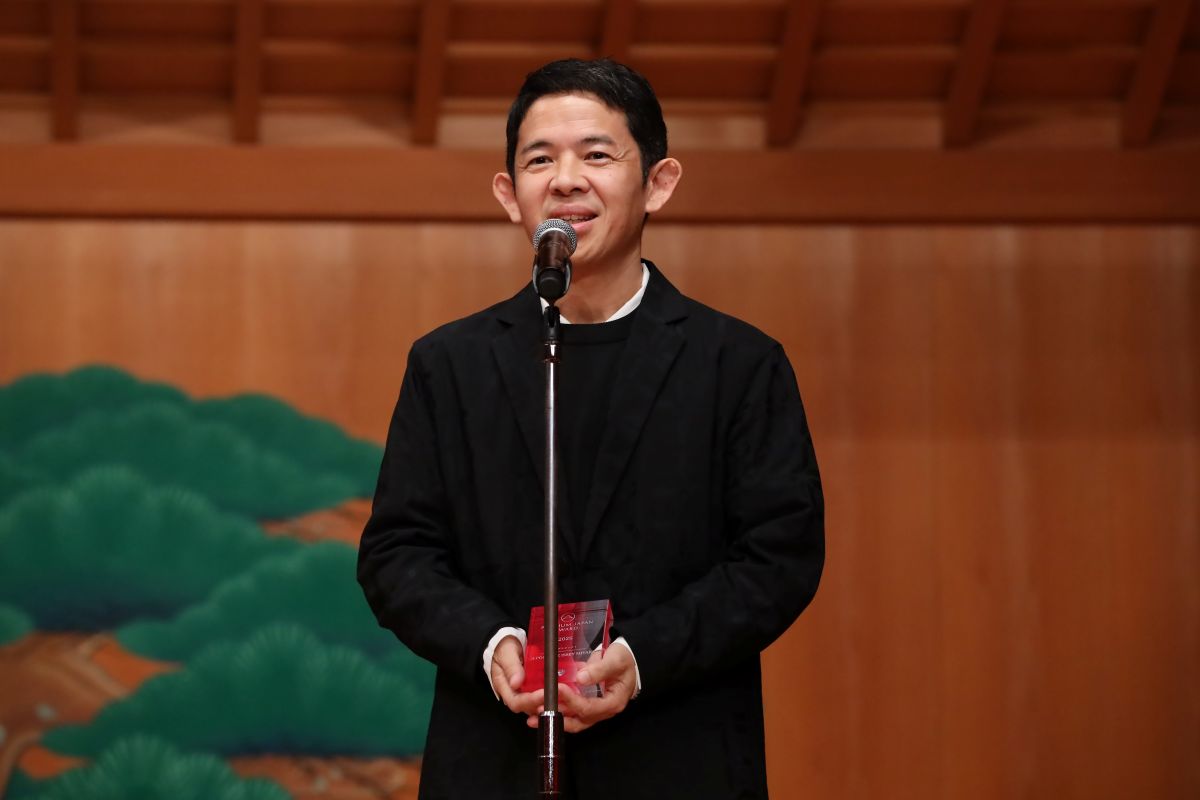
Yoshiyuki Miyamae, designer of A-POC ABLE ISSEY MIYAKE.
A-POC ABLE ISSEY MIYAKE
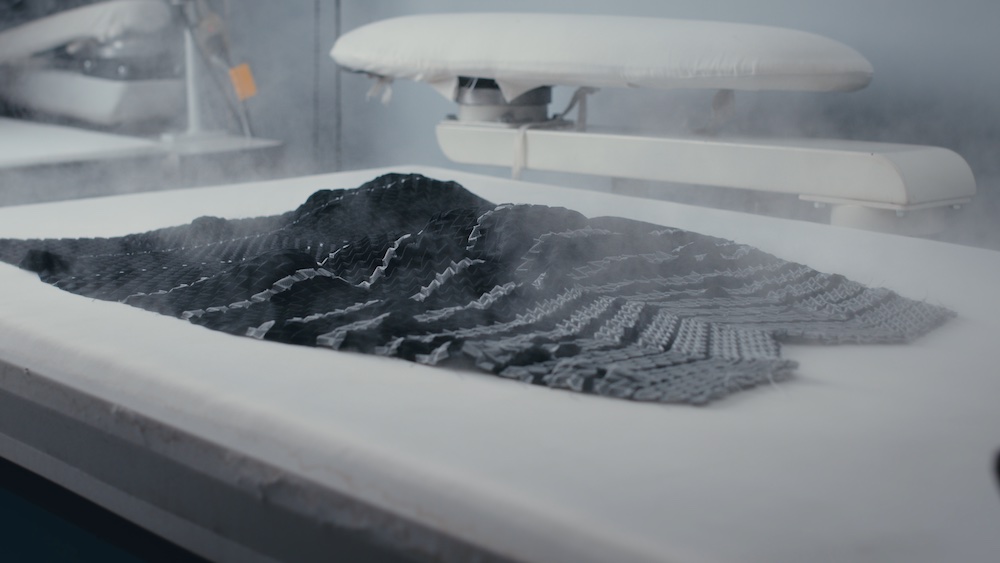
Led by designer Yoshiyuki Miyamae, the engineering team at A-POC ABLE ISSEY MIYAKE pursues new possibilities in clothing while upholding the philosophy of "A-POC (A Piece Of Cloth) = a single piece of fabric." Through repeated collaborations with companies, researchers, and creators from diverse fields, they have combined inherited techniques and philosophies with modern technology and ideas. Their inquisitive spirit and creativity, which push the boundaries of design beyond the realm of clothing, have been highly praised.
Atsushi Ichikawa, Director of the Japan Cultural Promotion Organization, presented a trophy to Hajime Iwabuchi, Vice President of Wakatsuru Sake Brewery.
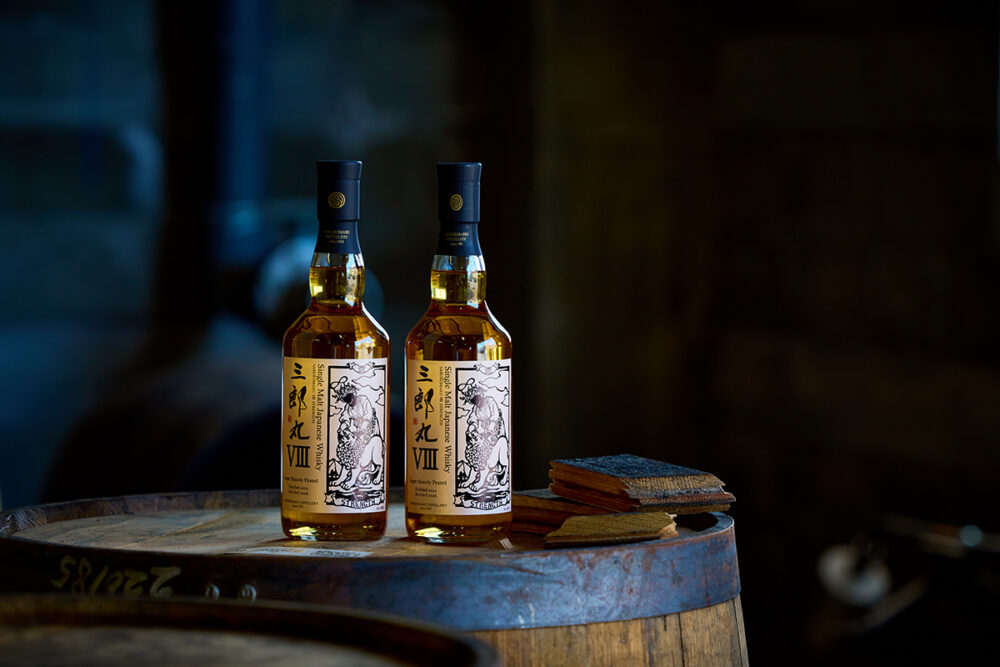
三郎丸蒸留所
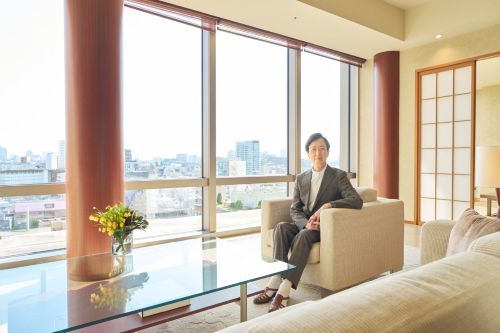
Saburomaru Distillery, located in Tonami City, Toyama Prefecture, has been producing whisky since 1952. Takahiko Inagaki, President and CEO of Wakatsuru Shuzo, has not only revitalized the distillery but has also promoted the establishment of a barrel workshop responsible for barrel restoration and training of craftsmen, as well as a bottler business that fosters collaboration between distilleries. His vision and practical skills, which look beyond the development of his own company to the entire Japanese whisky industry, and aim to cultivate Japanese whisky from a fleeting trend into a sustainable culture, have been highly praised.
From a boom to a culture: Saburomaru Distillery's challenge for the "next 100 years"
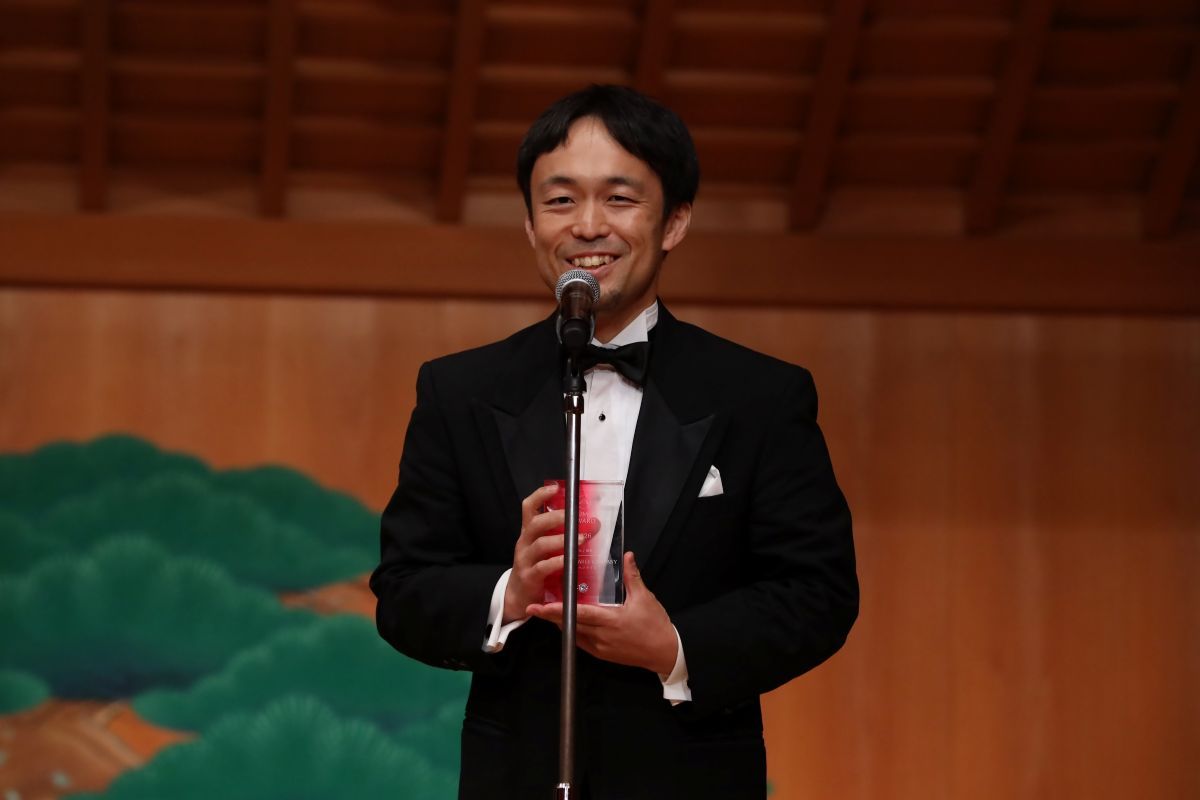
Yuichi Tomohiro, Co-Representative of Sea Vegetable.
Sea vegetables
Sea Vegetable LLC, whose motto is "Healthy Sea and Healthy People Through Seaweed," researches seaweed cultivation techniques that are in danger of disappearing, and works with fishermen and local communities nationwide to cultivate seaweed on the sea surface. At the same time, they propose new flavors and ways of eating seaweed in collaboration with chefs. Their innovativeness and practical ability to connect research, production, marine ecosystem restoration, and the creation of food culture, and to forge a new industry and a sustainable future from seaweed, have been recognized.

Mio Shimamura, Executive Director of the Japan Cultural Promotion Organization, and Tamasaburo Bando.
Tamasaburo Bando Costume Exhibition
Bandō Tamasaburō V, a leading female impersonator in the Kabuki world, has held costume exhibitions at the Ashmolean Museum, Oxford University, in the UK from 2023 to 2025, as well as at the MOA Museum of Art. By introducing magnificent stage costumes as works of art and craft, he has conveyed the exceptional skills of the artisans behind them and the unique Japanese aesthetic sense to both domestic and international audiences. His series of activities and achievements in conveying the value of Japanese culture through Kabuki costumes have been recognized.
Special Award (Sponsor Award)
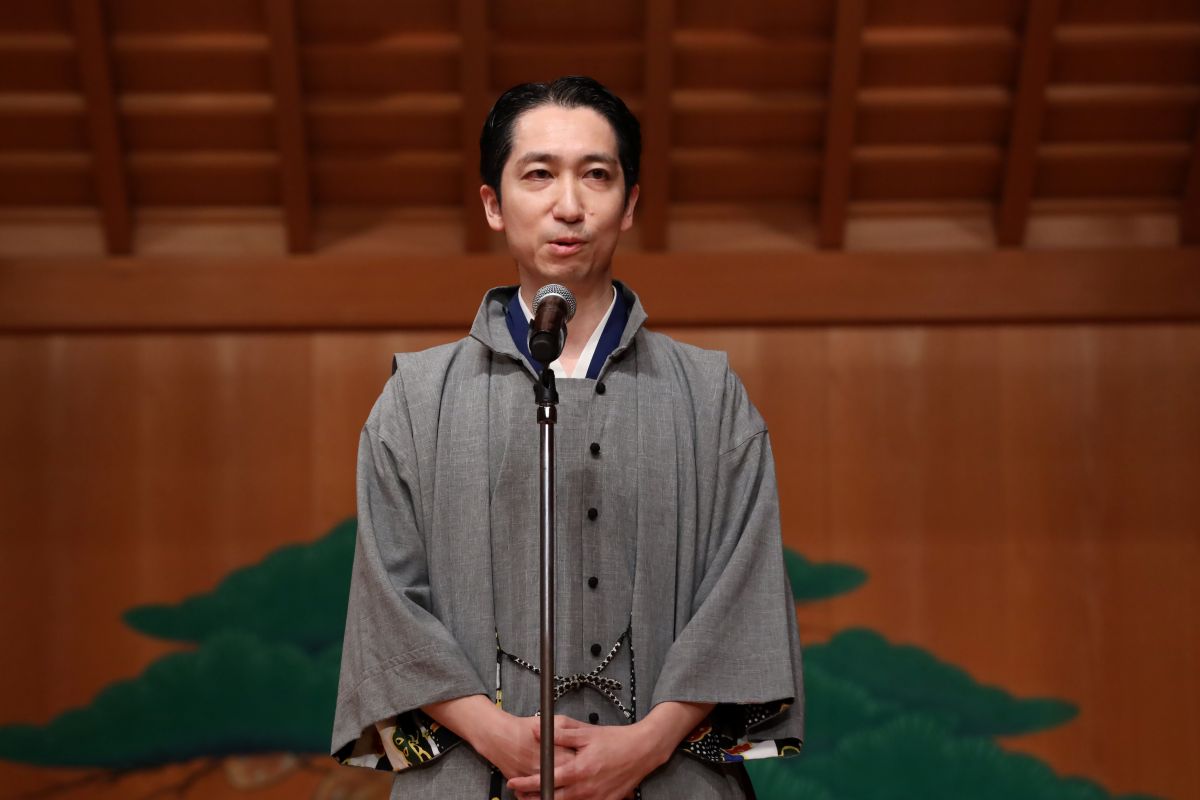
Unfortunately, Mieko Taira, Chairperson of the Kijoka Bashofu Business Cooperative, was absent, but presenter Masanori Ikegami, General Manager of Hoshinoya Tokyo, gave a speech.
Hoshino Resorts Co., Ltd. Award: Kijoka Bashofu Cooperative
The Kijoka Bashofu Business Cooperative in Ogimi Village, Okinawa Prefecture, is an organization that supports the production and preservation of "Kijoka Bashofu," a traditional Okinawan textile. After the war, Bashofu was in danger of disappearing, but it was revived by the late Toshiko Taira, a Living National Treasure, and others. The cooperative protects the advanced techniques from cultivating the banana plants to weaving the cloth, and supports the management and operation of the Ogimi Village Bashofu Hall and the training of successors. Their activities in connecting this unique textile, born from the climate and culture of Okinawa, to the next generation as a living culture have been recognized.
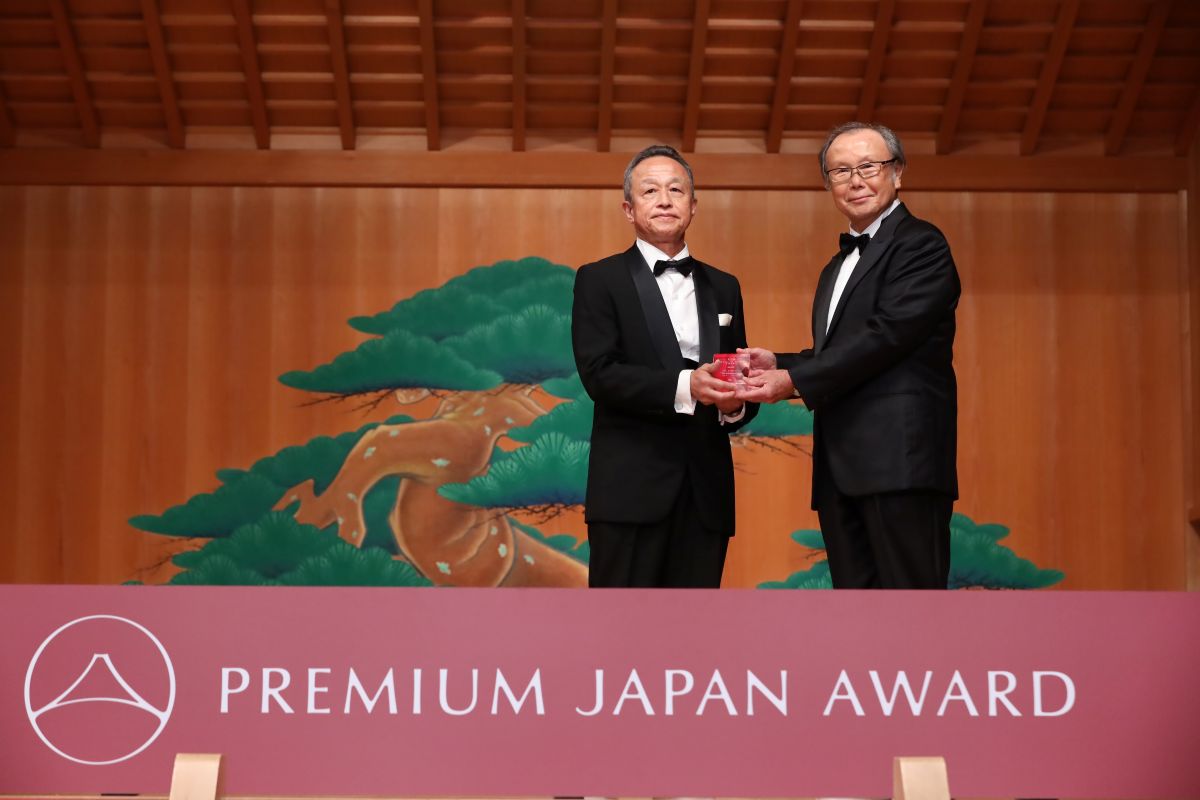
Kazuyasu Misu, President and CEO of Hiramatsu Co., Ltd., and Takashi Okui of Okui Kaiseido.
Hiramatsu Co., Ltd. Award: Okui Kaiseido, Kombu (kelp)
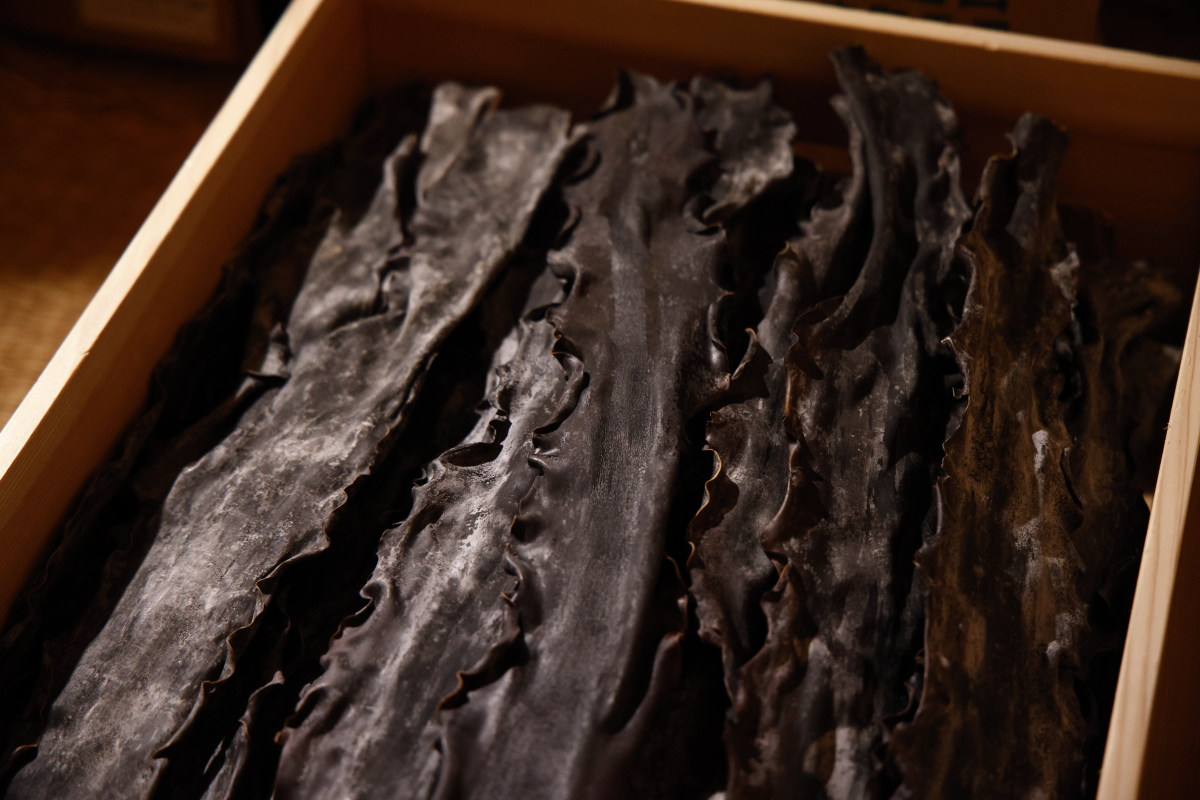
Founded in 1871, Okui Kaiseido is a long-established kelp merchant in Tsuruga City, Fukui Prefecture. Inheriting the traditional "kuragokori" technique of Echizen-Wakasa, which involves aging kelp in a storehouse to bring out its umami flavor, the fourth-generation owner, Takashi Okui, has been promoting the culture of kelp and dashi (broth) through interactions with chefs and lectures both domestically and internationally. Their skills, passed down for over 150 years, and their long-standing efforts to pass on Japanese food culture to future generations and the world have been recognized.
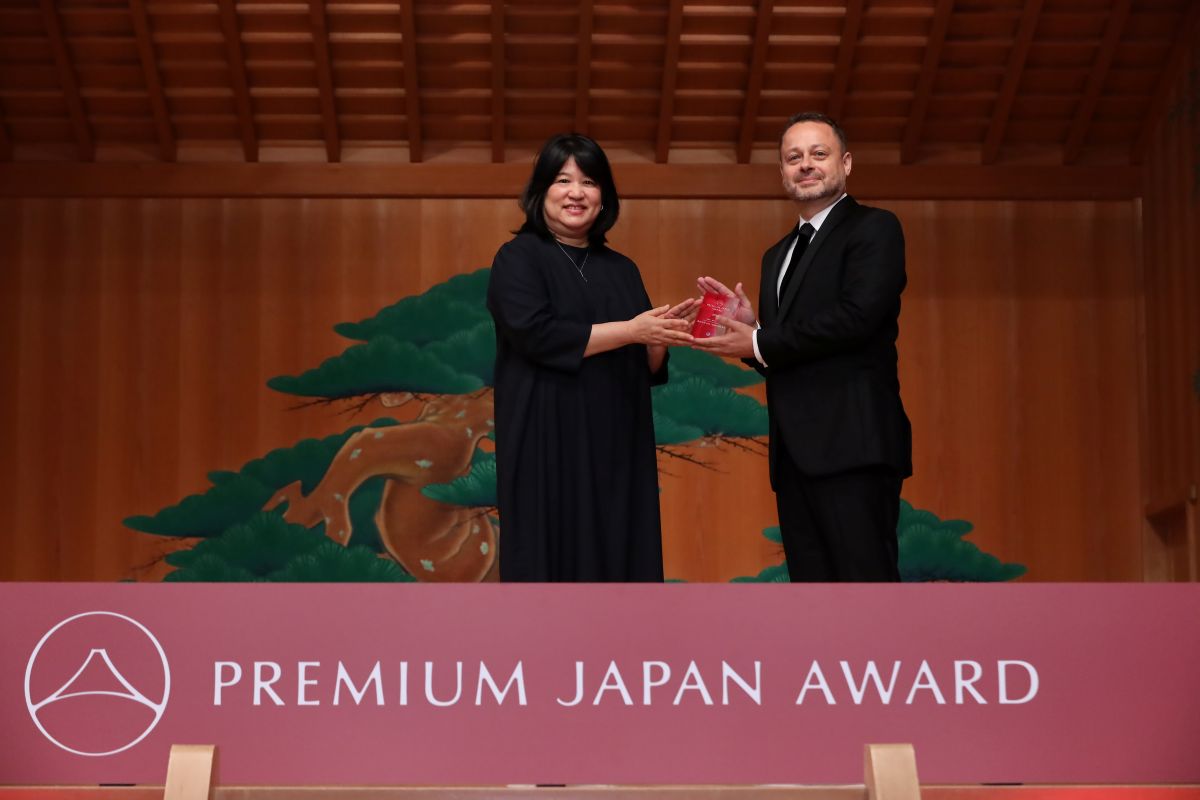
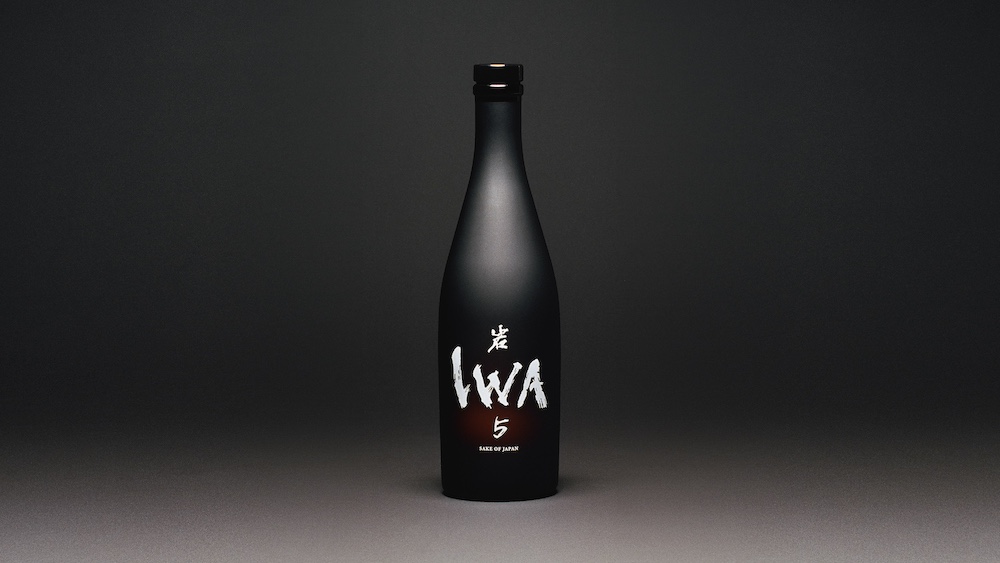
Charles-Antoine Picard, President and CEO of Shiraiwa Co., Ltd., receives the trophy from Kiyoko Niwazaki, President and CEO of Wako Co., Ltd.
Wako Award Co., Ltd. Shiraiwa Co., Ltd.
Shiraiwa Co., Ltd. is a company that oversees the sake brand "IWA," created by Richard Geoffroy, who led Dom Pérignon as its chief winemaker for 28 years. It fuses traditional Japanese sake brewing with blending techniques cultivated in Champagne. Its innovative approach, rooted in the traditions of Japanese sake while pushing its possibilities into new territory and expanding into countries around the world, has been highly praised.
Beyond the boundaries of sake: The innovation and originality brought about by Shiraiwa "IWA"

Mr. Teruyuki Omote, President and CEO of Lumine Co., Ltd., and Mr. Yoshinao Sugihara, President of Sugihara Shoten and Washi Sommelier.
Lumine Co., Ltd. Award: Sugihara Shoten
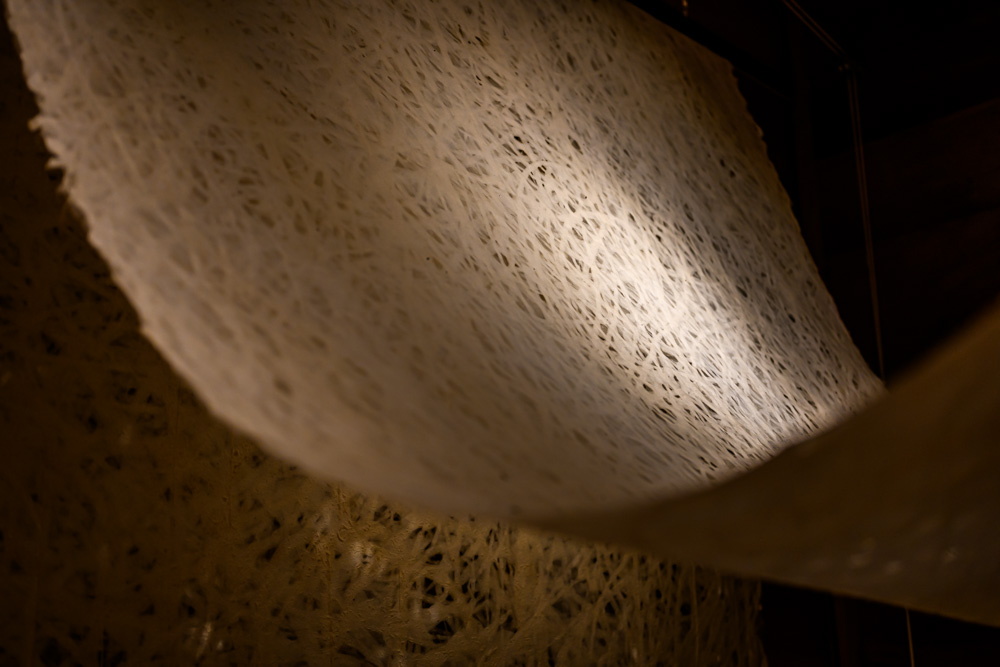
Sugihara Shoten, a washi paper wholesaler in Echizen City, Fukui Prefecture, the home of Echizen washi paper, has been operating for over 100 years. The 10th generation owner, Yoshinao Sugihara, is a "washi sommelier" who has pioneered uses for washi paper that are relevant to modern life and spaces, such as "habutae paper" compatible with inkjet printers and non-combustible washi paper for architecture and interiors. His ability to connect the skills of craftsmen with new demands through participation in overseas exhibitions and collaborations with architects and artists has been recognized.
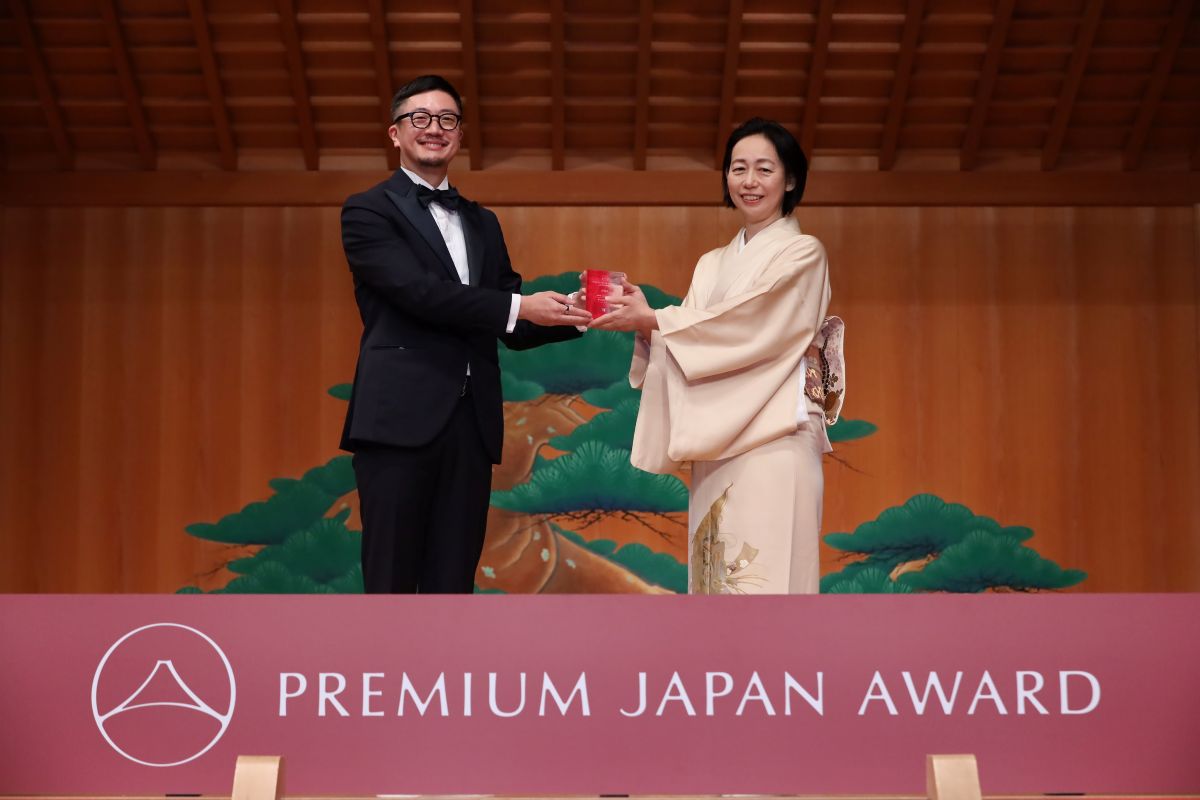
Ryuji Ikoma, Representative Director and CEO of Clear Co., Ltd., and Sachiko Miyashita of Fushiki.
SAKE HUNDRED Award Fushiki
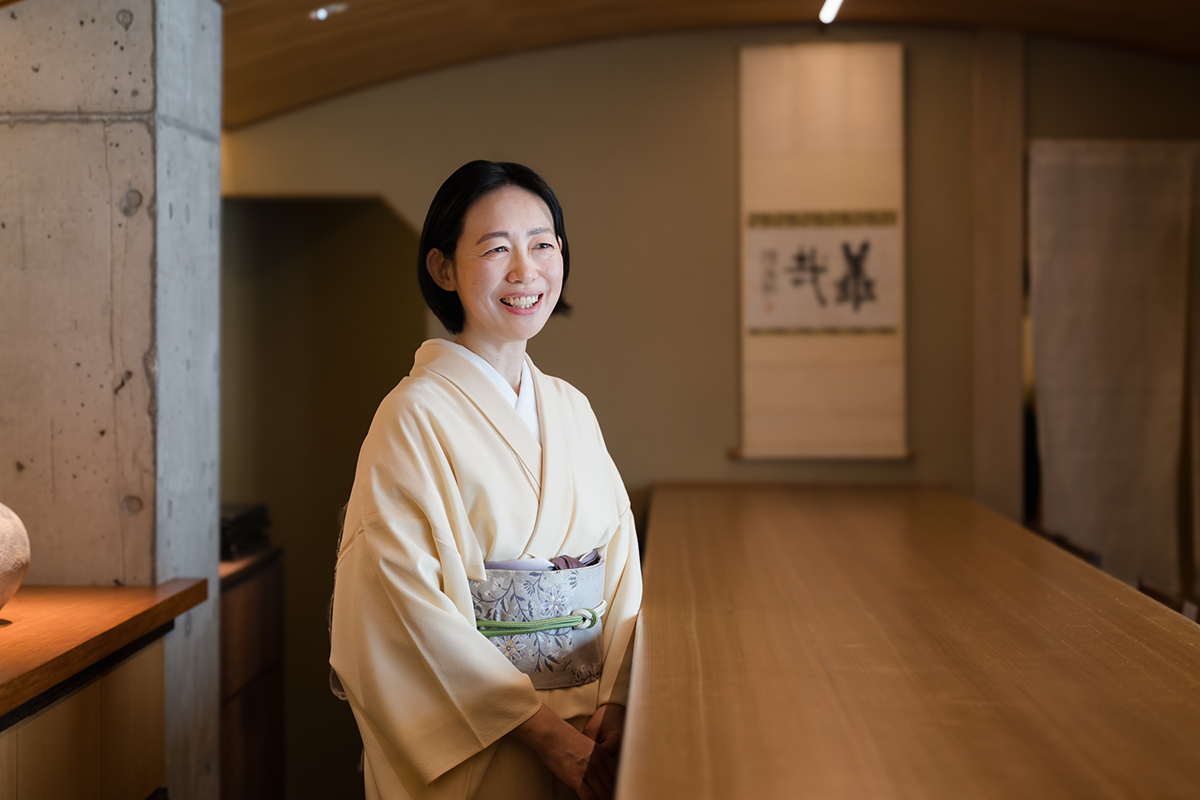
Fushiki, located in Kagurazaka, Tokyo, is a restaurant that has specialized in pairing kaiseki cuisine with sake since its founding in 2011. They not only focus on compatibility with food, but also on bringing out the charm of sake by considering factors such as temperature and the type of sake vessel used, presenting the food, sake, and vessel as a single, integrated experience. Their continuous efforts as a pioneer in sake pairing, expanding the possibilities of sake and Japanese cuisine and establishing it as a new culinary culture, have been recognized.
The current state of Japanese culture as seen through the first award winners.
During the drafting process, primarily by the PREMIUM JAPAN editorial team, various candidates were proposed based on each editor's area of expertise. As this was the first time the award was being held, there were many cases where the decision was difficult, considering that the very act of selecting the winners would shape the character of this award. However, each time, we repeatedly returned to the six judging criteria: quality, presence or absence of an international perspective, innovation and future potential, freshness to the world, and Japanese identity, and considered them carefully.
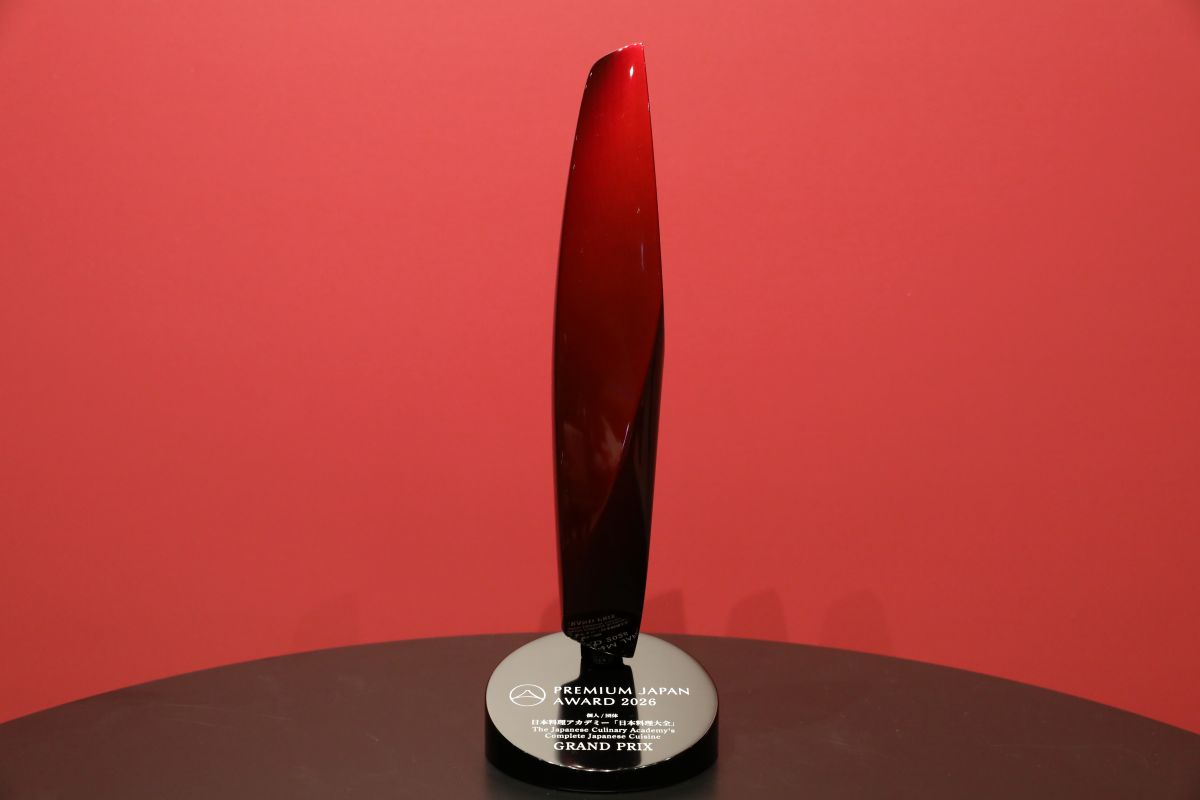
The trophy for the PREMIUM JAPAN AWARD Grand Prize was created by Mazda's design team, led by Ikuo Maeda.
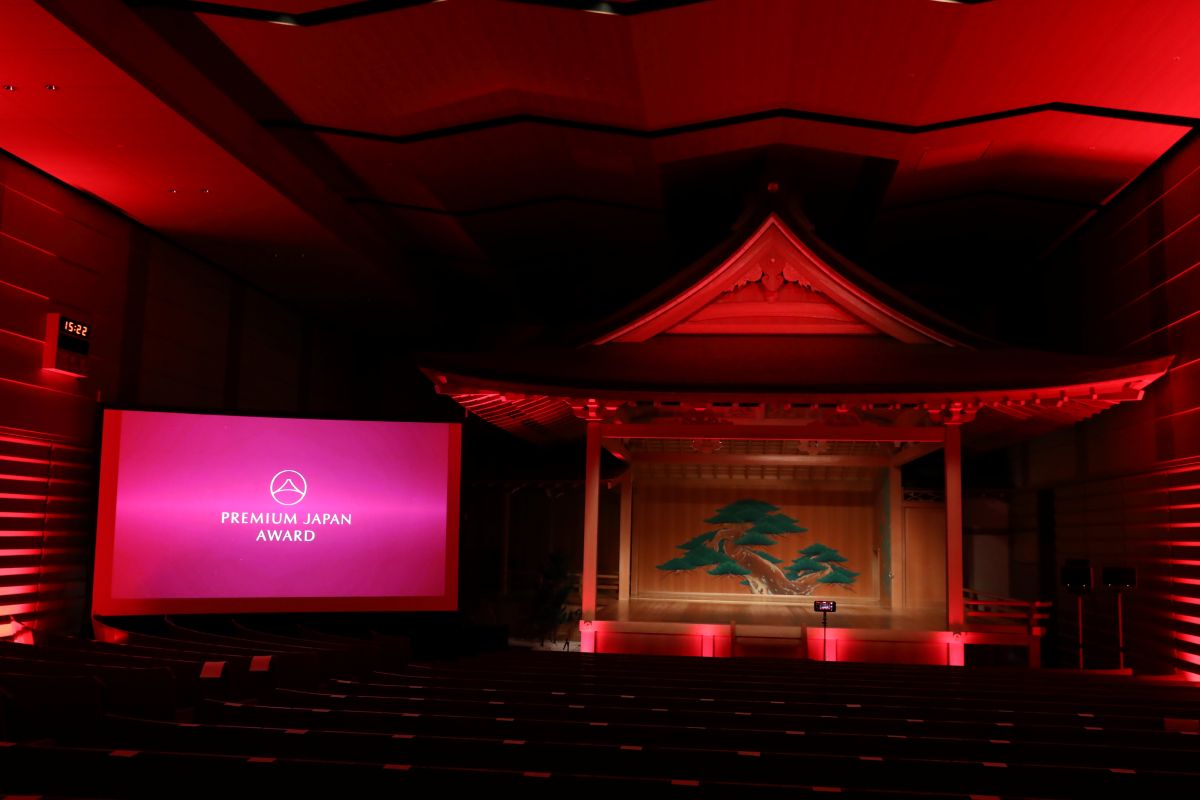
On this day, the Kanze Noh Theater was bathed in the traditional Japanese color, ebi-iro (shrimp color), which is the key color of PREMIUM JAPAN and the PREMIUM JAPAN AWARD.
When we finally look at the list of award winners, several characteristics become apparent. One is that they are "updating tradition into modern value." SUZUSAN, or Sugihara Shoten, fits this description. At a time when the survival of traditional crafts and industries is at risk, tradition cannot be preserved by remaining unchanged. By boldly updating and discovering new value, they are ultimately protecting and nurturing traditional industries.
Another characteristic is that they connect different genres. For example, Okurayama Studio combines several elements: stonework, architecture, art, and environmental regeneration. Sea Vegetable combines fishing, research, environment, and cuisine, and Shiraiwa is even more symbolic, combining sake and champagne expertise—a combination and collaboration that was previously unthinkable. In other words, innovation is born when boundaries are crossed, and new cultures are created there.
A distinctive feature of their activities was not simply exporting Japanese products overseas, but also emphasizing how to "translate" Japanese culture into other cultures. The Complete Guide to Japanese Cuisine, the Hayato Nakamura and Tamasaburo Bando costume exhibitions are examples of this. Rather than simply taking Japanese products overseas as they are, they considered how to ensure their value could be understood in different cultural spheres. Many of them took on the role of "translators" of Japanese culture.
The very mechanisms for nurturing culture and generating the next wave of creativity are what characterize the work of these award recipients.
On the other hand, there are also challenges that have become apparent precisely because it was the first time this event was held.
This year's award recipients represent a wide range of areas that PREMIUM JAPAN has covered, including food, crafts, traditional performing arts, and art. On the other hand, when considering contemporary Japanese culture in the world, the existence of content industries such as anime, manga, games, music, and film cannot be ignored.
For example, how should we evaluate the city pop boom that has seen a global surge in popularity in recent years? Overseas DJs who recognized the richness of Japan's 80s music scene created the genre of Viperwave, which contributed to the explosive city pop boom. Perhaps those who discover lesser-known aspects of Japan and continue to introduce them to the world also meet the criteria for being nominated for an award.
In an era where Japanese intellectual property (IP) transcends borders and generations, influencing global culture and consumption, the question of what should be recognized as "PREMIUM JAPAN" from these areas will be a major theme for future awards. Also, having only two female recipients (Fushiki and Kijoka Bashofu Cooperative) is a small number considering the balance of the awards.
The winners of the first award gave us a glimpse into the "Japanese culture" that the PREMIUM JAPAN AWARD seeks to recognize. The question now is how far this award can broaden its scope from the second year onward. This also raises the question of what kind of award the PREMIUM JAPAN AWARD itself will become in the future.
JCCO
PREMIUM JAPAN AWARD
PREMIUM JAPAN AWARD 2026





PREMIUM JAPAN AWARD


