

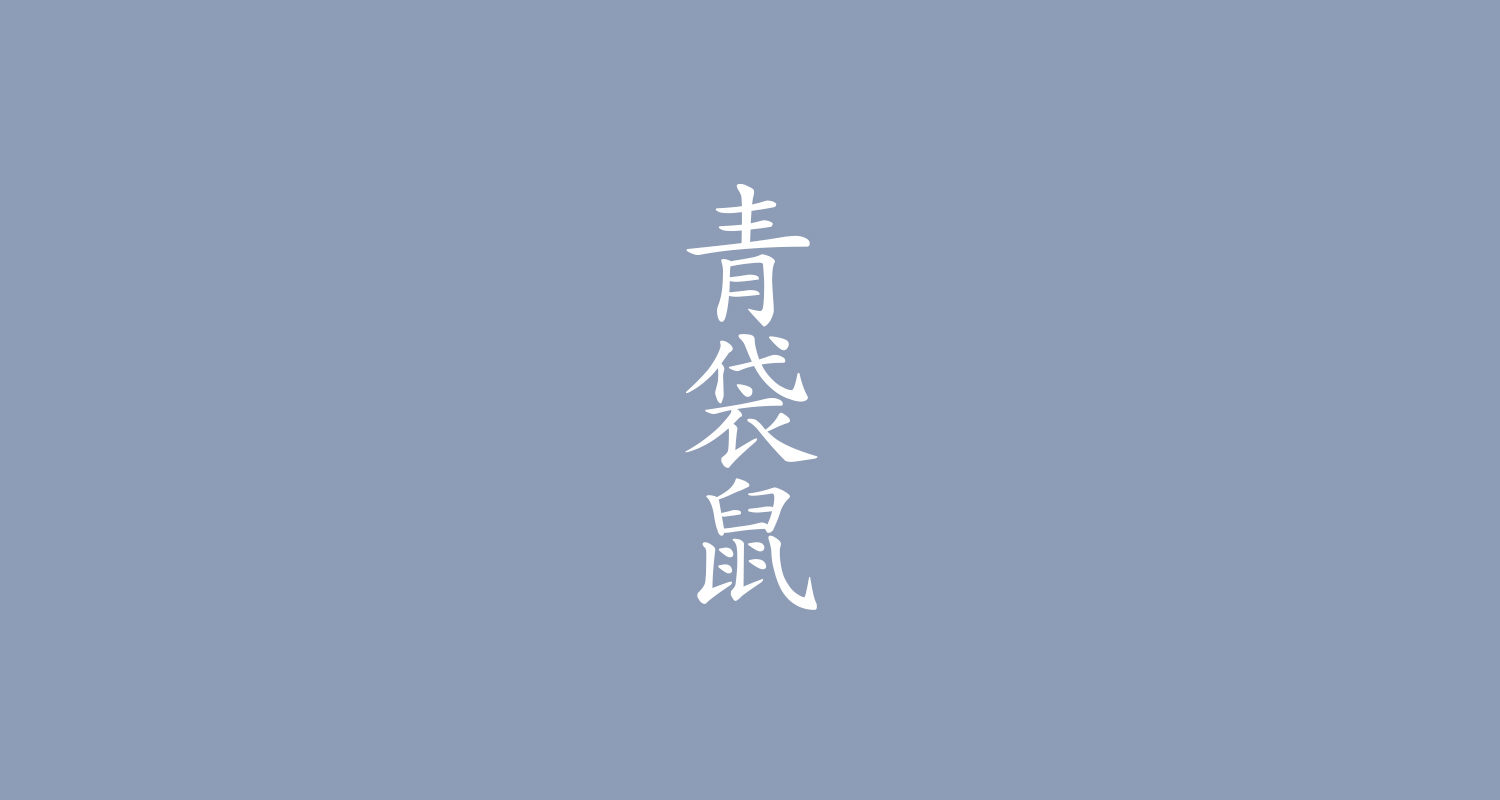
What is the traditional Japanese color "Aobukuro-nezumi"?
Ao-bukuro-nezumi is a soft, muted blue, like clouds spreading across the mountains in the morning. It's a quiet yet somehow refreshing pale color. The name Ao-bukuro (青袋) refers to a deep, subdued blue, but this color isn't simply that with gray added. The Edo period dyeing manual "Somemono Hiden" describes it as "a light blue with a little ink added," and it was considered a calm color with a subdued blue tone.
Blue bag rat = seitainezu
Indigo dye is made through fermentation, a time-consuming traditional technique that involves scooping up the foam called "indigo flower." "Ao-bukuro-nezumi" is pronounced "seitai-nezumi."
DIC Traditional Japanese Colors: C23 M14 Y0 K29 / R141 G156 B182 / Blue-brown gray (Seitai-nezumi)
What is “Learn about Japan’s traditional colors”?
We will also introduce beautiful traditional Japanese colors, how to read their kanji, and the background behind the colors. Let's enjoy together the Japanese sensibilities that have been passed down since ancient times.
Experiences
Premium Calendar
Learn about Japan's traditional colors







Premium Calendar


