A Spanish restaurant that seemed like it should exist in Japan but didn't.
CHUSTO in Ebisu is a Spanish bar unlike any other, perfect for when you're craving a hearty meal of lean meat.
This new restaurant is brought to you by V&K Co., Ltd., which has previously worked on establishments such as "La Pansa" in Ginza, "Bar Portillo" in Marunouchi, and "Sal y Amor" in Daikanyama. The name of the restaurant, CHUSTO, is said to be a portmanteau of "Chuleton" (meat) and "Justo" (just right).
The atmosphere inside the restaurant is very bright, with young staff members moving briskly and laughter constantly filling the air. I like the freedom of the kitchen and dining area being seamlessly connected. It really feels like a Spanish bar.
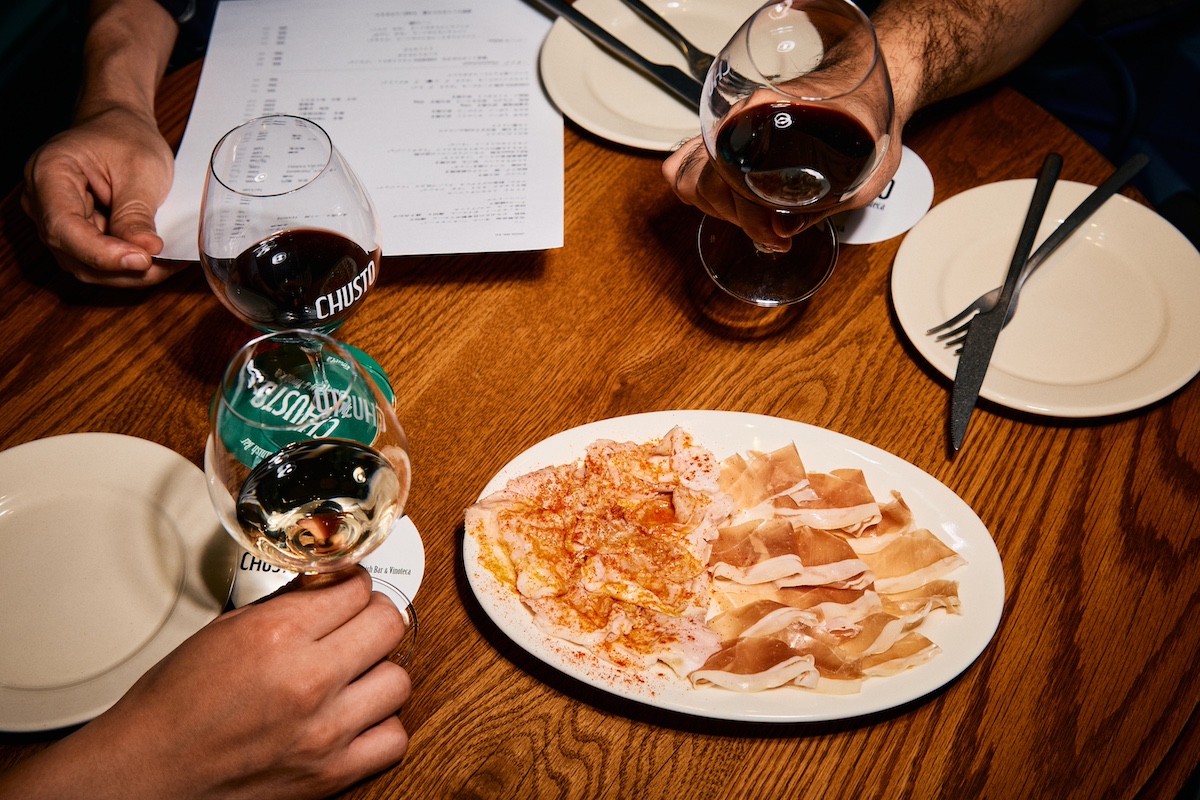
"Assortment of two types: prosciutto and thinly sliced boiled ham."
I'm so happy to get this precious Jamón Serrano.
The first appetizer, "Assortment of two types: prosciutto and boiled ham," is an essential item at any Spanish bar.
With Spanish cured ham "Jamon Serrano" banned from import from the end of 2025 due to the discovery of African swine fever, the cured ham produced by Hiroshi Ozaki in Saitama is now extremely valuable.
The finest Jamón Serrano I've ever tasted in Spain is the most delicious cured ham in the world, enough to silence even a crying baby. Mr. Ozaki's cured ham, with its sweet fat and moist texture, comes very close to that of the Spanish version.
The boiled ham is homemade from Hokkaido's "Dorobuta" pork. The mixed platter of prosciutto and boiled ham is sure to get you seconds, and is a dish that will instantly lift your spirits.
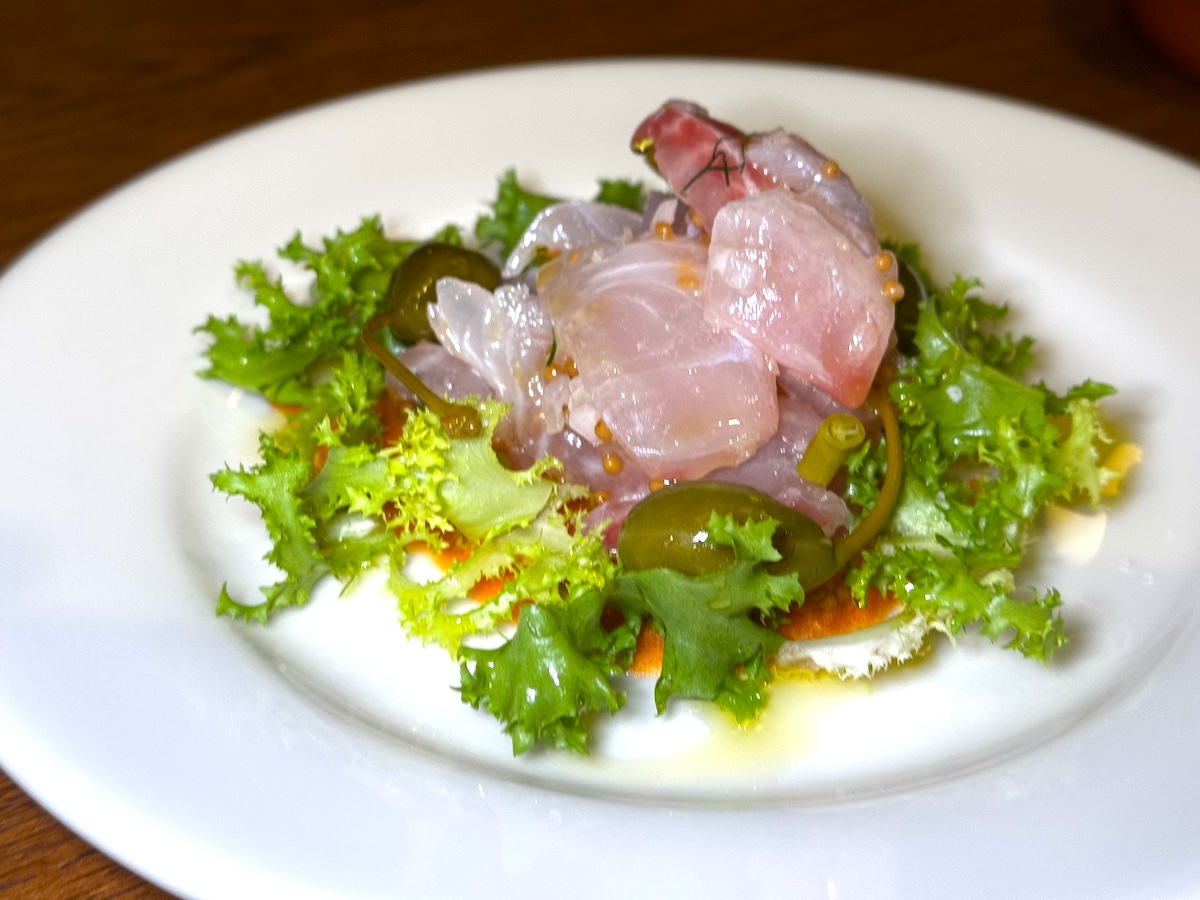
"Sea bream with escabeche sauce."
Spanish cuisine that focuses on the ingredients
The "Sea Bream with Escabeche Sauce" is also excellent. It's a fresh dish where slices of raw sea bream are eaten together with vegetables.
The escabeche sauce, flavored with white wine vinegar and garlic, utilizes the acidity of vegetables such as onions, carrots, and celery, resulting in a refreshing taste that beautifully enhances the flavor of the sea bream. Its lightness makes it perhaps best described as a Spanish-style carpaccio.
I have long held the belief that, among all European cuisines, no cuisine is as familiar to the Japanese palate as Spanish cuisine. This is because it is a cuisine that always respects each individual ingredient and does not add too much unnecessary processing.
Here you'll find dishes that perfectly embody that sentiment.

"Potato omelet, 'tortilla'."
In that context, the "potato omelet 'tortilla'" is also a dish that relies solely on the flavors of potatoes and eggs. The restaurant's commitment to ingredients is evident here as well, as the eggs used are "Yokamoyoka eggs" from Miyazaki.
Take a look at the cross-section of the omelet. The runny, soft yolk is magnificent. The egg has a deep, rich flavor, and the way it clings to your tongue is like flamenco on your tongue (lol). Delicious. It makes you want to involuntarily murmur, "Olé!"
Since it's a Spanish bar, of course they offer three types of paella: one with octopus, one with Kibimaru pork shank, and one with squid ink. The most popular is apparently the octopus paella.
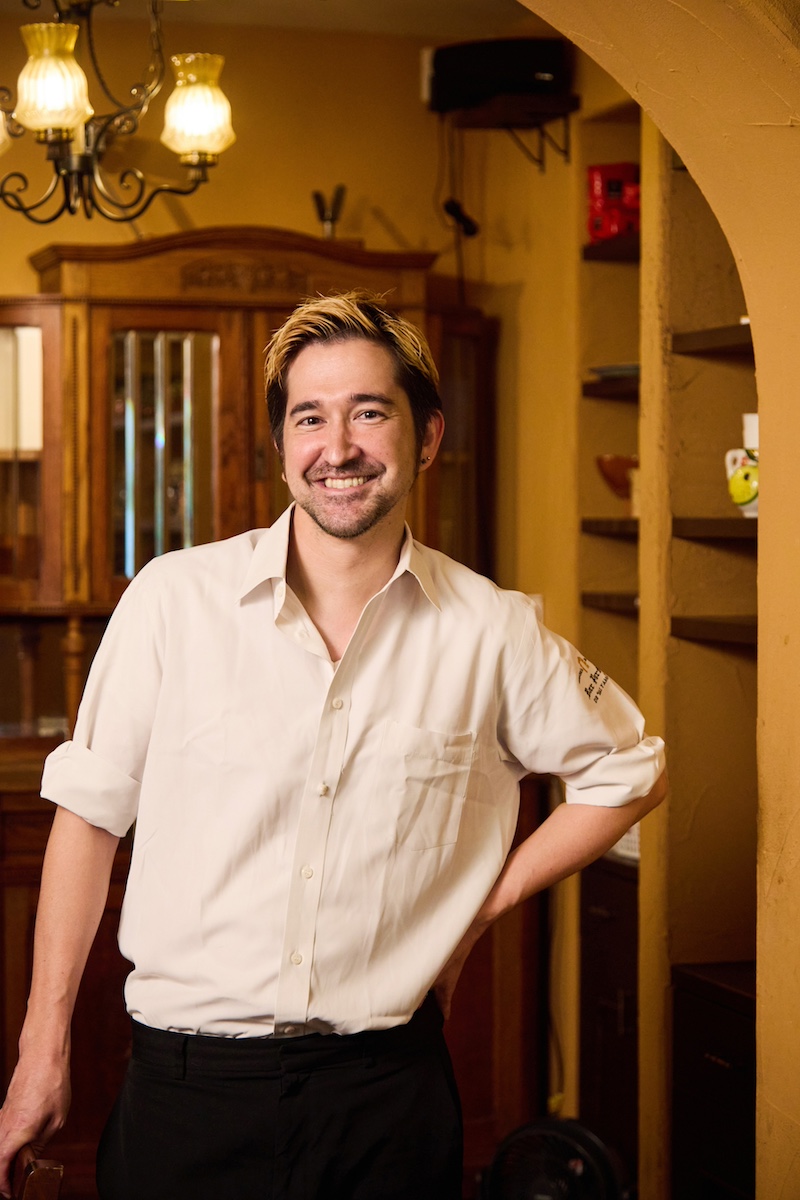
Mr. Victor Sakae Okamoto, President of V&K Co., Ltd.
We always stock hard-to-find lean meat.
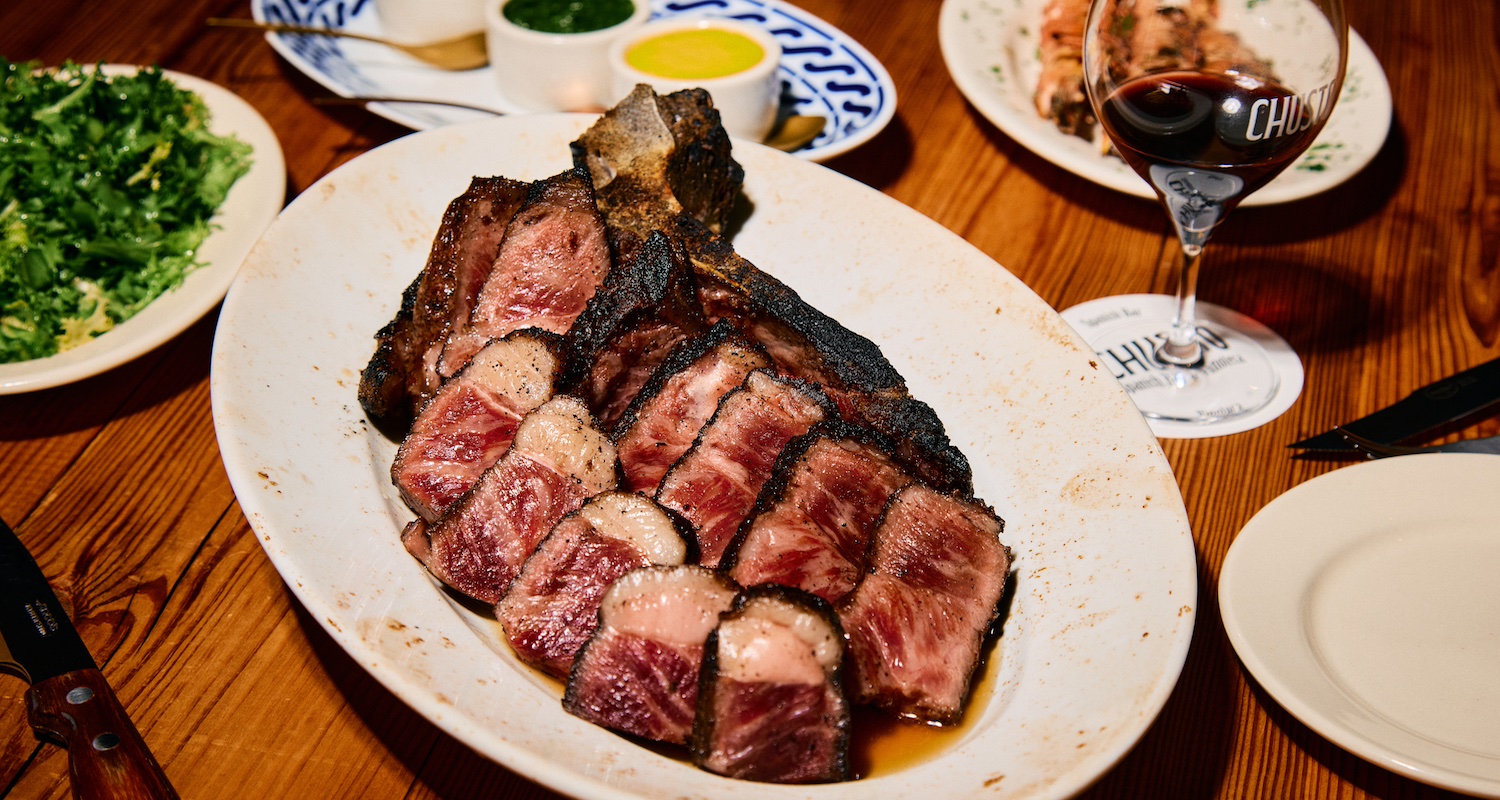
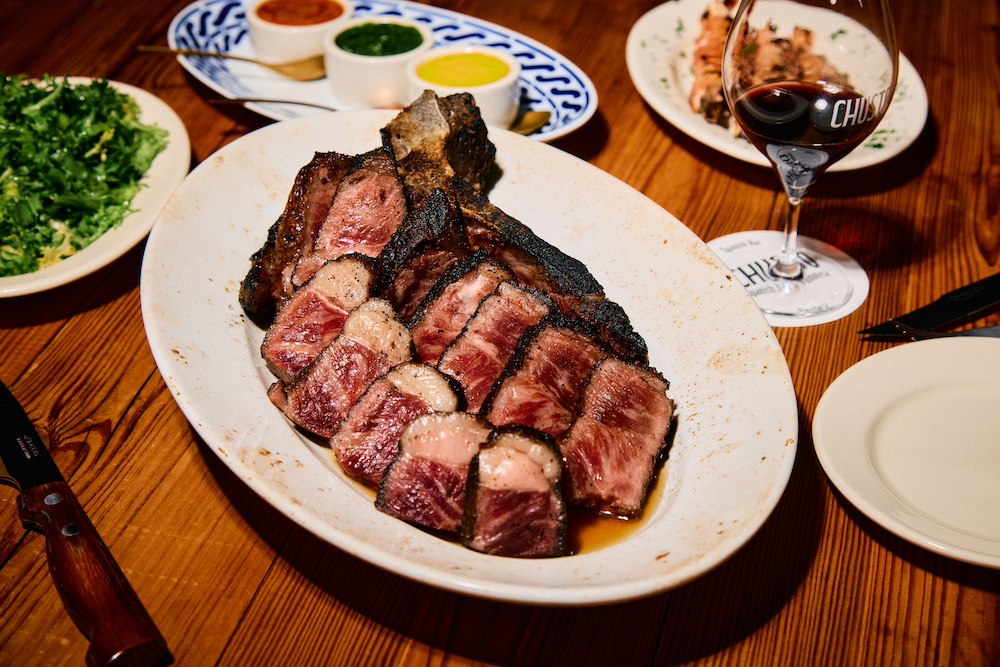
The main dish for the day was "Holstein L-bone sirloin, charcoal-grilled." The meat came from Maeda Farm in Tochigi Prefecture and had been aged for 35 days.
According to Mr. Victor Sakae Okamoto, President of V&K Co., Ltd.,
"While many restaurants advertise aged meat, we don't use the term 'aged' ourselves. We carefully select each cut of meat and slightly reduce its moisture content to make it delicious as a steak grilled over charcoal.
"Our goal is to create a restaurant where you can easily enjoy bone-in steaks that showcase the delicious flavor of lean meat, just like in Spain."
In reality, unlike A4 or A5 grade meat, sourcing lean meat is extremely difficult.
Mr. Okamoto has built a relationship of trust with butchers, and at times he is able to obtain extremely rare meats such as hornless Wagyu from Yamaguchi, short-horned Wagyu from Hokkaido, and Akaushi from Kumamoto, as well as from Iwate and Tochigi.
The menu changes daily because items sell out quickly. This restaurant apparently grills about 100 kg of meat a month.
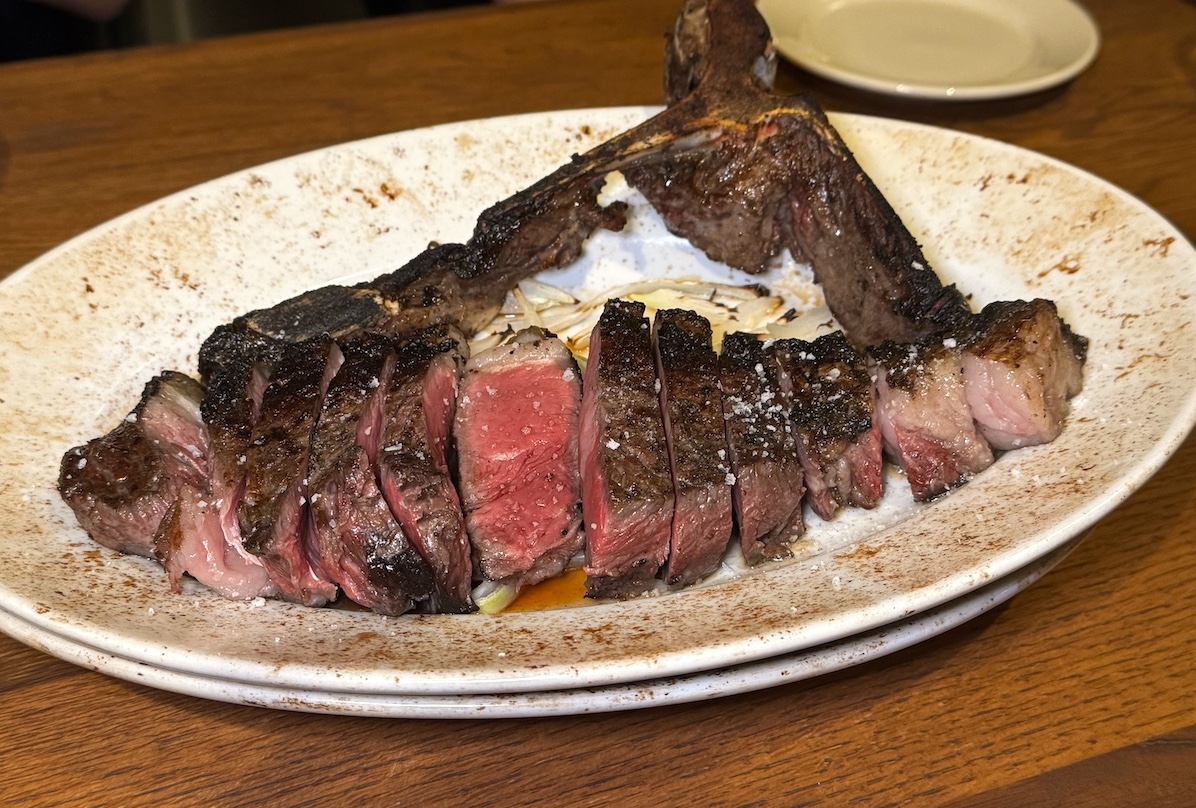
"Holstein L-bone sirloin, charcoal-grilled."
Now, the sirloin on this dayLBone steak is
The cut I chose that day was sirloin, so it had a good balance of lean meat and fat, and even the fat was delicious.
At the same time, as if awakening the animalistic instincts dormant within me since ancient times, I find myself breathing heavily as I eat (lol).

The wine selection is truly extensive, including white, red, and orange varieties.
Finally, regarding alcohol, they offer three types of Spanish beer and sparkling wine, as well as Spanish wines, such as "Guimaro Sebas Viejas" (white) and "Prima" (red), with four to five varieties available by the glass, which is a nice touch. Furthermore, they have an extensive list of about 100 bottled wines, so wine lovers will find it irresistible.
Manager and sommelier Shusuke Sawai said,
With a standing-only area, this is a great place to stop by after dinner and use it like a wine bar.
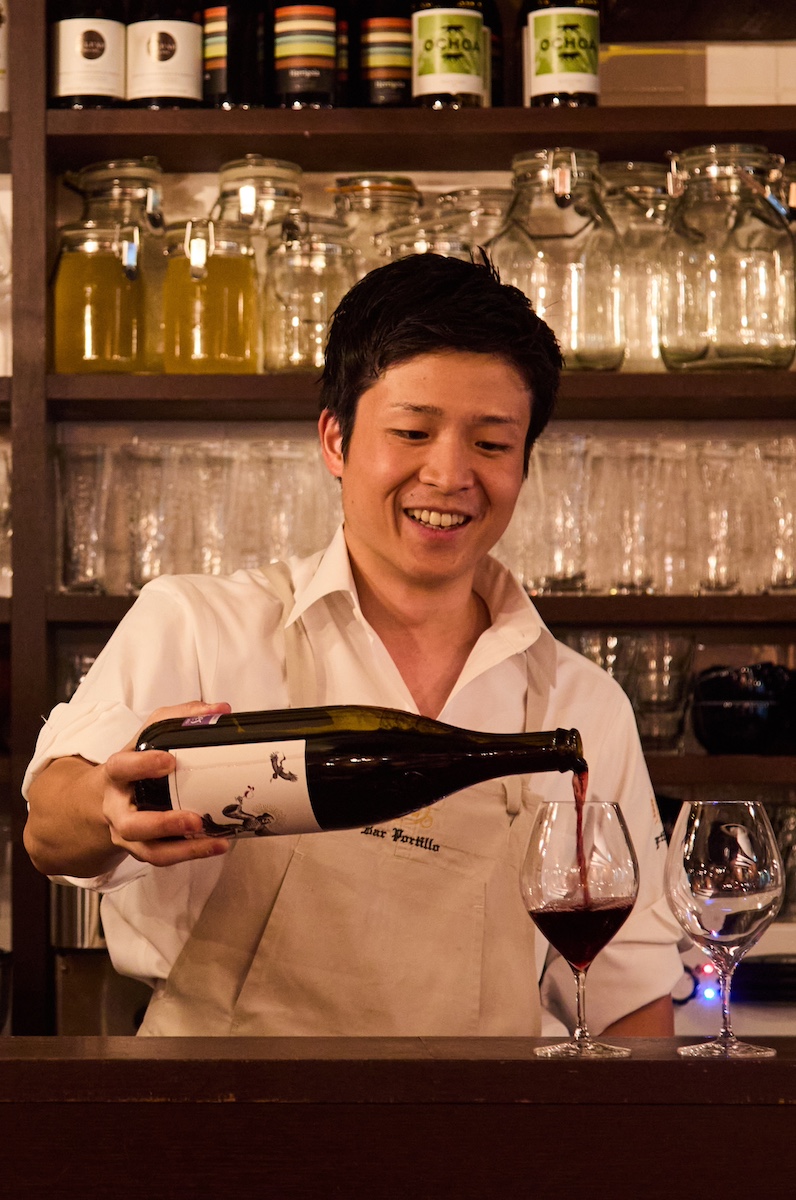
Shusuke Sawai, Manager and Sommelier at CHUSTO.
◆Chusto Spanish Barubinoteca
Address: 3F, Tangomachi Building, 3-26-1 Higashi, Shibuya-ku, Tokyo
TEL:050-1794-2550
営業時間:火~金曜:17:00~23:30、土日祝:11:30~14:30、17:00~22:00
Regular holiday: Monday
Text by Toshizumi Ishibashi

Profile
Toshizumi Ishibashi
Former editor-in-chief of "Claire Traveler" and "Claire."
Lounge
Premium Salon
Editorial Department & PJ Friends Blog











Premium Salon