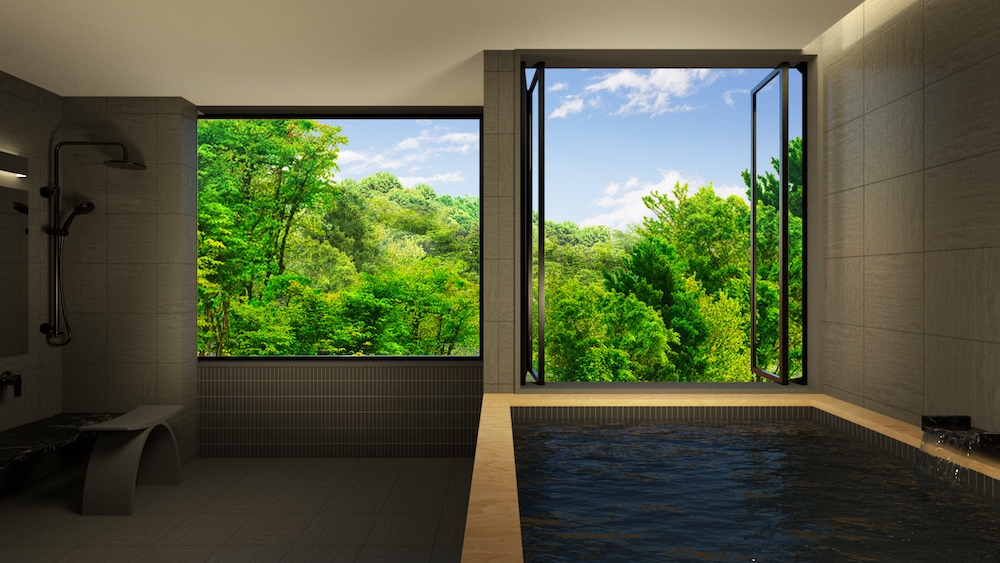
"1 Hotels"... Their unique style, which incorporates the nature and culture of each region while elevating sustainability into beauty and comfort, is gaining popularity worldwide.1 HotelsIt possesses such allure that you'll want to make visiting it the purpose of your trip itself.2026Years3In the month of its first entry into Japan,1 Hotel TokyoA new establishment has opened in Akasaka, Tokyo. What you'll find here is a different kind of luxury than ever before, one that goes beyond simply accumulating extravagance.
The globally acclaimed "1 Hotels" finally opens in Tokyo.
Since opening in Miami and New York in 2015, it has expanded throughout the United States, as well as to Canada, the United Kingdom, Australia, and other countries. Founded by Barry Stanricht, CEO of Starwood Hotels and founder of W Hotels, it is a hotel brand that champions sustainable luxury. At its core is the concept of "1 World—there is only one planet." It believes that protecting nature and providing a high-quality, comfortable stay can coexist. This philosophy is incorporated into every aspect of the brand, from architecture and design to food and service.
"1 Hotel Tokyo," making its debut in Japan, is located on the 38th to 43rd floors of the Akasaka Trust Tower within Tokyo World Gate Akasaka. In Tokyo, where numerous foreign-owned hotels stand side by side, this hotel presents a new form of richness that goes beyond simply accumulating luxury.
A green hotel floating in the Akasaka sky.
Walking through the streets of Akasaka, you step into the ground-floor entrance. You are greeted by a landscape created by stones and plants, and the world of "1 Hotel Tokyo" begins even before you reach the lobby.
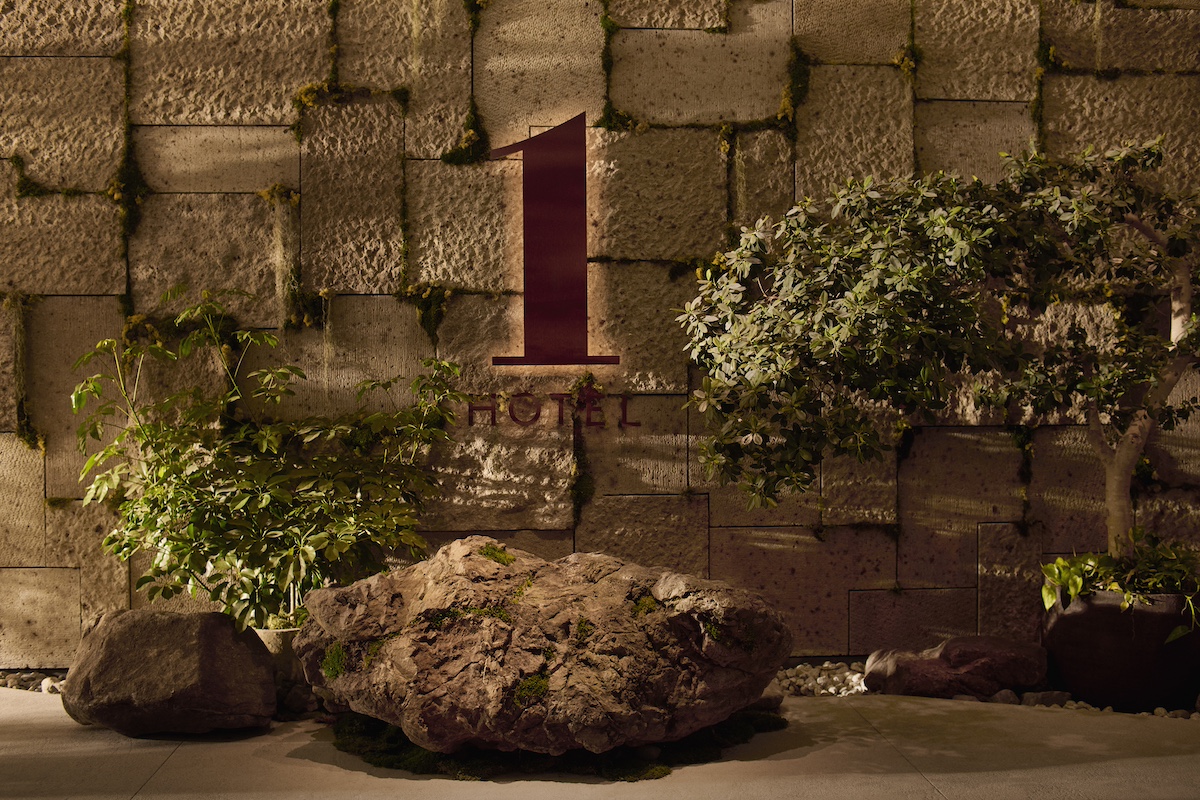
From the 1st floor entrance:1 Hotel TokyoThe world of "[Title of the work]" begins.
The elevator arrives on the 38th floor and the doors open. The first thing that catches your eye is the overwhelming greenery. In the lobby is a vertical botanical installation combining moss, recycled wood, and Oya stone. The spatial design was handled by "Crème," led by Japanese designer Jun Aizaki, who is based in Brooklyn, New York.
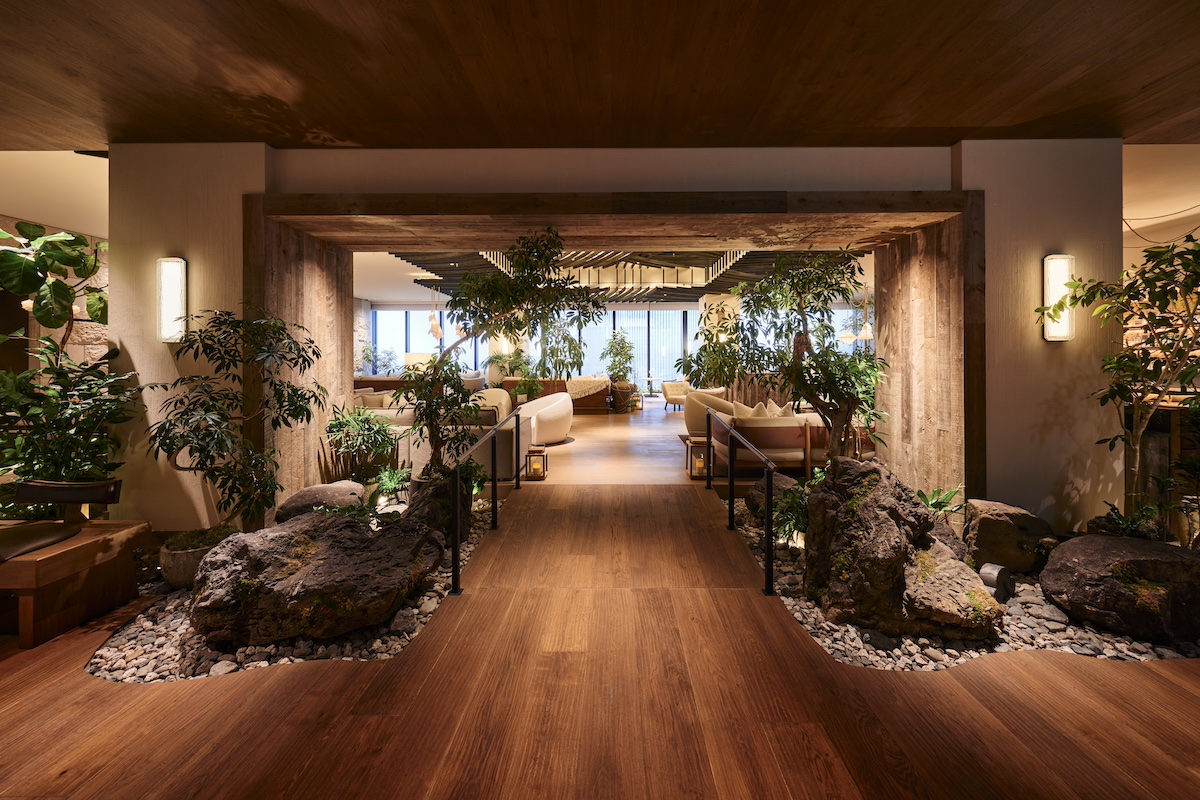
The lobby on the 38th floor welcomes guests with a botanical installation incorporating moss, recycled wood, and Oya stone.
There are over 300 potted plants in the lobby alone, and including the guest rooms, there are more than 1500 plants throughout the building. The numbers alone are overwhelming, but rather than the plants being merely "decorations," it feels as if the entire space itself is blended into the greenery.
As you venture further inside, you'll find a lounge and rock garden inspired by Zen philosophy. Through the large windows, you can see the Imperial Palace Outer Garden, Tokyo Tower, and the Tokyo skyline. The texture of the plaster, the design that reinterprets the dry landscape garden in a modern way, and the walls made of Oya stone, which is also the brand's signature material—all these elements, including the feel of the wood and stone and the pleasant scent that permeates the air, gradually release your senses from the tension of the city.
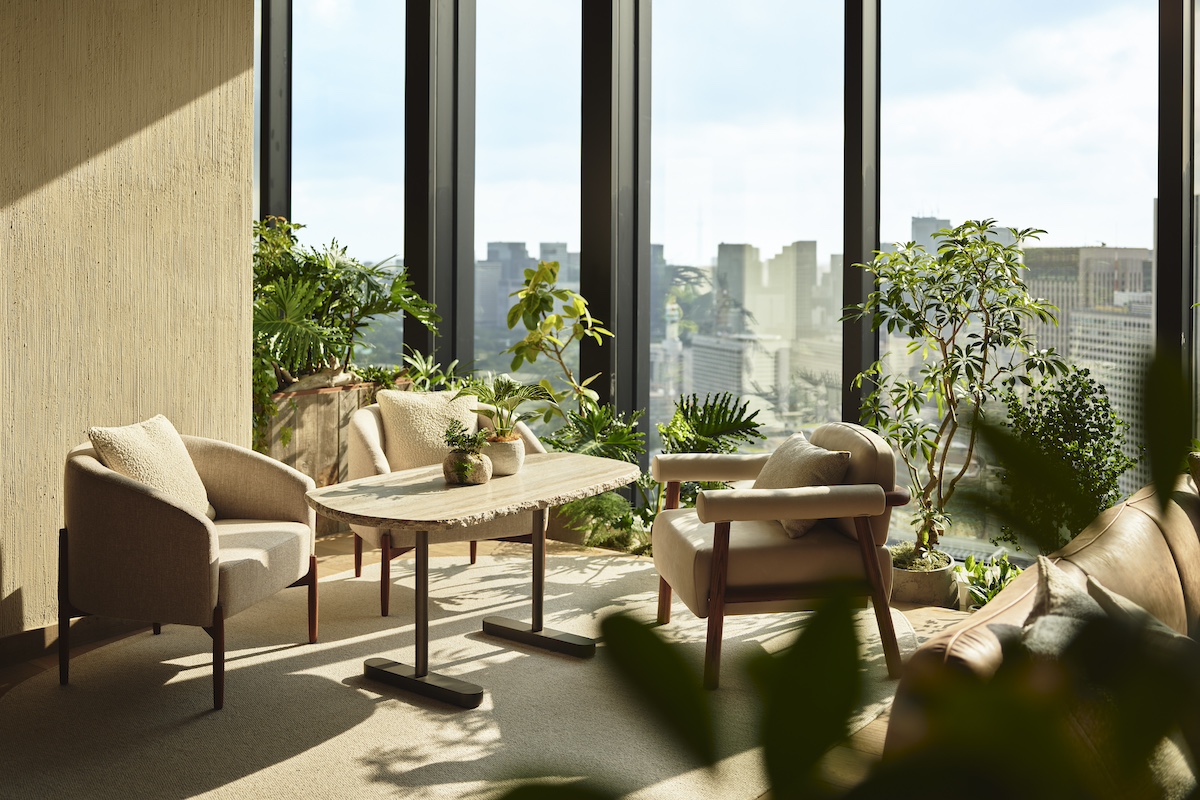
A lounge inspired by Zen philosophy. The Tokyo skyline stretches out beyond the large windows.
What's striking here is that nature and sustainability aren't merely added "value," but rather they shape the luxury itself. Instead of ostentatious decorations or excessive service, it's the comfort of natural materials, tranquility, beautiful views, and choices that minimize the impact on the planet. All of these elements connect to create a single, high-quality experience. It's not about "looking" at nature, but about spending time within it. That's the feeling you get here.
The wooden scaffolding used during the hotel's construction was dismantled, processed, and reborn as panels that adorn the walls of the guest rooms. Recycled materials and natural wood are also actively used in the furniture. The hotel's commitment to environmental considerations while maintaining beauty and comfort is also symbolic, as evidenced by its S-rank in Japan's Comprehensive Assessment System for Built Environment Efficiency (CASBEE).
A new kind of comfort born from richness that permeates even the guest rooms.
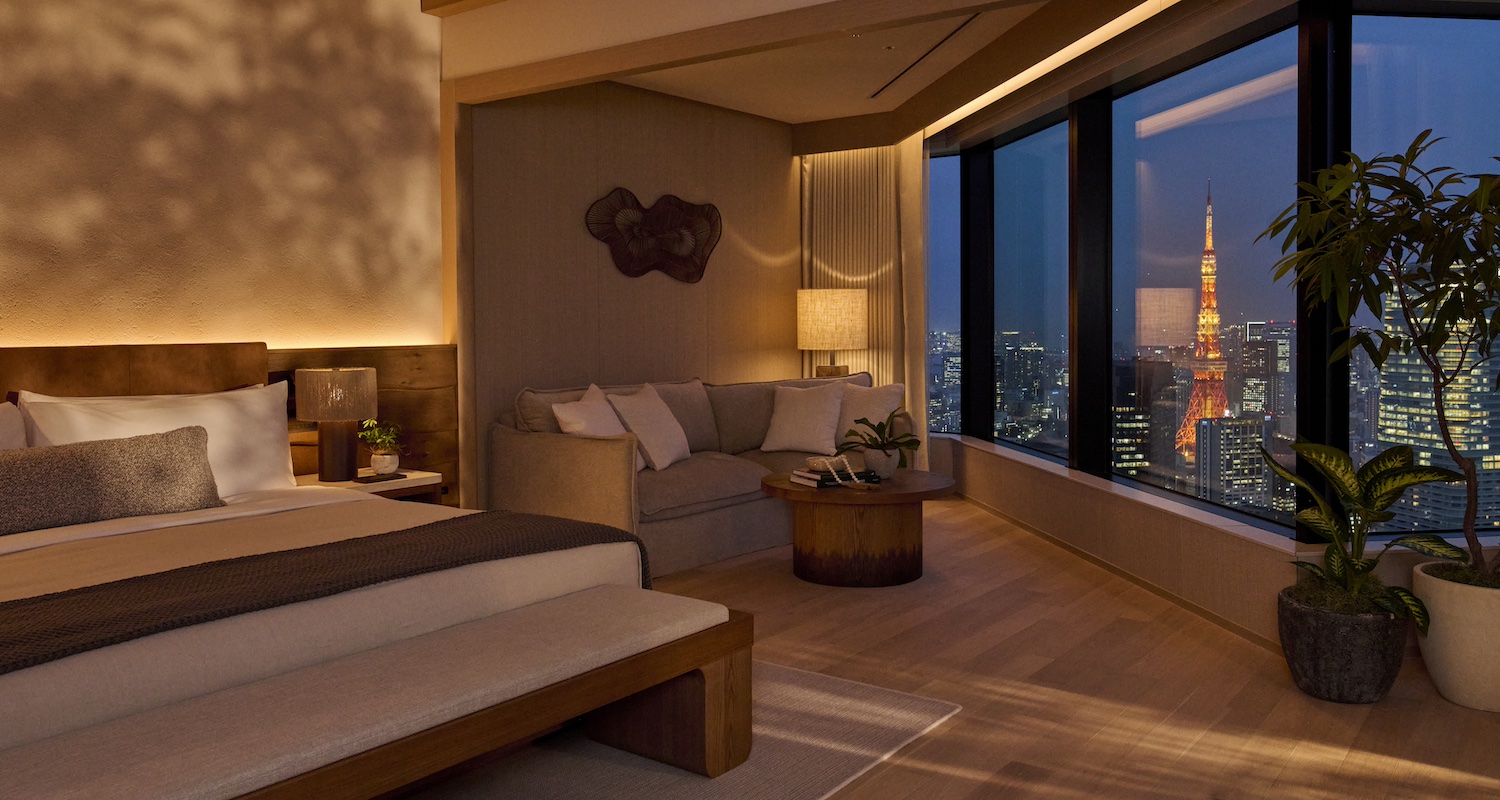
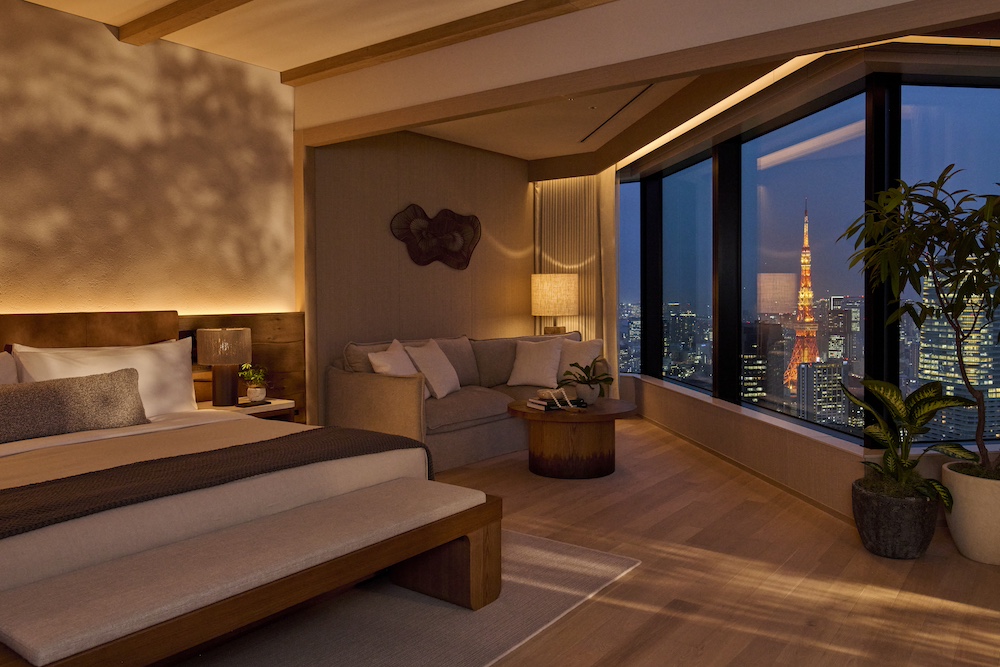
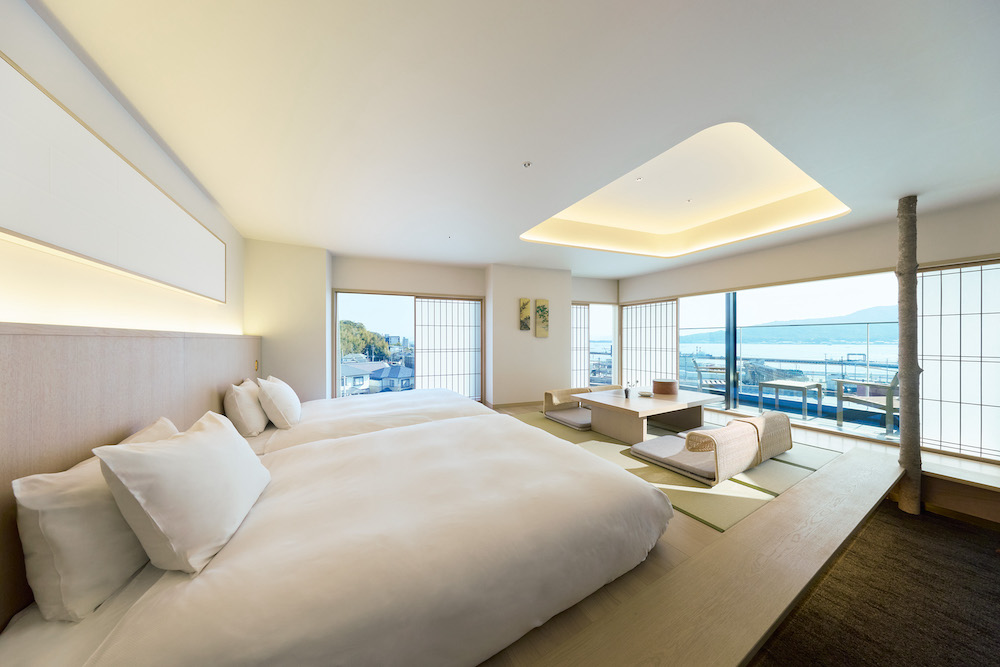
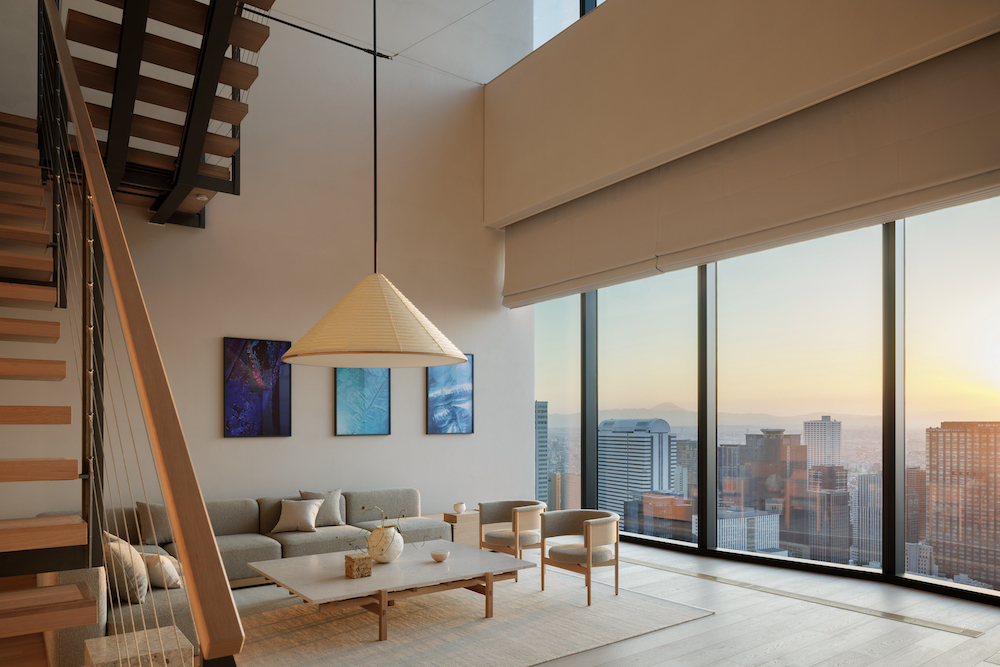
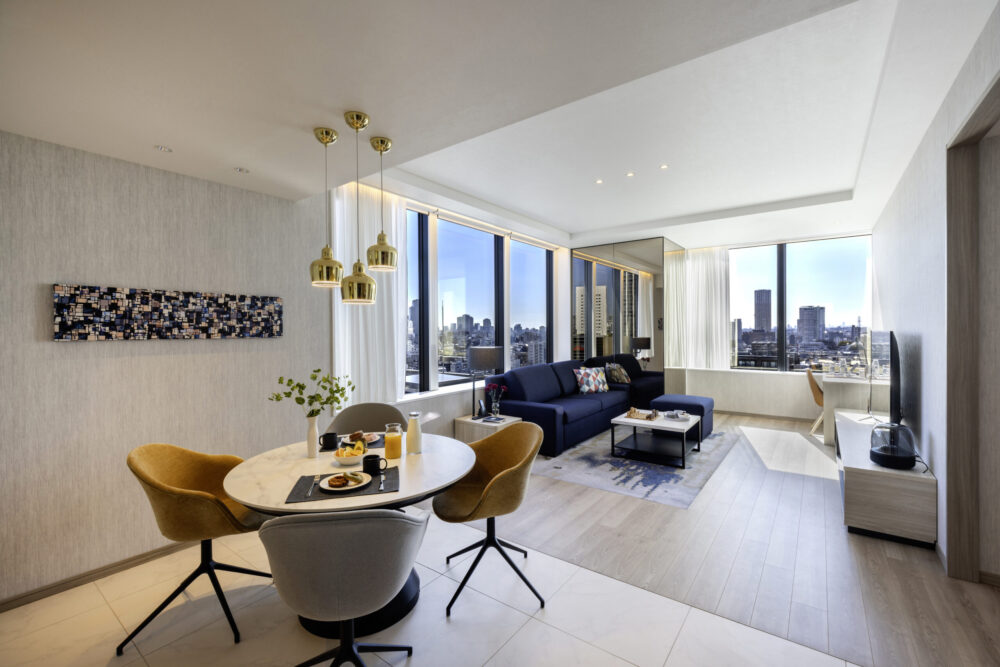
The hotel has a total of 211 guest rooms, 24 of which are suites, and also features three penthouses. The "1 Hotels" philosophy is evident in every detail of the rooms. The interiors are unified with earthy colors that evoke nature, and houseplants are placed throughout, creating a space where you can feel close to nature even in the heart of the city.
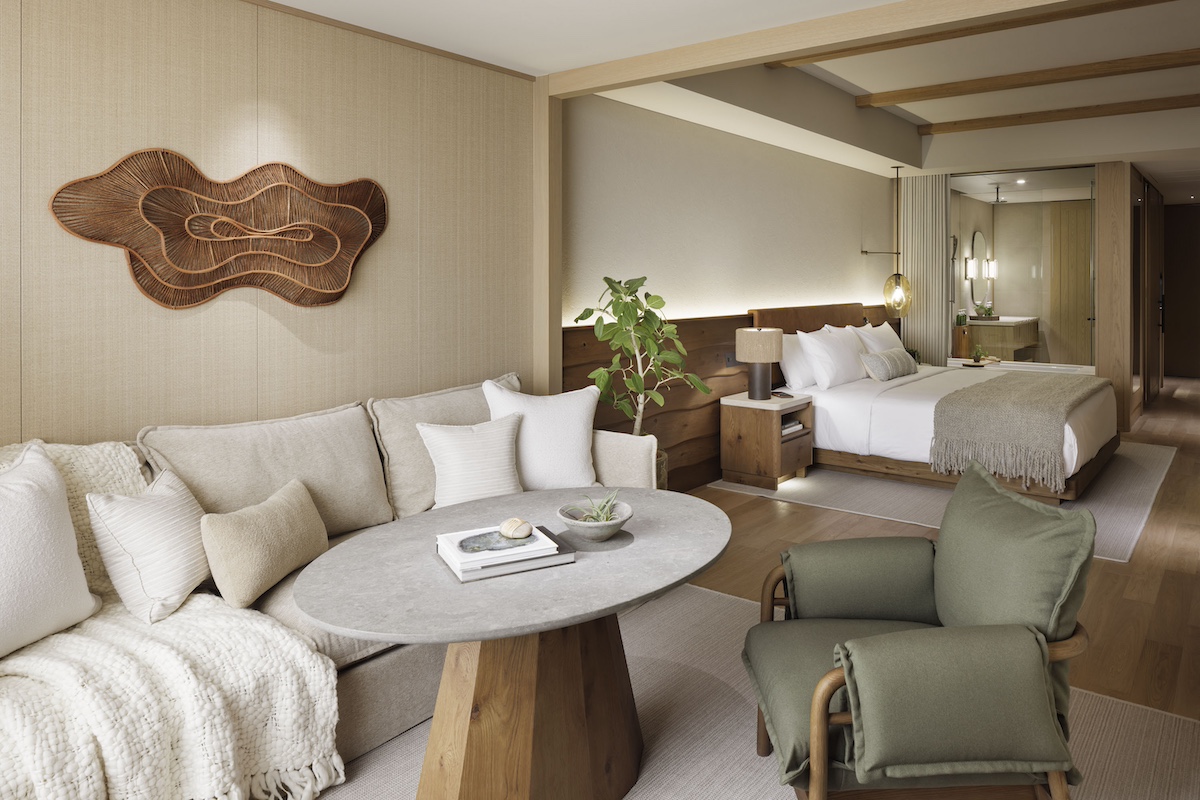
Skyline Lounge King
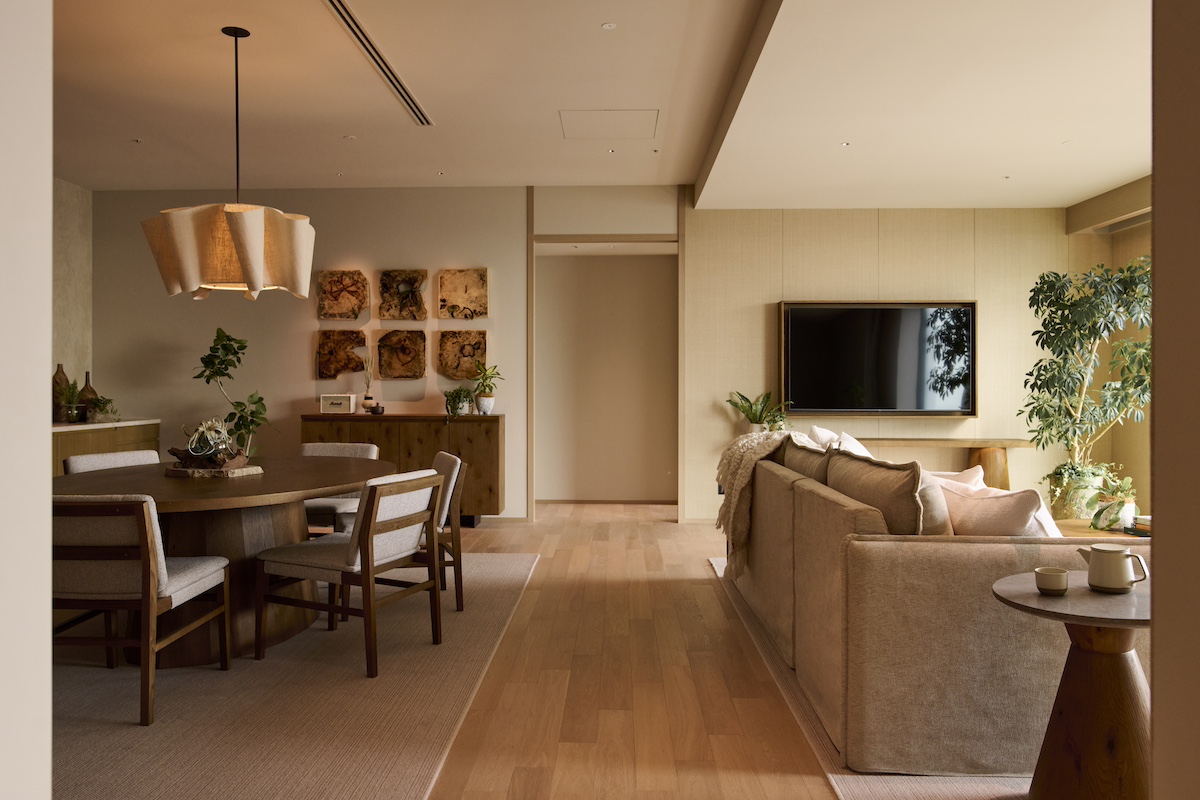
Hinata House King
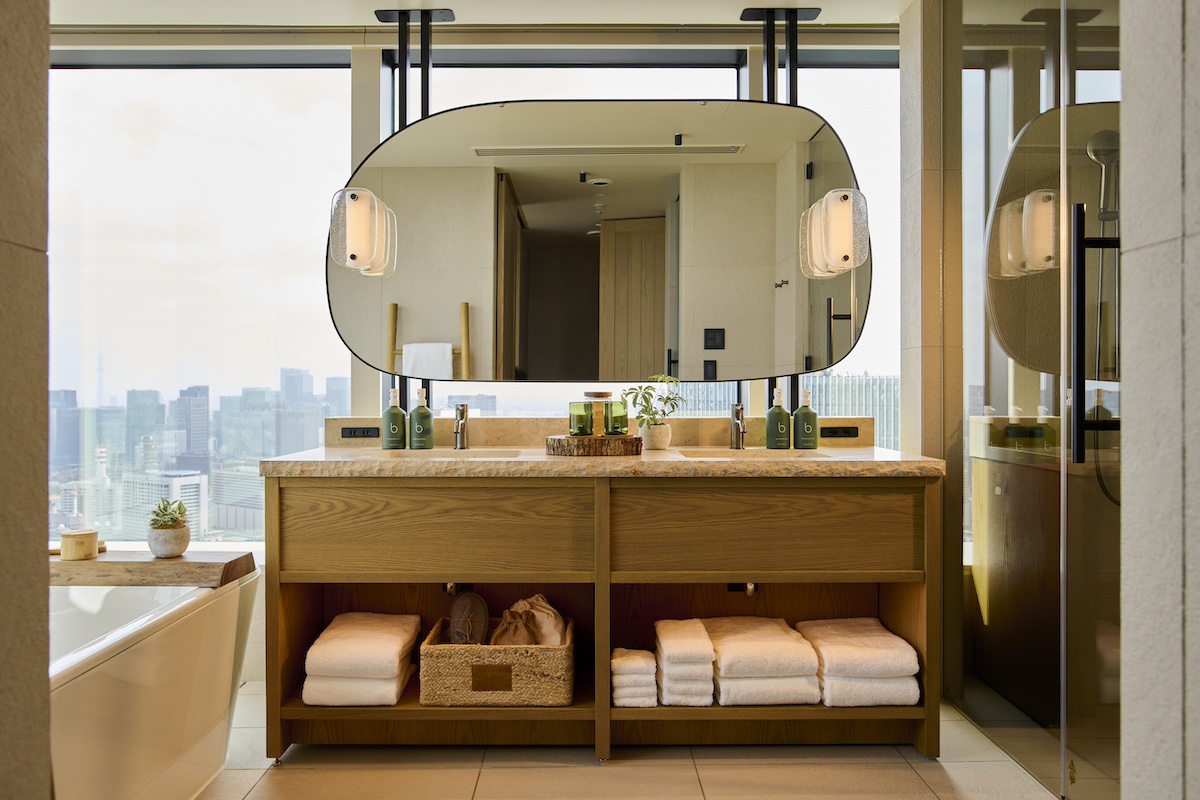
Midori House Two Queen
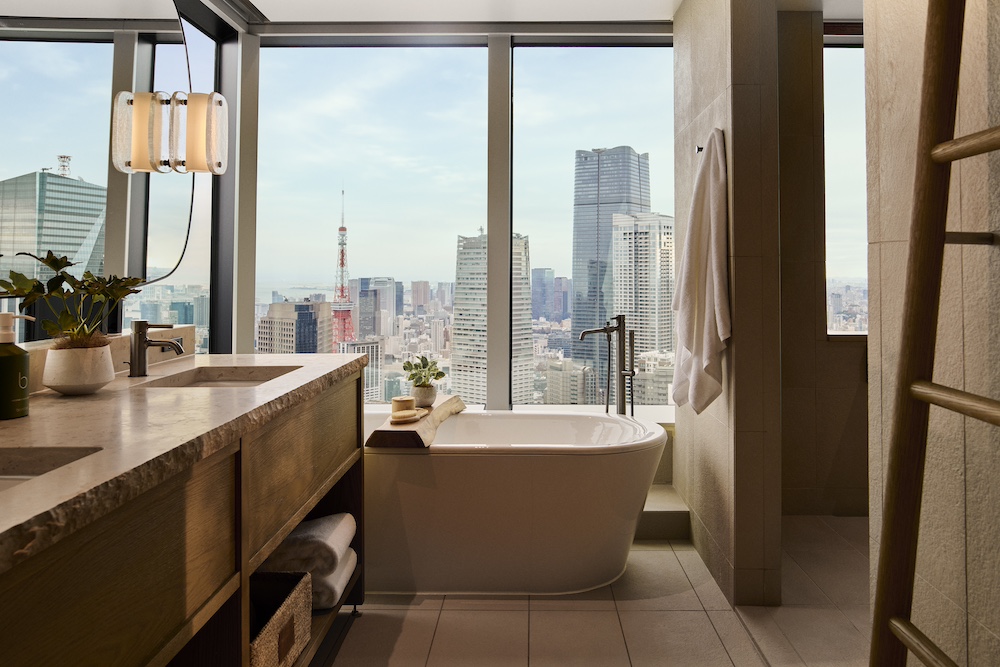
Panoramic Tower 1Bedroom Suite
The comfort isn't just about appearances. Every room is equipped with a water purification system to reduce the use of plastic bottles, and hourglasses are placed in the bathrooms to encourage guests to be mindful of their water usage. Furthermore, wine bottles are upcycled as drinking glasses, reflecting the "1 hotels" spirit throughout the rooms.
Furthermore, when you open the closet, you'll find messages written on the hangers, and the amenities include playful suggestions for alternative uses.
These kinds of setups are by no means rigid or formal. There's a certain enjoyment in discovering each little detail scattered throughout the room.
Furthermore, they offer a "1 Less Thing" program where guests can leave unwanted clothing and other items at the hotel, which are then donated to local NPOs. This initiative ensures that environmental considerations are not solely the hotel's responsibility, but are also naturally incorporated into the lives of the guests.
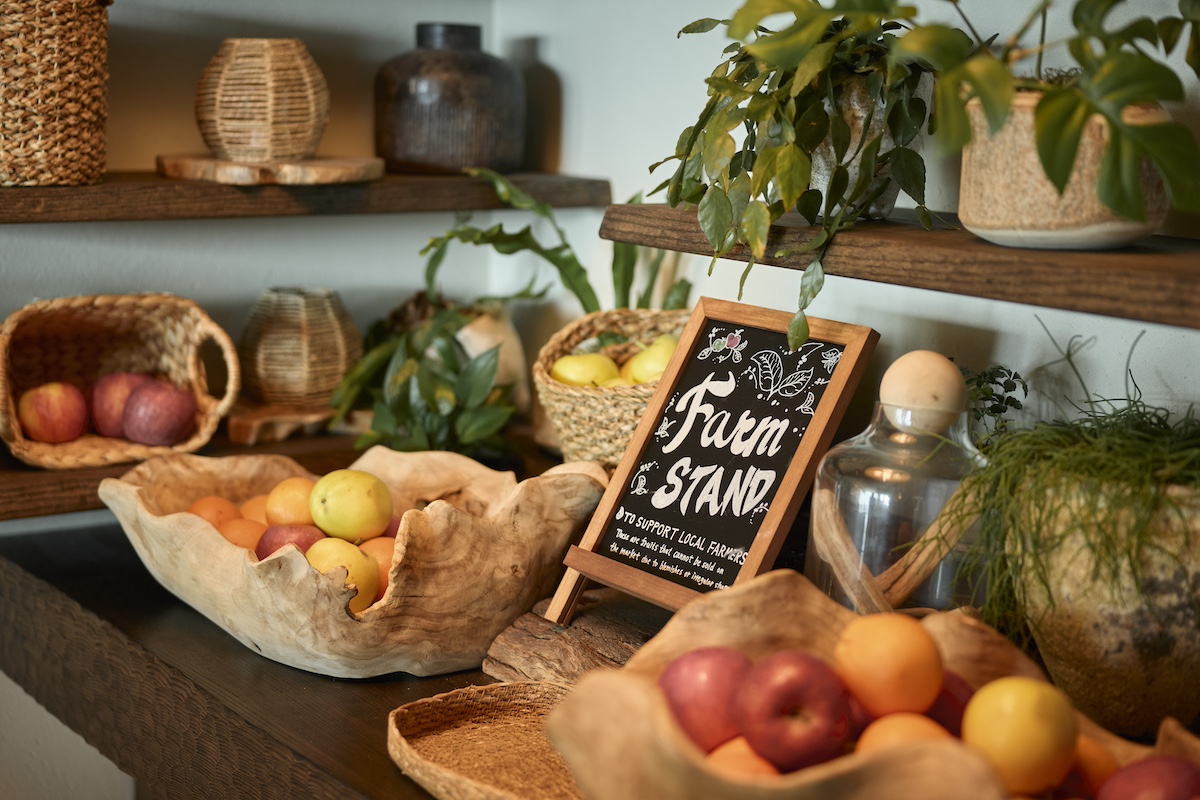
"Farm Stand" offers a variety of fruits that change from day to day.
They also operate a "Farm Stand" that offers guests fruits that are difficult to distribute due to being substandard or for other reasons. The fruits on display change daily. They convey the importance of not wasting food and their connection to the local community not through complicated explanations, but through casual experiences during your stay.
The guest rooms are equipped with yoga mats and rollers, allowing guests to relax and stretch while enjoying the view outside the window. Sustainability doesn't mean sacrificing anything; rather, by stripping away unnecessary elements, the comfort of the materials, the views, and the tranquility are all the more highlighted.
Enjoy the flavors of Tokyo at NiNi
This philosophy extends to the dining area as well. Using seasonal ingredients and local produce, and while being mindful of minimal waste, the restaurant carefully brings out the flavors of the season and the land.
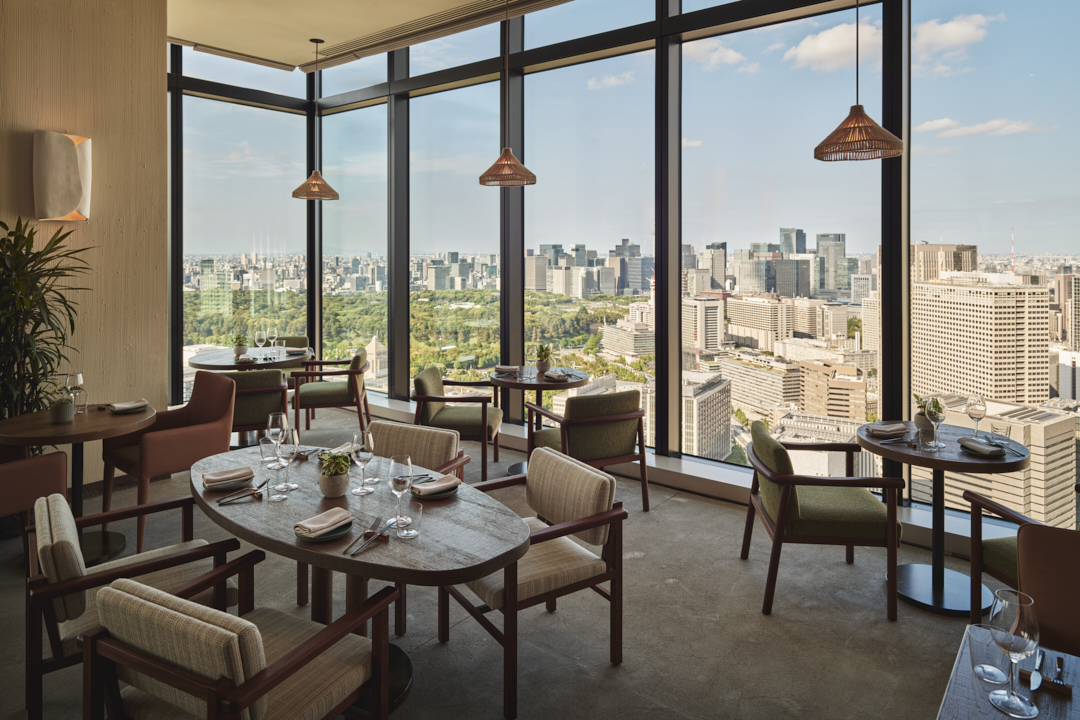
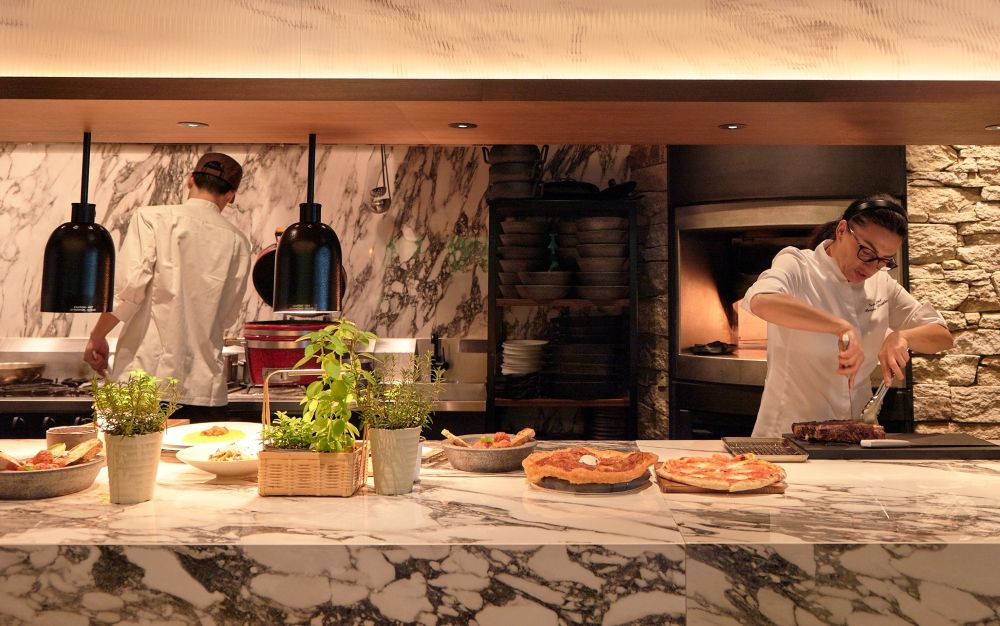
The signature restaurant, "NiNi," expresses the encounter between the French Riviera and the four seasons of Japan.
The signature restaurant "NiNi" represents the encounter between the French Riviera and the four seasons of Japan. The name itself embodies the meaning of "two coasts, two cultures, two rhythms." Furthermore, the "22" in the hotel's address, Akasaka 2-17-22, is playfully linked to "NiNi."
Head chef Nico Policarpio combines herbs and olive oil from Provence with vegetables sourced from young farmers and producers utilizing reclaimed farmland in the Tokyo area. He also leverages the "Tokyo NEO-FARMERS!" network, which supports urban agriculture, to reflect his connection to the land in each dish. Chef Nico's passion and sense of style shine through in his dishes, which change with the seasons, and he is constantly developing new menu items.
For some ingredients, they use a charcoal oven that uses only charcoal as a heat source. Rather than overcooking the ingredients, they carefully bring out their natural flavors while infusing them with a savory aroma. All the pasta is handmade.
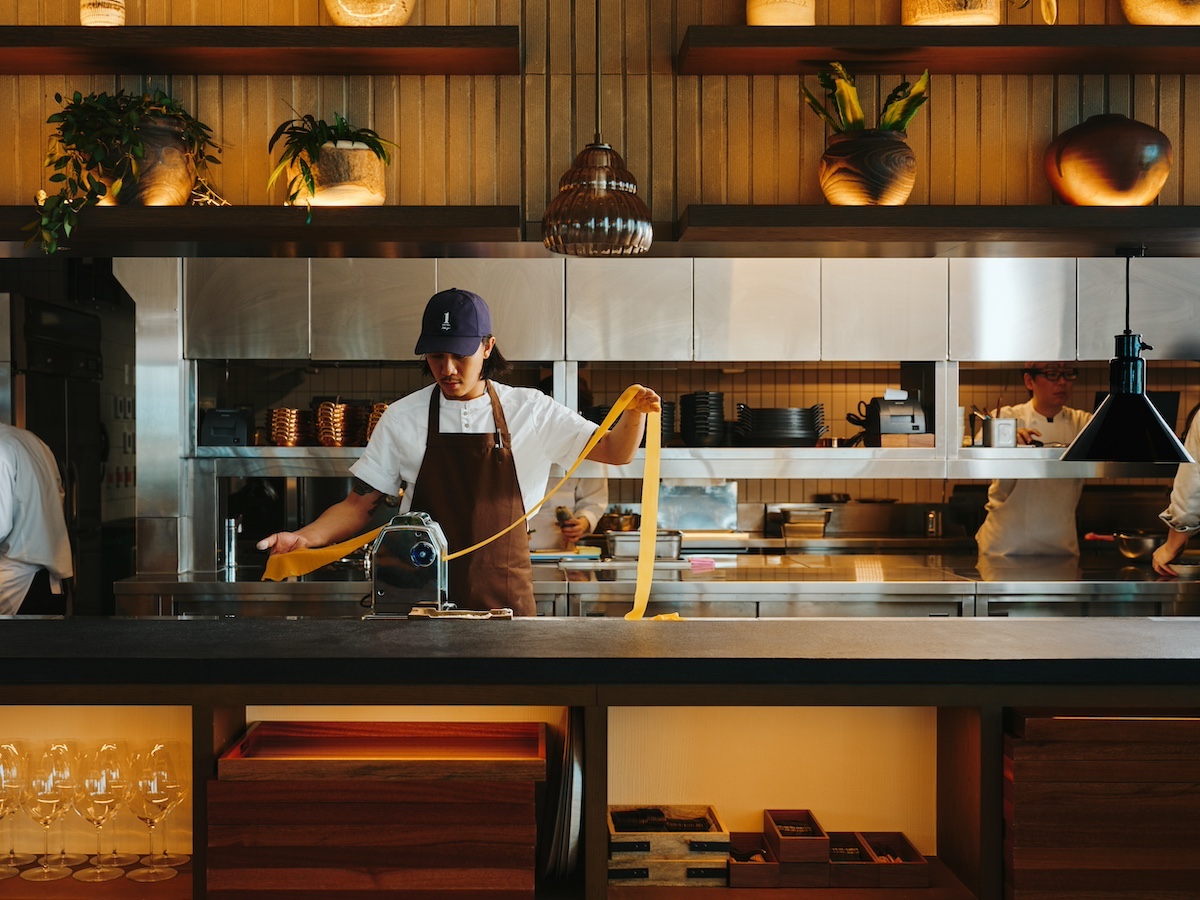
Chef Nico says that when he comes across good ingredients, he can't help but create new dishes.

Tajima Wagyu Tomahawk Steak
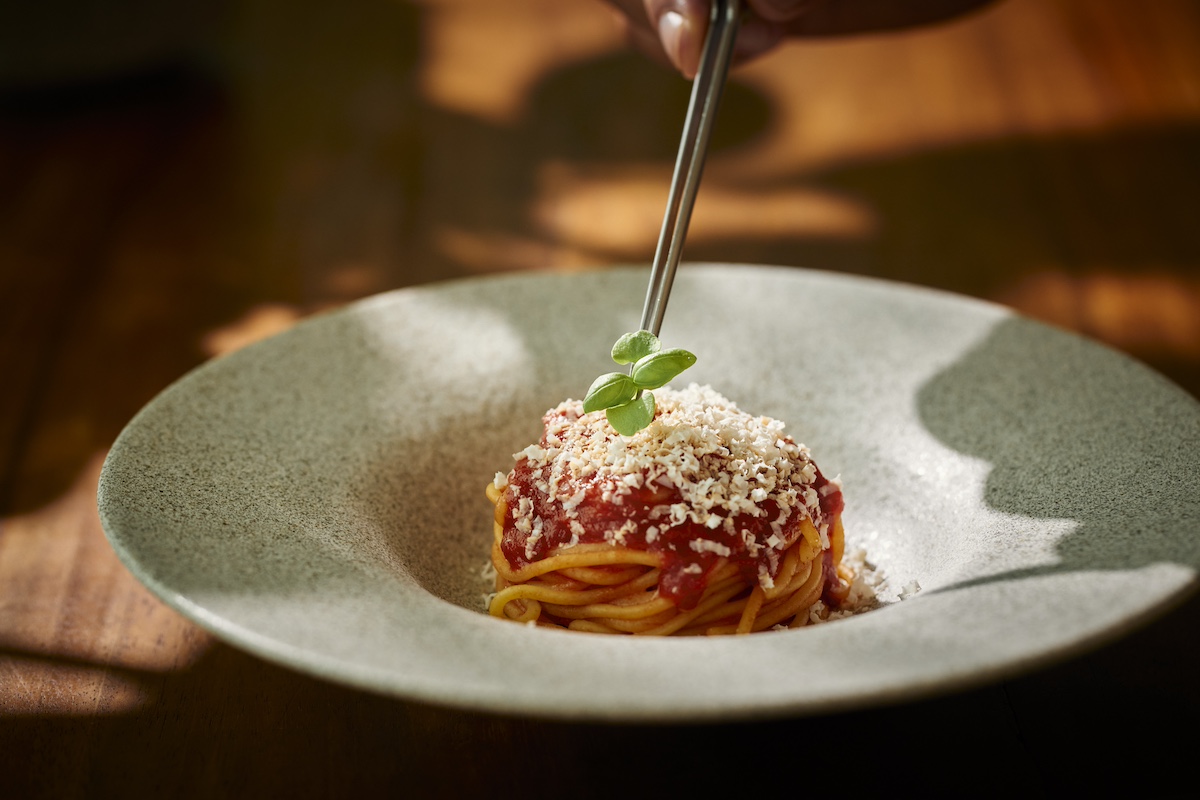
Spaghetti with tomato sauce. All the pasta is handmade.
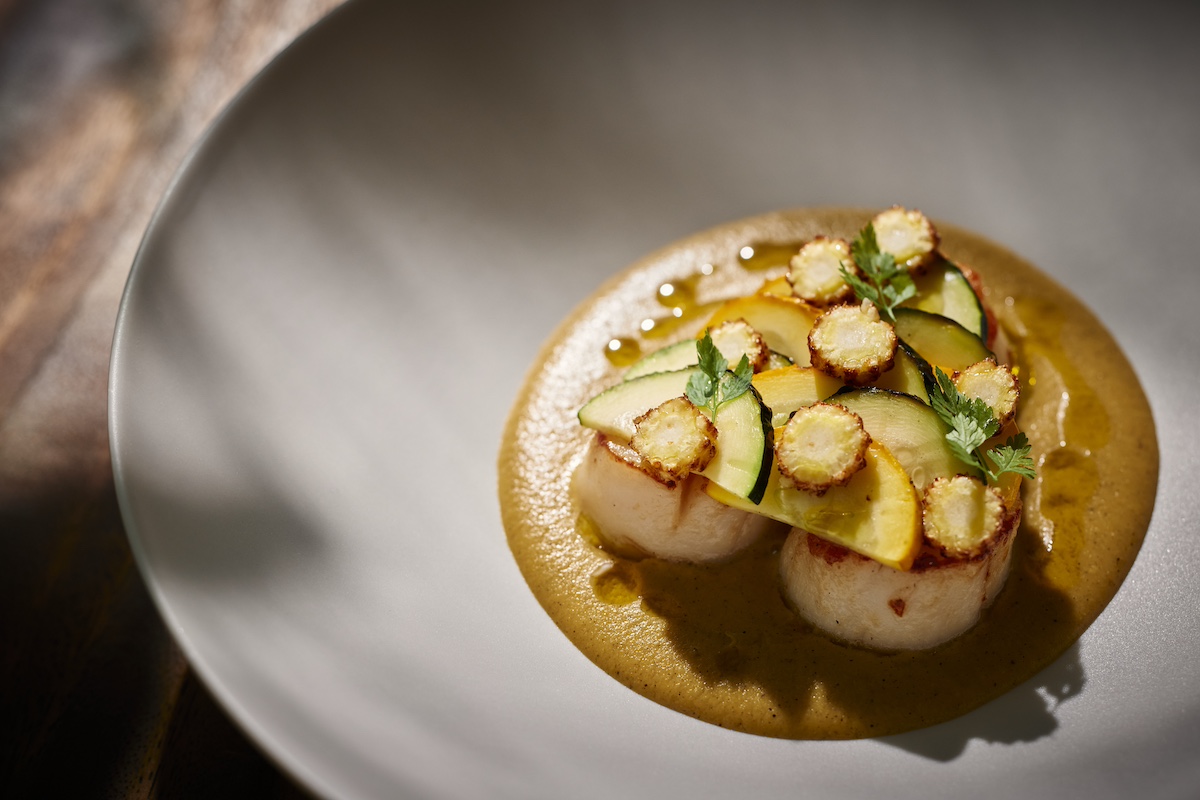
Roasted scallops.
While hotel dining might seem a bit intimidating, NiNi aims to be a place you can enjoy on a regular basis. The menu, atmosphere, and prices are all designed to be approachable. Instead of relying on extravagant presentations, they focus on enjoying seasonal ingredients in their purest form. This approach seems to transform sustainability from a mere formality into a focus on taste and comfort.
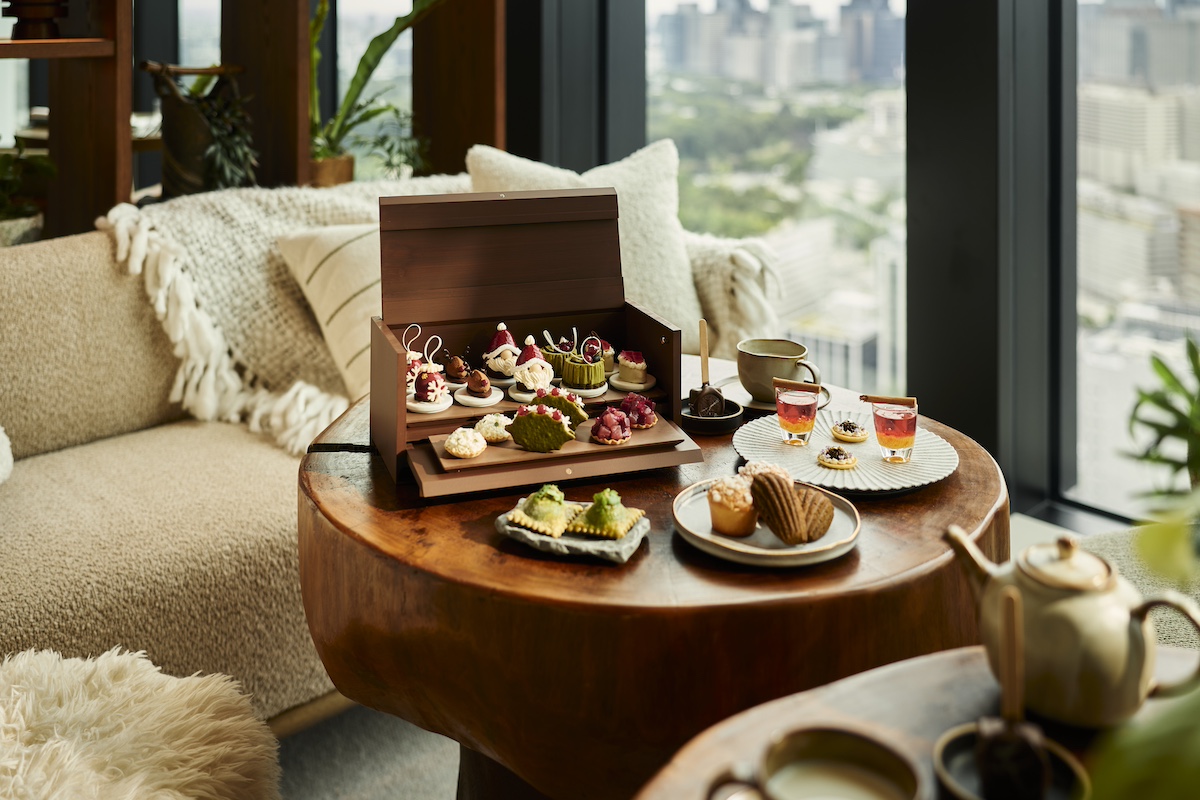
Seasonal afternoon tea. Sweets and savory items are beautifully presented in an original wooden box.
The seasonal afternoon tea is also not to be missed. Executive Pastry Chefs Fumitake Goji and Policarpio have created an original wooden box in which sweets and savories are beautifully presented.
The afternoon tea pictured is part of "La Belle Vie Afternoon Tea ~Festive Afternoon Tea~," which will be offered at 1 Hotel Tokyo from November 16th to December 25th, 2026, to celebrate the holiday season.
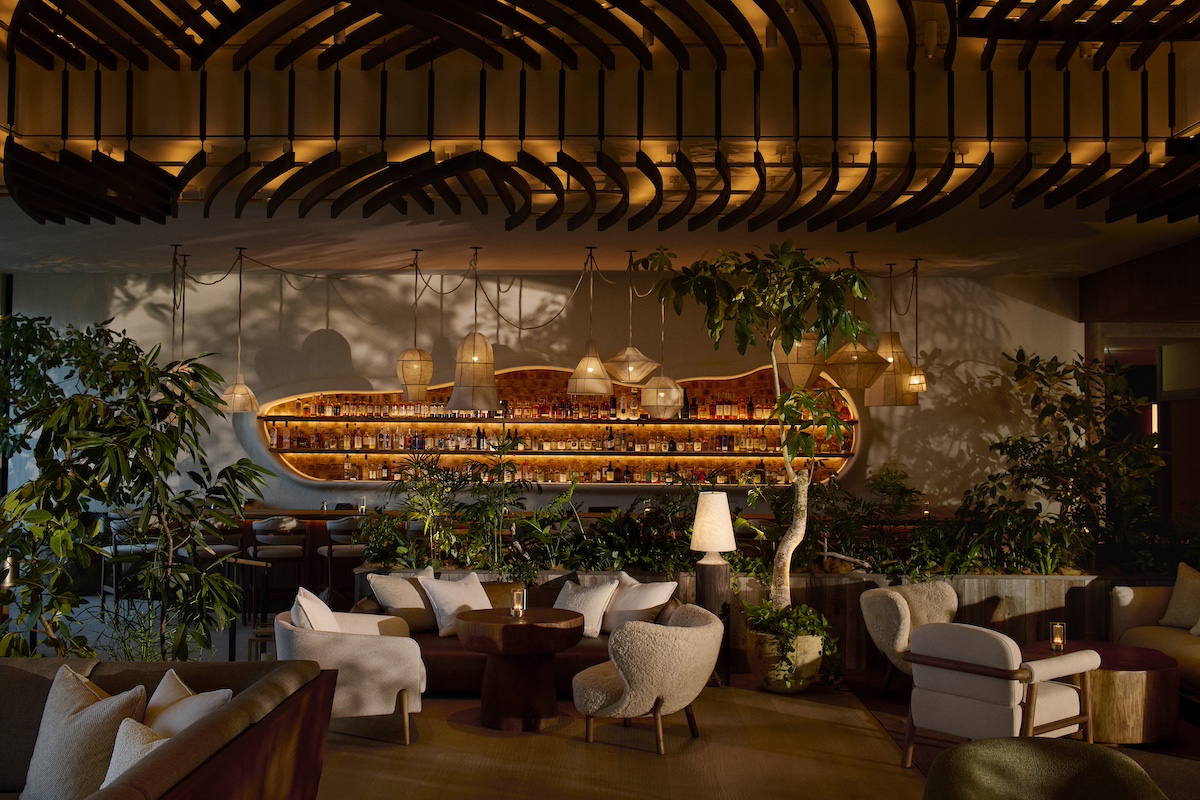
Lobby Lounge & BarSpotted stone. "
Located on the same 38th floor, the lobby lounge and bar "Spotted Stone" focuses on Japanese gin culture. They offer over 50 types of Japanese craft gin, and guests can enjoy the "Signature Martini Ritual," where they can create their own unique drink by selecting their favorite botanicals and vermouth.
During the day, the hotel is bathed in greenery and natural light, but at night it takes on a completely different appearance. As you spend time gazing at the lights of Tokyo, you realize that nature and the city, seemingly contradictory elements, coexist harmoniously in this hotel.
Furthermore, "Neighbors Café" offers healthy, plant-based menu items, coffee, and tea. It's open not only to hotel guests but also to people who live in the neighborhood. While it's a hotel in a travel destination, it's loosely connected to the daily life of the area. This sense of distance is also characteristic of "1 Hotel Tokyo."
Relax your mind and body and contemplate true richness.
Wellness, which focuses on restoring mind and body, is an extension of everyday life here. Bamford Wellness Spa offers holistic treatments that blend Japanese and Western traditions. It features five private rooms, a couples suite, a relaxation space, and a hammam room, and offers menus inspired by local culture, such as the "Japanese Bamboo Massage" which uses bamboo tools from Kyoto and green tea oil.
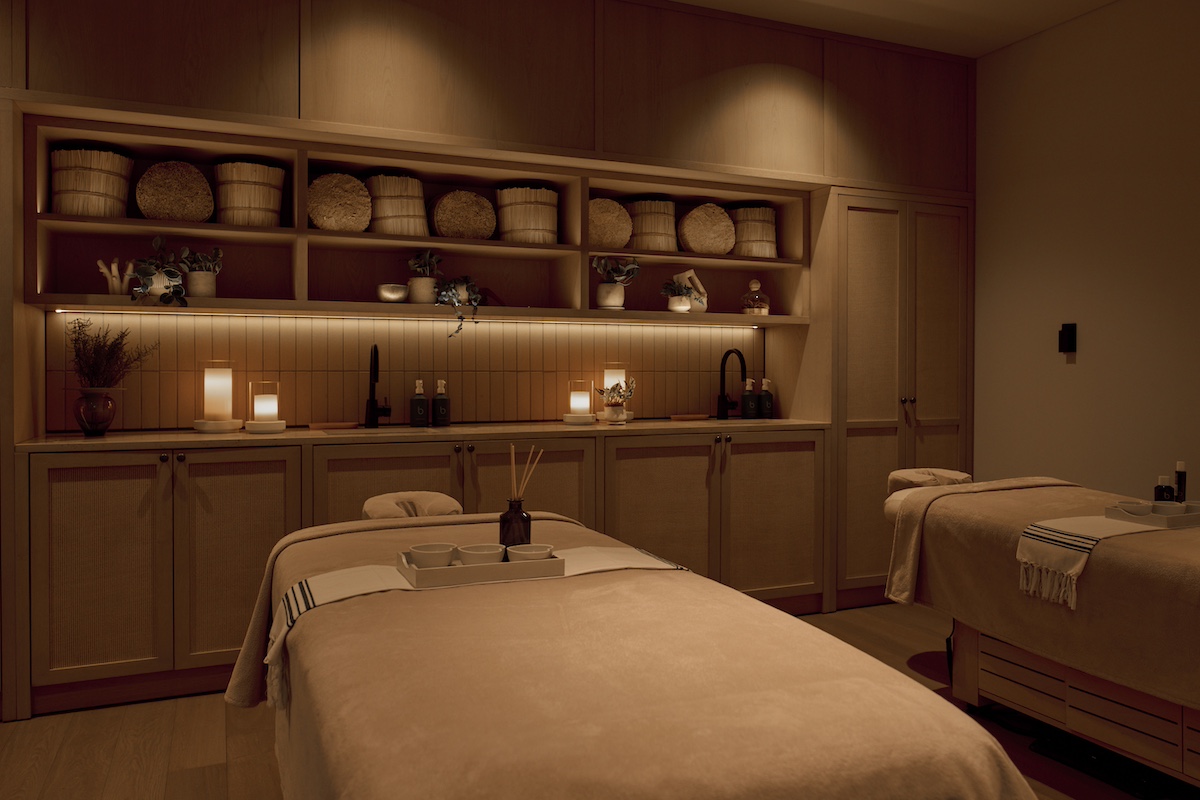
A treatment room at "Bamford Wellness Spa".

An indoor pool filled with natural light. A place to slowly reset your mind and body in the heart of Tokyo.
The Field House, a 24-hour fitness area, is fully equipped with training facilities. The event space also hosts various wellness activities, including yoga. Beyond the indoor pool, bathed in natural light, lies a deck surrounded by lush greenery, offering a place to slowly reset your mind and body, even in the heart of Tokyo.
At "1 Hotel Tokyo," events are called "Happenings," and the schedule is posted on a blackboard next to the lobby. Through monthly changing programs that are open to non-guests as well, such as kintsugi (gold repair), calligraphy, matcha-themed events, and sound baths, the hotel connects the local community and people with each other.
The word "sustainable" might conjure up images of something a little austere. However, what you'll find here is quite the opposite. Surrounded by greenery, you'll find comfort in pleasant scents. You'll savor delicious locally sourced cuisine, gaze upon the Tokyo skyline, and relax in the spa or pool. Without any pretense, each experience is pleasant and leads to peace. And environmental considerations are an extension of that.
Is luxury about accumulating extravagant things? Or is it about owning many things? A stay at "1 Hotel Tokyo" changes the answer slightly. Beauty and comfort. And minimizing the burden on the planet. Perhaps achieving both is what true richness of the future lies in.
Leaving the hotel, I returned to the streets of Akasaka. The scenery—lines of buildings and people coming and going—hadn't changed at all. However, the lessons I learned during my time at "1 Hotel Tokyo" seemed to slightly alter even the scenery that followed.
2-17-22 Akasaka, Minato-ku, Tokyo
Text by Yuko Taniguchi
Stories
Premium X
Japan's premium hotels





Premium X